
Why Indoor Plants Matter for Oxygen and Air Quality

How Plants Improve Indoor Air
Have you ever felt refreshed just by being around plants? That’s not just in your head — plants genuinely help purify the air around us! Just like trees help us breathe outdoors, the best indoor plants for oxygen can do something very similar inside your home.
Plants soak up carbon dioxide (the gasoline we breathe out) and release oxygen (the fuel we need to live) in the course of a process referred to as photosynthesis. But that’s not all—additionally they assist in getting rid of dirt, reduce carbon monoxide, or even add moisture to the air. That manner cleaner, more energizing, and extra snug air for your circle of relatives.
Fun Fact: Some indoor flora may even trap dangerous chemicals like formaldehyde and benzene that come from cleaning products, fixtures, or paint.
🔗 Source: U.S. Environmental Protection Agency (EPA) on indoor air pollutants
The Science Behind Oxygen Production
Let’s make it extraordinary simple:
🌞 Sunlight + 💧 Water + 🌬️ Carbon Dioxide = 🌿 Oxygen + 🍬 Plant Food (Glucose)
This magical procedure is referred to as photosynthesis, and it happens within the green part of a plant referred to as the leaf. During the sunlight hours, plants use sunlight to make their meals, and in return, they supply us oxygen.
🌿 Some flora, like the Snake Plant and Aloe Vera, are more special. They can release oxygen even at night. That’s why they’re perfect for bedrooms—supporting you to breathe higher even as you sleep.
NASA’s Clean Air Study: What It Revealed
Back in 1989, NASA (sure, the distance business enterprise!) wanted to locate ways to easy air in space stations. So they studied how indoor flowers could put off pollutants from the air. The results were fantastic!
NASA located that some plants can take in harmful chemicals like:
- Benzene (located in plastics and detergents)
- Formaldehyde (from fixtures and cleansing merchandise)
- Trichloroethylene (from paints and glues)
These plant weren’t just pretty—they have been effective air purifiers!
Some of the top performers were:
- Areca Palm
- Spider Plant
- Peace Lily
- Mother-in-law’s Tongue (Snake Plant)
🔗 Source: NASA Clean Air Study Summary (thru NASA Archive)
🔗 Harvard Health on plants and air quality
💡 While newer studies says you’d need a lot of flora to absolutely smooth the air in a room, even a few can still assist—especially in stuffy or poorly ventilated areas.
Top 15 Oxygen-Boosting Indoor Plants
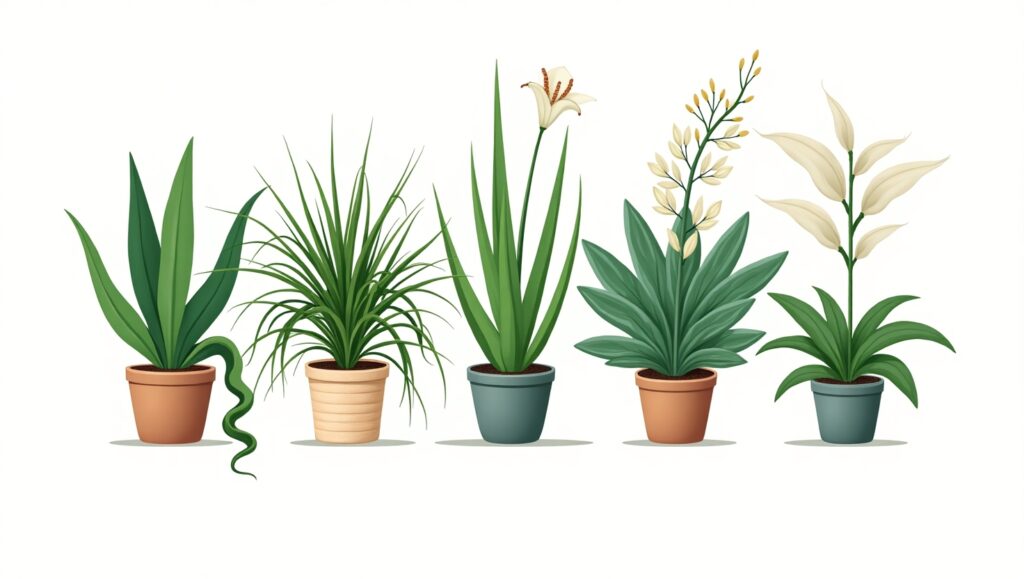
🌿 1. Snake Plant (Sansevieria trifasciata)
🫁 Oxygen Benefits
Releases oxygen even at night—perfect for bedrooms and improving sleep quality.
🧼 Air-Purifying Properties
Filters out toxins like formaldehyde, benzene, and xylene.
🏠 Ideal Placement in Home
Great for bedrooms, living rooms, and low-light corners.
🌞 Care Tips
- Tolerates low light
- Water only when soil is dry
- Hardy and beginner-friendly
🔗 NASA Clean Air Study – Snake Plant
🌴 2. Areca Palm (Dypsis lutescens)
🫁 Oxygen Benefits
High oxygen output during the day; also adds humidity to dry air.
🧼 Air-Purifying Properties
Removes carbon monoxide and formaldehyde.
🏠 Ideal Placement in Home
Bright living rooms or offices with indirect light.
🌞 Care Tips
- Needs bright, indirect light
- Water regularly but avoid soggy soil
- Wipe leaves to keep them dust-free
🌿 3. Aloe Vera (Aloe barbadensis miller)
🫁 Oxygen Benefits
Produces oxygen at night—ideal for improving bedroom air.
🧼 Air-Purifying Properties
Removes formaldehyde and benzene from the air.
🏠 Ideal Placement in Home
Sunny windowsills or tabletops near natural light.
🌞 Care Tips
- Needs bright sunlight
- Water deeply but infrequently
- Great for beginners
🔗 NCBI Study – Medicinal and Air-Purifying Uses of Aloe Vera
🌾 4. Spider Plant (Chlorophytum comosum)
🫁 Oxygen Benefits
Efficient at oxygen release, especially in enclosed spaces.
🧼 Air-Purifying Properties
Removes carbon monoxide and formaldehyde.
🏠 Ideal Placement in Home
Hanging baskets in kitchens, bathrooms, or kids’ rooms.
🌞 Care Tips
- Thrives in indirect light
- Tolerates occasional neglect
- Non-toxic to pets
🌸 5. Peace Lily (Spathiphyllum)
🫁 Oxygen Benefits
Produces high oxygen levels during photosynthesis.
🧼 Air-Purifying Properties
Eliminates benzene, formaldehyde, and ammonia.
🏠 Ideal Placement in Home
Shady corners, bathrooms, or living rooms.
🌞 Care Tips
- Prefers shade or low light
- Water when leaves droop
- Toxic to pets if ingested
🌼 6. Gerbera Daisy (Gerbera jamesonii)
🫁 Oxygen Benefits
Releases oxygen at night—ideal for sleeping areas.
🧼 Air-Purifying Properties
Targets benzene and trichloroethylene.
🏠 Ideal Placement in Home
Well-lit spots like sunny windowsills.
🌞 Care Tips
- Requires full sun
- Keep soil evenly moist
- Needs cool indoor temps
🌿 7. Tulsi (Ocimum tenuiflorum / Holy Basil)
🫁 Oxygen Benefits
Known in Ayurveda to increase oxygen levels and reduce stress.
🧼 Air-Purifying Properties
Neutralizes harmful gases and airborne microbes.
🏠 Ideal Placement in Home
Balconies, sunny windows, or near entrances.
🌞 Care Tips
- Requires 4–6 hours of sunlight
- Water daily
- Offers medicinal benefits too!
🔗 AYU Journal on Medicinal Plants – Tulsi Benefits
🌿 8. Boston Fern (Nephrolepis exaltata)
🫁 Oxygen Benefits
Adds humidity and improves oxygen circulation.
🧼 Air-Purifying Properties
Filters xylene and formaldehyde.
🏠 Ideal Placement in Home
Bathrooms or humid kitchens.
🌞 Care Tips
- Prefers indirect light
- Keep soil moist
- Likes high humidity
🌿 9. Bamboo Palm (Chamaedorea seifrizii)
🫁 Oxygen Benefits
Steady oxygen release and humidification.
🧼 Air-Purifying Properties
Removes formaldehyde and benzene.
🏠 Ideal Placement in Home
Corners of bright living rooms.
🌞 Care Tips
- Indirect sunlight preferred
- Keep soil evenly moist
- Grows slowly but steadily
🌿 10. Chinese Evergreen (Aglaonema)
🫁 Oxygen Benefits
Contributes to clean oxygen-rich air over time.
🧼 Air-Purifying Properties
Removes multiple VOCs including benzene.
🏠 Ideal Placement in Home
Low-light areas like hallways or bedrooms.
🌞 Care Tips
- Thrives in low light
- Water moderately
- Avoid overwatering
🌿 11. Money Plant (Epipremnum aureum / Golden Pothos)
🫁 Oxygen Benefits
Steady oxygen producer and mood booster.
🧼 Air-Purifying Properties
Cleans air of carbon monoxide and xylene.
🏠 Ideal Placement in Home
Hanging baskets or shelves in any room.
🌞 Care Tips
- Tolerates low to bright light
- Water when soil dries
- Grows quickly and easily
🌿 12. Rubber Plant (Ficus elastica)
🫁 Oxygen Benefits
Boosts oxygen and helps balance indoor humidity.
🧼 Air-Purifying Properties
Absorbs airborne toxins and formaldehyde.
🏠 Ideal Placement in Home
Well-lit corners in living or dining rooms.
🌞 Care Tips
- Bright, indirect light
- Keep soil moist
- Wipe large leaves for best growth
🌿 13. Weeping Fig (Ficus benjamina)
🫁 Oxygen Benefits
Filters indoor air and supports oxygenation.
🧼 Air-Purifying Properties
Removes formaldehyde, toluene, and xylene.
🏠 Ideal Placement in Home
Bright spots in living areas or hallways.
🌞 Care Tips
- Needs consistent light
- Keep soil lightly moist
- Can drop leaves with sudden changes
🌿 14. Dracaena Marginata (Dracaena reflexa)
🫁 Oxygen Benefits
Improves indoor oxygen flow over time.
🧼 Air-Purifying Properties
Filters out trichloroethylene and benzene.
🏠 Ideal Placement in Home
Offices, bedrooms, or study areas.
🌞 Care Tips
- Likes indirect light
- Allow topsoil to dry between watering
- Avoid fluoride in water
🌿 15. English Ivy (Hedera helix)
🫁 Oxygen Benefits
Releases oxygen and helps reduce mold in the air.
🧼 Air-Purifying Properties
Removes formaldehyde, mold spores, and airborne fecal particles.
🏠 Ideal Placement in Home
Bathrooms, bookshelves, or hanging baskets.
🌞 Care Tips
- Needs medium light
- Keep soil moist but not soggy
- Toxic to pets if chewed
Best Indoor Plants for Bedrooms
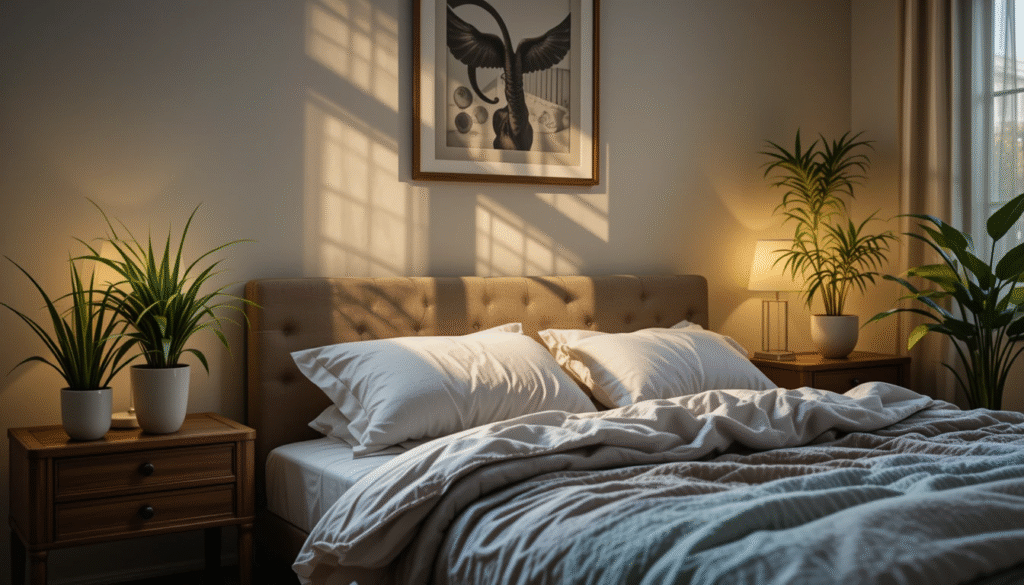
Having plants in your bedroom doesn’t simply make it appear relaxed—they are able to in reality help you sleep higher by improving air satisfaction and boosting oxygen levels even as you rest.
Nighttime Oxygen Producers
Most plants release oxygen in the course of the day. But a few unique ones can launch oxygen at night, making them best sleep-time companions.
Here are top nighttime oxygen producers:
🌿 Snake Plant (Sansevieria trifasciata)
- One of the best bedroom plants for nighttime oxygen.
- Filters out harmful toxins even while you’re asleep.
🌵 Aloe Vera (Aloe barbadensis miller)
- Releases oxygen at night and also has soothing gel for burns and cuts.
- Needs minimal care and is great for beginners.
🌸 Gerbera Daisy (Gerbera jamesonii)
- Beautiful and functional—produces oxygen at night.
- Adds a pop of color to your room.
🔗 NASA Clean Air Study – Nighttime Oxygen Plants
Air-Purifying Plants for Better Sleep
These plants help clean the air and create a calmer, healthier sleeping environment by removing harmful indoor pollutants.
🕊️ Peace Lily (Spathiphyllum)
- Filters mold spores and airborne toxins.
- Increases room humidity, which helps with dry noses and throats.
🍀 Spider Plant (Chlorophytum comosum)
- Removes carbon monoxide and other pollutants.
- Great choice for allergy-sensitive people.
🌿 English Ivy (Hedera helix)
- Known to reduce airborne mold—ideal for asthma and allergy sufferers.
- Works best in hanging baskets away from pets.
🔗 Harvard Health – Plants and Air Quality
🌑 Low-Light Tolerant Options
Bedrooms don’t always get a lot of sunlight, especially if you keep curtains closed. These plants thrive in low-light conditions and still clean your air.
🌱 ZZ Plant (Zamioculcas zamiifolia)
- Almost impossible to kill!
- Does well in dark corners and needs very little water.
🌿 Chinese Evergreen (Aglaonema)
- Grows well in shade and has attractive, colorful leaves.
- Filters common toxins like benzene.
💰 Money Plant / Golden Pothos (Epipremnum aureum)
- Tolerates low light and adds a touch of greenery to any shelf or hanging basket.
- Great air purifier and super easy to care for.
✅ Pro Tip: Even in low light, it’s good to rotate your plants toward sunlight every few weeks to help them grow evenly.
Why These Are the Best Indoor Plants for Oxygen
We’ve carefully selected these plants because they’re among the best indoor plants for oxygen. Many, like the snake plant, aloe vera, and peace lily, have been studied for their oxygen-boosting and air-purifying abilities. Whether you’re looking to freshen up your bedroom or create a healthier workspace, these indoor plants are top-rated by both scientists and home gardeners
Indoor Plants That Purify Air and Remove Toxins
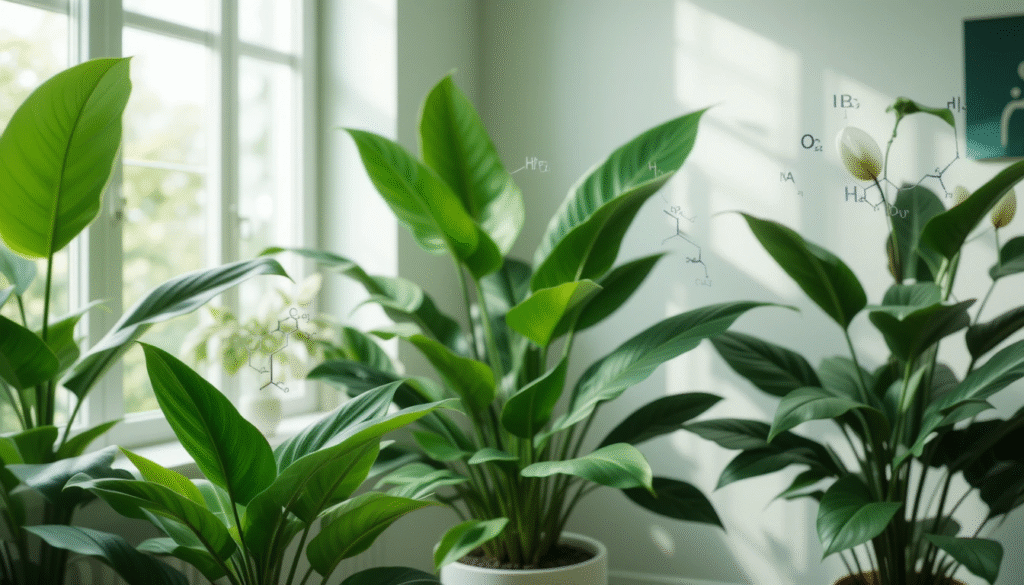
Did you understand your house air can sometimes be greater polluted than the air out of doors? This is by and large due to chemical substances known as VOCs (unstable natural compounds) launched from paints, fixtures, cleansing products, or even carpets.
The accurate information? Certain indoor flowers can help entice and put off these pollution naturally, appearing like your own home’s mini air filters.
Formaldehyde and Benzene Absorbers
Formaldehyde and benzene are two of the most common indoor air pollutants. They come from everyday things like pressed wood furniture, synthetic fabrics, air fresheners, and paints. But some plants are experts at removing them!
✅ Best Plants That Remove Formaldehyde and Benzene:
- Peace Lily (Spathiphyllum)
Known to remove formaldehyde, benzene, and even mold spores.
Great for bedrooms and bathrooms. - Spider Plant (Chlorophytum comosum)
Absorbs both benzene and formaldehyde from the air.
Perfect for desks and kitchen shelves. - Bamboo Palm (Chamaedorea seifrizii)
Adds moisture to the air while filtering out harmful toxins.
Works well in well-lit corners.
🔗 EPA on Formaldehyde in Indoor Environments
🔗 NASA Clean Air Study – Air-Purifying Plants
🧪 VOC-Filtering Plants
VOCs (Volatile Organic Compounds) are invisible chemicals found in many everyday products. Breathing in VOCs can lead to headaches, dizziness, or even long-term health issues.
These plants are like green superheroes that trap VOCs and clean your air naturally:
🌿 Top VOC-Fighting Plants:
- Rubber Plant (Ficus elastica)
Excellent at absorbing VOCs and boosting indoor humidity.
Looks great in modern living rooms. - Areca Palm (Dypsis lutescens)
Combats VOCs and adds a refreshing tropical vibe.
One of the best humidifying houseplants too. - Dracaena Marginata
Filters VOCs like xylene and trichloroethylene.
Stylish and easy to care for.
🔗 CDC on VOCs and Indoor Air Quality
💧 Natural Dehumidifiers
Too much moisture in the air? That can lead to mold, mildew, and even dust mites—which aren’t great for your health. Some plants naturally absorb humidity from the air and help you maintain a comfortable environment.
🌿 Best Plants That Reduce Humidity Indoors:
- English Ivy (Hedera helix)
Reduces mold levels and airborne fecal matter.
Perfect for bathrooms or damp areas. - Boston Fern (Nephrolepis exaltata)
Absorbs moisture and purifies air in humid environments.
Looks lush in hanging baskets or on plant stands. - Peace Lily (Spathiphyllum)
Balances humidity levels and removes air pollutants.
Works especially well in windowless rooms or basements.
✅ Bonus Tip: Place these plants in bathrooms, kitchens, or laundry areas—anywhere moisture tends to collect.
Easy-Care Oxygen Plants for Beginners
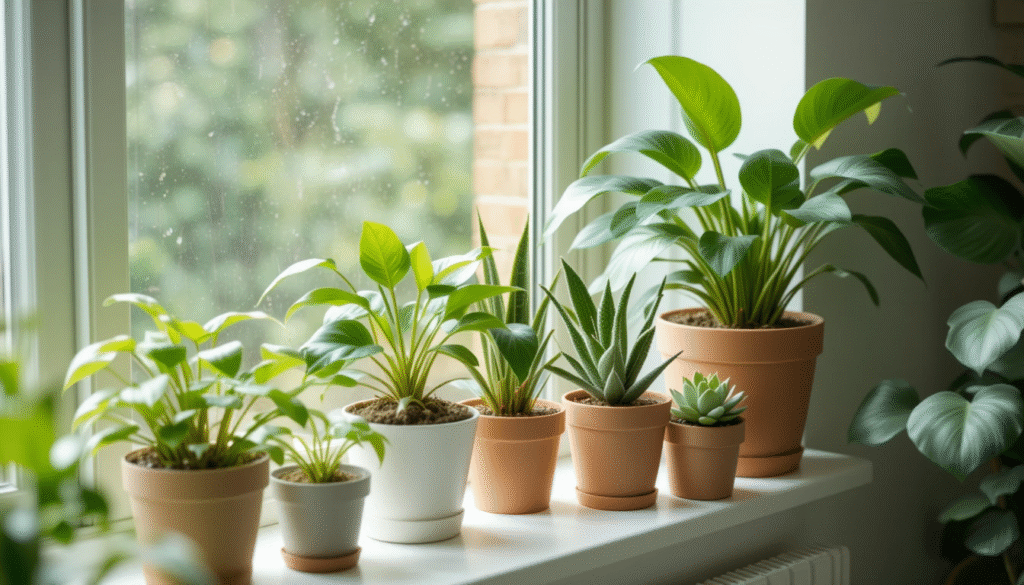
Starting your indoor plant journey? You don’t need a green thumb to enjoy the health benefits of houseplants. These beginner-friendly options are low-maintenance, safe for pets, and tough enough for busy lifestyles—all while boosting oxygen and cleaning your air.
Low-Maintenance Options
If you’re new to plant care or tend to forget watering, these are your best bets. They require minimal attention and can survive in different light conditions.
🪴 Snake Plant (Sansevieria trifasciata)
- Needs water only once every 2–3 weeks
- Thrives in low light
- Filters toxins and releases oxygen at night
🌿 ZZ Plant (Zamioculcas zamiifolia)
- Can go weeks without watering
- Tolerates low light and dry air
- Extremely durable and stylish
💰 Money Plant / Golden Pothos (Epipremnum aureum)
- Grows fast in water or soil
- Tolerates low to bright light
- Helps purify air of toxins like carbon monoxide
🐶 Pet-Friendly Choices
If you have cats or dogs, it’s important to choose non-toxic plants that won’t harm them if nibbled on. Here are some safe options according to the ASPCA (American Society for the Prevention of Cruelty to Animals).
🔗 ASPCA Toxic & Non-Toxic Plant List
🌱 Spider Plant (Chlorophytum comosum)
- Non-toxic to cats and dogs
- Removes pollutants like formaldehyde
- Great for hanging baskets or shelves
🌿 Areca Palm (Dypsis lutescens)
- Pet-safe and elegant
- High oxygen output and humidifies air
- Loves bright, indirect sunlight
🌿 Bamboo Palm (Chamaedorea seifrizii)
- Gentle on pets and great at filtering toxins
- Easy to care for and adds a tropical touch
⚠️ Tip: Even non-toxic plants can cause mild tummy trouble if eaten in large amounts—keep all plants out of heavy chewing zones!
💪 Hardy Plants for Busy Individuals
Life gets hectic. These plants are tough survivors that can bounce back from occasional neglect and still thrive.
🌵 Aloe Vera (Aloe barbadensis miller)
- Water sparingly—perfect for forgetful owners
- Needs bright light, but survives with less
- Produces oxygen at night
🌿 Chinese Evergreen (Aglaonema)
- Tolerates low light and irregular watering
- Filters common VOCs like benzene and formaldehyde
- Beautiful variegated leaves for decor appeal
🌿 Rubber Plant (Ficus elastica)
- Very forgiving and grows well in various light conditions
- Helps maintain indoor humidity and clean air
- Just needs occasional watering and dusting
🌟 Pro Tip: Start with one or two easy plants, place them where you’ll see them daily, and set a simple reminder to check on them once a week.
What Science Says About Indoor Plants and Oxygen

It’s regularly stated that indoor plants cleans the air and increases oxygen, but what does the technology sincerely say? Let’s break it down in simple phrases with insights from main studies, expert perspectives, and actual-global eventualities.
Insights from NASA’s Clean Air Study
In 1989, NASA performed a now-famous examination to find out if houseplants may want to help astronauts breathe cleaner air in space stations. What they found became groundbreaking.
Key Findings from NASA’s Study:
- Certain plants can remove harmful toxins like formaldehyde, benzene, and trichloroethylene.
- Some plants also release oxygen and add humidity, improving indoor air quality.
Top-performing plants from NASA’s research:
- Peace Lily (Spathiphyllum)
- Snake Plant (Sansevieria)
- Spider Plant (Chlorophytum comosum)
- Areca Palm (Dypsis lutescens)
Important note: NASA’s experiment was done in sealed, controlled chambers, which means the results may not exactly match what happens in a regular home.
Expert Opinions on Air Purification
While NASA’s study is often cited, modern scientists have a more nuanced view:
What Experts Say:
- Plants can purify air, but the amount is small unless you have a lot of them.
- You’d need dozens of plants per room to match the cleaning power of an air purifier.
For example:
- Michael Waring, an environmental engineer at Drexel University, concluded that “houseplants do almost nothing to clean indoor air in real homes.”
- However, they do improve humidity, reduce stress, and make people feel better mentally, which are all great health benefits.
🔗 National Geographic – Can Houseplants Really Purify the Air?
🔗 Time Magazine – The Myth About Plants Cleaning Indoor Air
🏡 Real-World Effectiveness of Indoor Plants
So, should you fill your home with plants for oxygen? Here’s a real-world breakdown:
Yes, Plants Help With:
- Releasing small amounts of oxygen
- Filtering out certain toxins (to a limited degree)
- Increasing humidity, which is great for your skin and breathing
- Reducing stress and boosting mood—a major wellness win!
But Keep in Mind:
- One plant won’t dramatically change your air quality.
- They’re not a replacement for proper ventilation or air purifiers.
- For noticeable benefits, aim for 5–10 plants in medium to large spaces.
✅ Balanced Advice: Use plants alongside other air-improving methods, like opening windows, using HEPA filters, and avoiding chemical-heavy products.
🌿 Conclusion: While the oxygen boost and air purification are modest, indoor plants offer a range of physical, mental, and emotional health benefits—making them well worth having in your space.
Tips for Maximizing Oxygen Production Indoors
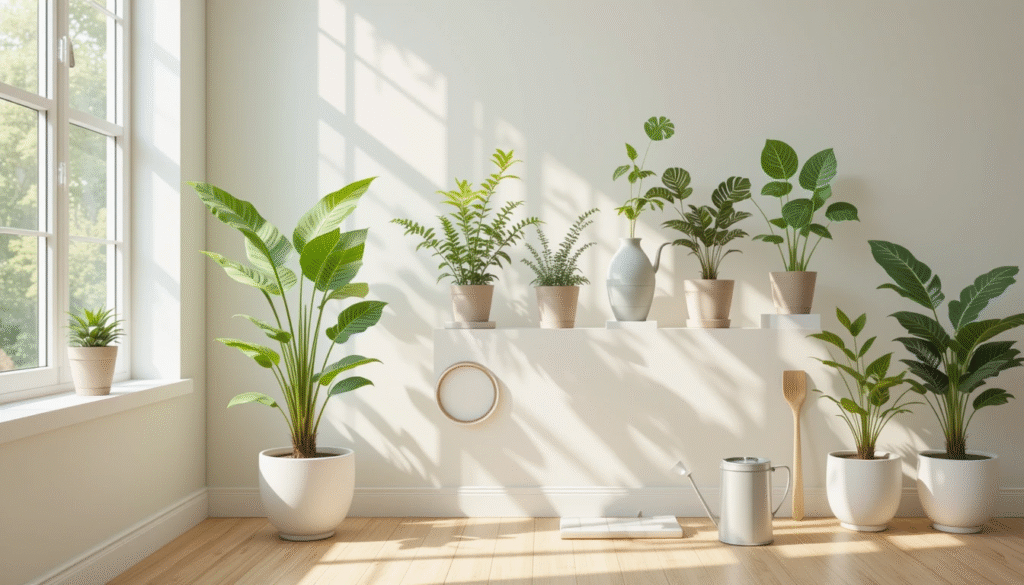
Want to get the maximum oxygen and air-purifying blessings out of your indoor flora? It’s no longer pretty much what plants you pick out—it’s additionally about where you put them, the way you take care of them, and the way you combine them.
Let’s take a look at some smooth pointers that even beginners can comply with.
Optimal Plant Placement
Where you place your plants matters for both air circulation and oxygen release.
Best practices for placement:
- Near windows: Most plants need sunlight to perform photosynthesis (that’s how they make oxygen).
- Across different rooms: Spread plants throughout your home to purify and freshen the air everywhere.
- Group in clusters: Putting 2–3 plants together in one area helps create a stronger localized air-cleaning effect.
📌 Try this: Place a snake plant or aloe vera in your bedroom (they produce oxygen at night), and a peace lily or pothos in the living room where people gather.
✅ Pro Tip: Keep plants away from direct AC or heater vents, as strong airflow can dry them out and stress the leaves.
☀️ Light and Watering Guidelines
Healthy plants = higher oxygen output. And healthy plants need the right amount of light and water.
General care tips:
- Light: Most indoor plants prefer indirect sunlight (not harsh, direct beams). A bright, east-facing window is ideal.
- Watering: Overwatering is the #1 mistake. Let the top inch of soil dry out before watering again.
- Clean leaves: Dust blocks sunlight. Gently wipe leaves with a damp cloth once a week to keep photosynthesis strong.
⏰ Watering schedule for beginners:
- Low-maintenance plants (e.g., snake plant, ZZ plant): Every 2–3 weeks
- Medium-care plants (e.g., pothos, peace lily): Once a week
- Humidity-loving plants (e.g., Boston fern, areca palm): 2–3 times a week or mist regularly
🌿 Combining Plants for Enhanced Air Quality
Want to boost the benefits even more? Mix and match your plants for a supercharged indoor ecosystem.
Smart plant combos:
- Oxygen at night + VOC remover
Example: Aloe Vera + Rubber Plant - Humidifier + toxin filter
Example: Areca Palm + English Ivy - All-around air-cleaning corner
Example: Spider Plant + Peace Lily + Golden Pothos
🧠 Why it works: Different plants specialize in filtering different chemicals and releasing oxygen under various conditions (day vs. night). When combined, they cover more ground—literally and chemically!
🔗 Better Homes & Gardens – Best Air-Purifying Plant Combinations
🌿 Final Word: A few healthy, well-placed plants are better than many poorly maintained ones. Focus on quality plant care, smart placement, and diverse combinations to create a space that not only looks beautiful but also breathes better.
Where to Buy These Oxygen-Boosting Plants in India

Ready to bring home some oxygen-boosting green friends? Whether you prefer shopping online or visiting a local nursery, there are plenty of options in India to get fresh, healthy, and air-purifying indoor plants.
🌐 Trusted Online Nurseries
Buying plants online is now easier than ever. You can choose from a wide variety, read customer reviews, and even get them delivered straight to your doorstep.
Best Online Plant Stores in India:
- Nurserylive
One of the largest online plant retailers. Offers curated air-purifying plant bundles, indoor plants, pots, and fertilizers. - Ugaoo
Known for premium indoor plants and elegant planters. Great for beginners and plant lovers alike. - Plantshop.in
Affordable, beginner-friendly plant options with easy-to-understand care instructions. - Amazon India
Offers indoor plants from verified sellers with quick delivery. Always check seller ratings and reviews.
🛒 Pro Tip: Look for sellers who mention live plant quality assurance, eco-friendly packaging, and pest-free guarantees.
🪴 Local Garden Centers and Markets
Prefer to see your plants in person before buying? Visit nearby nurseries to handpick healthy plants and ask care questions directly.
Where to Go:
- City nurseries or municipal gardens often have seasonal plants at lower prices.
- Farmers’ markets and weekend bazaars offer unique varieties and local-grown options.
- Home improvement stores like Home Centre or IKEA (select locations) also carry indoor plant selections.
📍 Common cities with excellent plant markets:
- Delhi NCR – Sunder Nursery, Shahpur Jat, Panchkuian Road
- Mumbai – Byculla Market, Vriksha Nursery
- Bangalore – Lalbagh Nursery, Indira Nagar local shops
- Hyderabad – KBR Park Road Nurseries, Shamirpet Garden Centres
✅ Bonus Tip: Talk to the seller about plant care, sunlight needs, and watering routines—especially if you’re new to plant parenting.
🧐 Tips for Selecting Healthy Plants
Whether you’re buying online or offline, here’s how to make sure you’re choosing a healthy, oxygen-producing plant:
Look for:
- Vibrant green leaves (no yellowing, browning, or curling)
- Strong stems with no mushiness or drooping
- No visible pests (check under leaves for webs, eggs, or sticky residue)
- Moist but not soggy soil (a sign of good watering practices)
Avoid:
- Plants with broken leaves, moldy soil, or a chemical smell
- Sellers with poor reviews or vague descriptions
- Over-potted or root-bound plants (too many roots coiled inside a small pot)
🌿 Pro Tip: Always repot your new plant into fresh, well-draining soil after a week of letting it adjust to its new environment.
Final Thoughts: Creating a Healthier Home with Indoor Plants
Whether you’re starting with just one plant or planning a full green makeover, bringing nature indoors is a simple and powerful way to improve your home and health. Let’s wrap up with a quick recap and a little inspiration to help you begin your plant journey.
🌿 Recap of Top Oxygen-Producing Plants
Here’s a quick list of oxygen-boosting and air-purifying champions covered in this guide:
- Snake Plant (Sansevieria trifasciata) – Emits oxygen at night, super low maintenance
- Areca Palm (Dypsis lutescens) – Great for humidity and clean air
- Spider Plant (Chlorophytum comosum) – Pet-safe, toxin-remover
- Peace Lily (Spathiphyllum) – Elegant and excellent air-purifier
- Aloe Vera (Aloe barbadensis miller) – Nighttime oxygen + medicinal use
- Rubber Plant (Ficus elastica) – Strong toxin remover
- Golden Pothos (Epipremnum aureum) – Hardy, fast-growing, air-purifier
These plants are not only beautiful but also scientifically proven to support cleaner indoor air.
🏡 Benefits of Incorporating Plants Indoors
Let’s not forget—plants offer more than just oxygen.
Here’s what you gain:
- 🌬️ Cleaner air and reduced indoor toxins
- 🧘♂️ Stress relief and mood improvement
- 😴 Better sleep with nighttime oxygen producers
- 💧 Improved humidity—great for skin and breathing
- 🎨 Natural decor that beautifies your space
Studies have even shown that being around greenery can increase productivity and creativity. (Source: Journal of Environmental Psychology)
🌟 Encouragement to Start Your Indoor Garden
Don’t worry about being perfect or owning fancy tools. The best time to start your indoor garden is right now—with what you have.
Start small:
- Pick 1–2 easy-care plants like a snake plant or pothos
- Place them where you’ll see them often (and remember to water!)
- Learn as you grow—literally
🌱 Remember: Every healthy plant is a step toward a cleaner, calmer, and more joyful home. You don’t need to be a gardening expert—you just need to care.
🌿 Final Thought: Your home doesn’t need to be a jungle to feel alive. Just a few green companions can make a big difference in how you breathe, feel, and live.
Still feel like getting to know more?
Read our another blog about indoor plants to boost oxygen levels.
Frequently Asked Questions
Are indoor plants effective at purifying air?
Indoor plants can help remove some harmful toxins like formaldehyde and benzene, as shown by NASA’s Clean Air Study. However, in typical homes, plants alone are not enough to fully purify the air—you’d need many plants per room for significant effects. Still, plants improve air quality modestly and add benefits like increased humidity and stress reduction.
How many plants do I need to improve air quality?
Experts suggest having 5 to 10 medium-sized plants per 100 square feet to notice meaningful improvements in air quality. For smaller rooms, even 2–3 plants can contribute to fresher air and a healthier environment, especially when combined with good ventilation.
Can indoor plants help with allergies?
Certain plants can help reduce airborne dust and mold spores, potentially easing allergy symptoms. However, some indoor plants may also produce pollen or attract mold if overwatered. Choose low-pollen, easy-care plants like the Spider Plant or Bamboo Palm to minimize allergy risks.
What are the best plants for small spaces?
For small spaces, compact plants like Pothos (Golden Pothos), ZZ Plant, Snake Plant, and Succulents like Aloe Vera are ideal. They need little room, are easy to care for, and still provide oxygen and air-purifying benefits.
Which indoor plant produces the most oxygen?
The Snake Plant (Sansevieria trifasciata) is often considered the best oxygen producer among indoor plants because it releases oxygen both day and night. Aloe Vera and Areca Palm also produce good amounts of oxygen, especially during the night. Keep in mind that healthy plants with ample light generally produce more oxygen.