
Introduction: Why Small Plants Matter in Indian Apartments
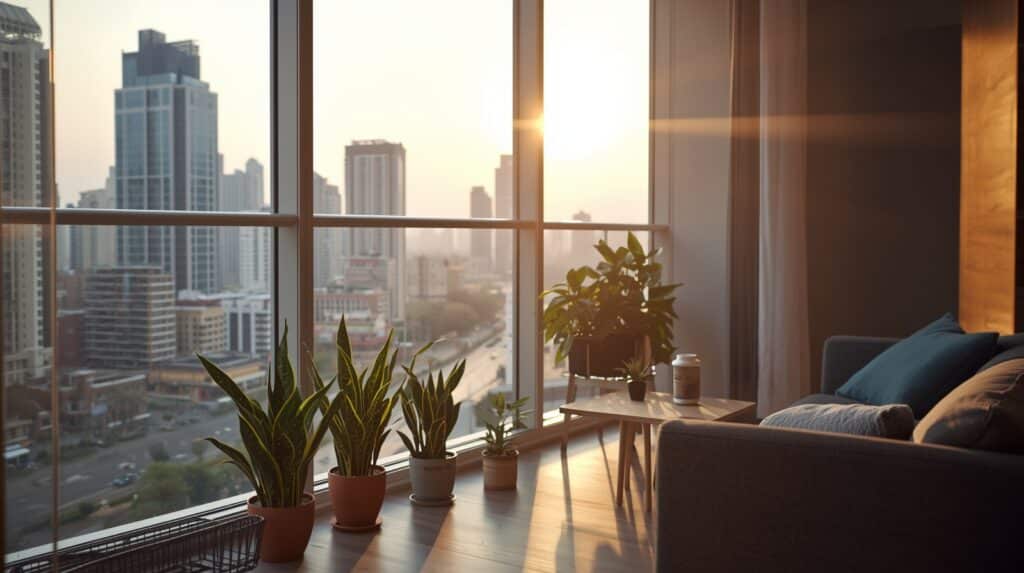
Urban constraints: balconies, light, soil, space
In dense Indian metros — Delhi, Mumbai, Bangalore, Pune — many homes are flats or apartments with limited outdoor space. A balcony might be only 3–6 feet wide, often partially shaded, exposed to wind, dust, and heat. Bulky plants or large garden beds simply aren’t feasible. Small plants that thrive in containers, adapt to varying light, and stay compact are the workable solution.
Benefits: air quality, aesthetics, mental health
Bringing greenery into your apartment has multiple benefits: indoor air purification, reduction of pollutants (dust, VOCs), visual appeal, cooling by transpiration, and mental well-being. Even a few potted plants on a balcony or window sill can uplift mood, reduce stress, and connect you with nature daily.
What qualifies as a “small plant” in Indian apartments
In this context, “small plants” are those that:
- Can be grown in pots/containers under ~ 30–60 cm height (or manageable size)
- Have compact or slow growth habits
- Tolerate indoor/outdoor microclimates (shade, wind, temperature swings)
- Don’t require frequent heavy maintenance
When you choose plants that satisfy these criteria, even a small balcony can feel lush and green.
How to Choose the Right Plants for Your Apartment Balcony
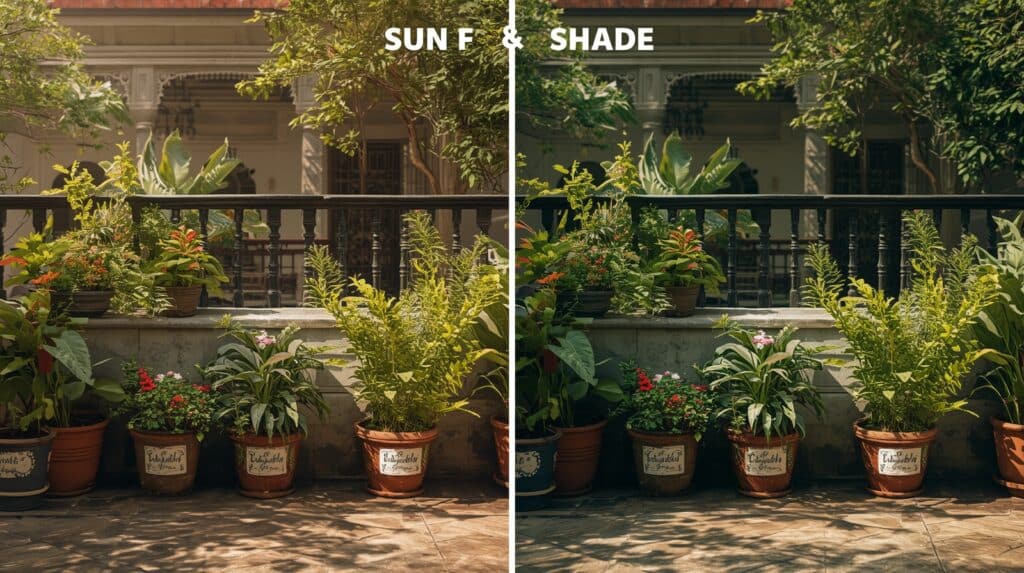
Light conditions: full sun, partial shade, low light (Indian climate context)
- Full sun balconies (4–8+ hrs of direct sunlight): choose sun-loving succulents, cacti, bougainvillea, kalanchoe.
- Partial shade / filtered light: ferns, pothos, snake plant, peace lily perform well.
- Low light / north-facing or enclosed balconies: use shade-tolerant species like peace lily, dracaena, english ivy.
In India, sunlight is intense during summer — adapt choice accordingly.
Size constraints & growth habit (compact, dwarf, trailing)
Prefer dwarf cultivars, slow growers, or trailing types. For example, a trailing pothos or spider plant doesn’t take vertical floor space. Avoid plants that grow into large trees or overly leggy shrubs.
Soil, pot, drainage, and microclimate
Use good-quality potting mix (not garden soil): a blend of coco peat, compost, perlite, coarse sand. Ensure every pot has drainage holes. In Indian conditions, heavy downpours (monsoon) or heavy watering can cause waterlogging — elevate pots or use trays to drain excess.
GardenDesign’s guide suggests that as long as you have appropriate sun or shade and containers with drainage, many plant types (shrubs, annuals, herbs) can be grown in balcony kitchens. GardenDesign.com
Watering & humidity adaptation in Indian cities
City air can be dry (summer) or humid (monsoon). Plants must be tolerant. Water when topsoil (1–2 cm) is dry. Use efficient irrigation: drip trays, self-watering pots, mulching to retain moisture. From urban gardening communities:
“For watering, I would suggest getting drip trays for every container … The trays also help trap some moisture …” Reddit
Pest resilience & low maintenance
Choose plants that resist common pests in urban India (aphids, mealybugs, fungal diseases). Avoid high-maintenance, delicate species unless you’re ready to invest time.
Top 5 Small Plants Ideal for Indian Apartments & Flats
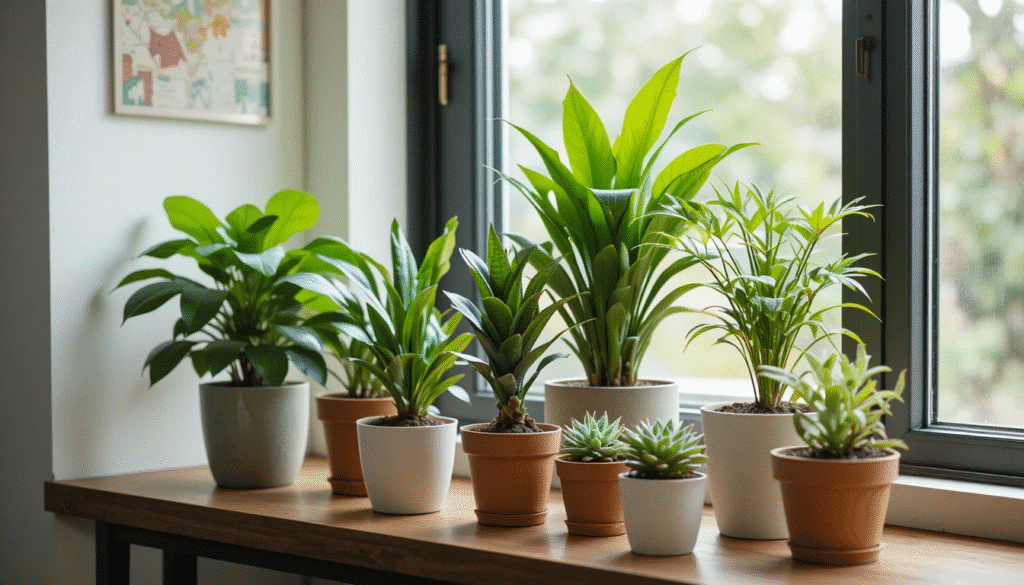
Below are five proven, reliable small plants to grow in apartments/balconies in India, along with care tips, advantages, and local context.
Money Plant (Epipremnum / Pothos varieties)
- Why it fits: Very forgiving, thrives in bright indirect light, tolerates low light.
- Ideal conditions: Indirect to dappled sunlight, moderate watering.
- Care tips: Water when the top inch is dry; avoid soggy soil. Use a mixed potting medium (peat + perlite).
- Indian/local varieties: Golden pothos (Epipremnum aureum), Neon pothos, variegated types.
- Pros/cons:
+ Rapid growth, easy propagation
+ Good for vertical or hanging setups
– Has to be trimmed occasionally to control size
Money plant is a perennial favorite in Indian homes, often grown in water jars or pots near windows, because of its resilience and aesthetic. urvann.com
Snake Plant (Sansevieria / Dracaena trifasciata)
- Why it fits: Extremely hardy, minimal water needs, tolerates low light to bright light.
- Ideal conditions: Partial shade to bright light; low to moderate watering.
- Care tips: Let soil dry out between watering; avoid waterlogging. Use well-draining mix.
- Variations: Dwarf snake plant cultivars (e.g. ‘Golden Hahnii’), compact forms.
- Pros/cons:
+ Virtually indestructible
+ Good vertical form — doesn’t spread far
– Slow-growing, so visual impact takes time
Snake plant is widely recommended in balcony plant lists for small spaces.
ZZ Plant (Zamioculcas zamiifolia)
- Why it fits: Thrives in low to moderate light, very drought-tolerant, elegant foliage.
- Ideal conditions: Indirect light, occasional watering.
- Care tips: Water only when soil is mostly dry. Avoid overwatering, as roots can rot.
- Pros/cons:
+ Superb tolerance for neglect
+ Elegant foliage works for indoor/outdoor
– Takes time to grow bigger
ZZ plant is gaining popularity among indoor apartment gardeners for its robustness.
Spider Plant (Chlorophytum comosum)
- Why it fits: Compact, produces offshoots (“spiderettes”), tolerates varied light.
- Ideal conditions: Bright indirect light, consistent but moderate watering.
- Care tips: Water when topsoil is dry; trim dead leaves; pot in well-draining soil.
- Varieties: ‘Vittatum’, ‘Bonnie’, variegated forms.
- Pros/cons:
+ Good hanging/rail option
+ Air-purifying qualities
– Sensitive to overwatering
Succulents / Mini Cacti / Haworthia / Echeveria
- Why it fits: Low water, compact form, strong in full sun or bright light.
- Ideal conditions: Bright sun to partial sun; minimal water.
- Care tips: Use cactus mix (sand + perlite); water deeply but infrequently; avoid overwatering.
- Examples: Haworthia, Echeveria, tiny cacti, sedum.
- Pros/cons:
+ Very low maintenance
+ Great for sunny balconies
– Sensitive to overwatering or very cold damp monsoon
In Indian balcony plant recommendations, succulents and sun-loving tough plants often top lists acceptable under harsh sun.
Bonus Plants & Alternatives for Balcony Gardening in India
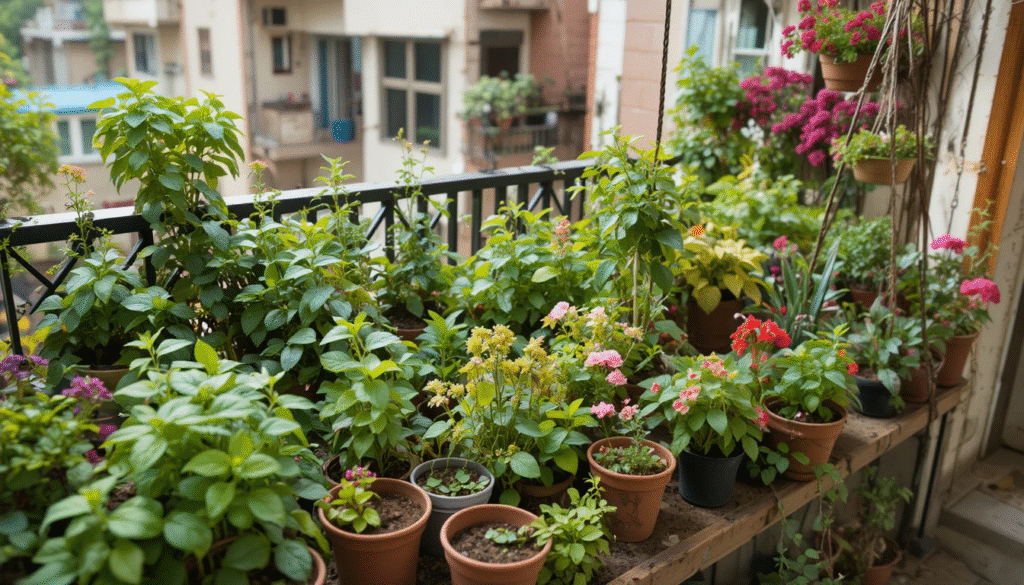
Bonus Plants & Alternatives for Balcony Gardening in India
To add variety, color, aroma, or edibles, these bonus options complement the five above.
Herbs & small edibles (mint, basil, coriander)
Culinary herbs adapt well to container life. Mint and basil thrive with 4–6 hours of sun; coriander tolerates partial shade. These can double as kitchen utility plants.
Flowering small plants (Ixora nana, dwarf hibiscus, kalanchoe)
Compact flowering plants give visual appeal. Ixora nana, mini hibiscus, and kalanchoe suit container growth and partial sun.
Trailing & hanging options (string of pearls, tradescantia, creeping fig)
Use rail planters or hangers to utilize vertical space. Trailing plants like tradescantia, creeping fig help fill gaps.
Bonsai or dwarf foliage plants
If you enjoy structured form and slow growth, bonsai or small foliage plants like dwarf ficus or schefflera may work (if light and care permit).
Care & Maintenance Tips for Balcony Plants in Indian Conditions
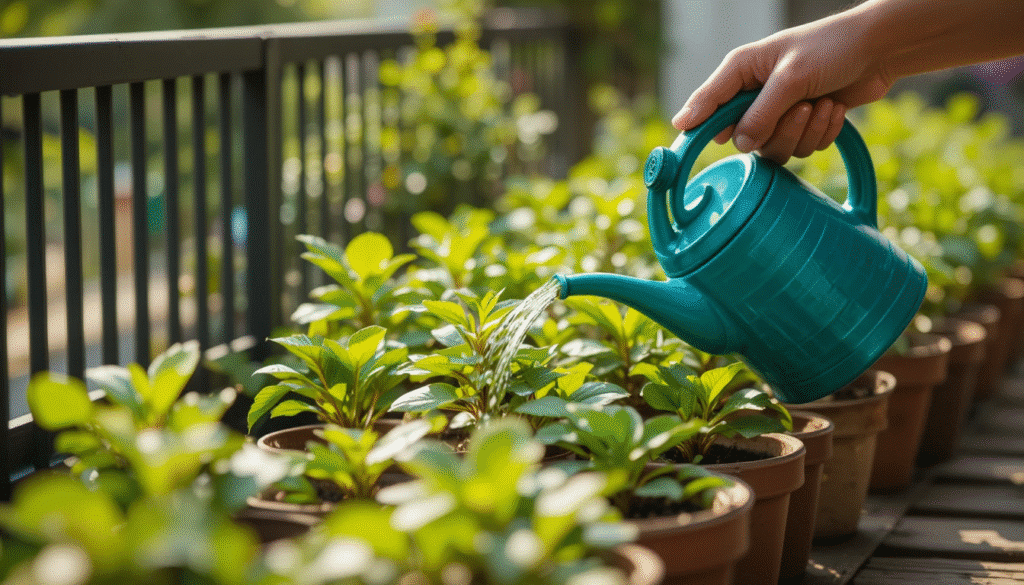
Seasonal care (monsoon, summer heat, winter)
- Summer (Mar to June): Provide shade nets or misting to reduce heat stress. Increase watering frequency but avoid waterlogging.
- Monsoon (July to Sept): Protect pots from heavy rains; ensure drainage; watch for fungal diseases.
- Winter (Dec to Feb): Bring sensitive plants closer to walls or indoor; reduce watering; protect from cold drafts.
Potting mix & fertilization (Indian materials)
Use a mix: coco peat, vermicompost, perlite or brick chips. Avoid heavy clay. Fertilize monthly (NPK 10:10:10 or compost tea).
GardenDesign’s suggestion: many container plants (annuals, shrubs, herbs) can thrive if given proper sun/shade and drainage. GardenDesign.com
Watering schedules & avoiding waterlogging
Water deeply but infrequently. Let top soil dry between watering. Use saucers/trays to catch overflow. In high heat, check soil daily. This aligns with best practices suggested in container gardening guides. GardenDesign.com
Pest & disease control (common pests in urban India)
Watch for aphids, mealybugs, scale, fungal infections. Use neem oil spray, gentle soap spray, or remove affected leaves. Ensure good airflow.
Pruning, repotting & propagation
Trim leggy shoots, dead leaves, and spent flowers. Repot when roots crowd (~every 1–2 years). Many of these plants propagate via cuttings or division (pothos, spider plant, snake plant).
Design & Layout Ideas for Apartment Balcony Gardens
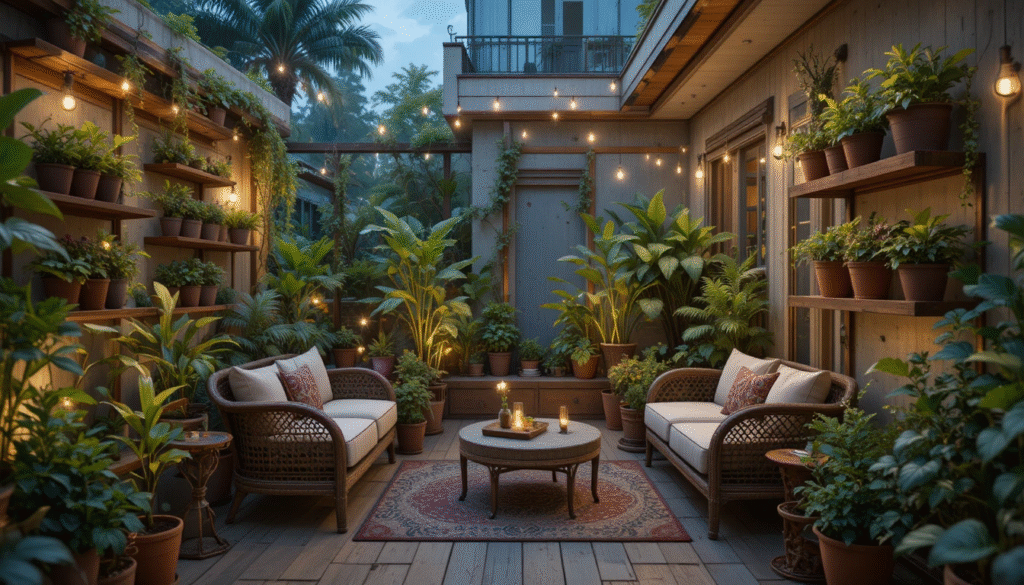
Vertical & tiered planting (wall planters, shelves, rail planters)
Use vertical space with wall-mounted planters, ladder-style plant stands, hanging baskets. This adds depth without occupying floor area.
Containers, pots & material choice (plastic, ceramic, fiber, self-watering)
Lightweight containers (plastic, fiberglass) are easier to manage. Use self-watering pots if you travel often. Heavier pots (ceramic) work if the balcony is stable.
Grouping, color schemes & foliage contrast
Combine plants with contrasting leaf shapes, variegation, and colors. For example, pair broad-leaf money plant with spiky snake plant for contrast.
Micro-climate hacks: windbreaks, shade nets, reflective surfaces
Use bamboo screens, shade cloth, or transparent sheets to buffer wind and harsh sun. Reflective surfaces or white walls help bounce indirect light.
Seasonal rotation & mobility
Keep plants on wheeled trolleys or trays so you can reorganize with seasons (move to shade, bring inside). Rotate plants periodically to avoid one side growing lopsided.
Frequently Asked Questions (FAQ)
Which small plants survive low light balconies in India?
Snake plant, ZZ plant, pothos, peace lily, dracaena varieties are good low-light choices.
How often should I water balcony plants during monsoon / summer?
Summer: 3–4 times/week or daily in intense heat (depending on pot size). Monsoon: water only when soil is drying and after rain; many plants may not need watering.
Can I grow balcony plants during extreme heat in Indian cities?
Yes, with shade nets, misting, selecting heat-tolerant species (succulents, aloe, bougainvillea) and watering smartly.
How to revive a dying balcony plant?
Check for root rot, trim dead parts, repot in fresh soil, reduce stress, move to safe microclimate, add balanced fertilizer.
Best soil mix accessible in Indian markets?
Use a mix: coco peat / coir (40%), compost or vermicompost (30%), perlite / brick chips / sand (30%). Many nurseries offer ready potting mix with good drain and aeration.
Conclusion: Bringing Green to Your Apartment
Here’s a quick recap:
- The 5 best small plants for apartments and flats in India are money plant, snake plant, ZZ plant, spider plant, and succulents.
- Always consider light, size, soil, watering, and pest resilience before selecting.
- Use vertical design, proper containers, seasonal care, and smart layout to maximize impact.
Green your balcony, share your plant photos, and be sure to explore our other articles (monsoon care, indoor plants, DIY pots) for more ideas.