
Introduction
Gardening in India is unique because our climate is unlike any other in the world. We don’t follow the typical four-season pattern. Instead, India experiences three major seasons—Winter (Rabi), Summer, and Monsoon (Kharif)—each with its own rhythm, challenges, and plant preferences. This is why having a Seasonal Planting Calendar for India becomes an essential tool for every home gardener.
What Is a Planting Calendar?
A planting calendar is a detailed month-by-month schedule that tells you what to plant, when to plant, and how to care for it. It helps you match your sowing and planting timing with your local climate conditions so your plants grow healthier with minimum effort.
Why It Matters for the Indian Climate
India’s climatic zones vary—from the chilly plains of North India to the humid coasts of the South and the dry interiors of Central India. A one-size-fits-all gardening strategy simply does not work.
A planting calendar ensures:
- Vegetables sprout well in the right temperature
- Flowers bloom at the right season
- Herbs grow continuously
- Plants avoid pests that peak in off-seasons
Why Seasonal Planting Is a Game-Changer for Urban Gardening
Whether you’re gardening on a balcony, terrace, apartment window, or courtyard, choosing the right plant for the right season can triple your success.
- Balcony gardeners can avoid failures due to temperature mismatch
- Terrace gardeners can maximize vegetable yields
- Home gardeners can enjoy year-round flowers and herbs
What This Guide Includes
This complete guide covers:
- Month-wise planting calendar for India
- Seasonal care instructions
- Best varieties for each season
- Soil, watering, and fertilizer schedules
- Common mistakes & troubleshooting
- Price guide and buying tips
→ Top 20 Low-Maintenance Plants for Busy People
→ Landscaping Services
Key Benefits of Following an India Planting Calendar
1. Higher Success Rates
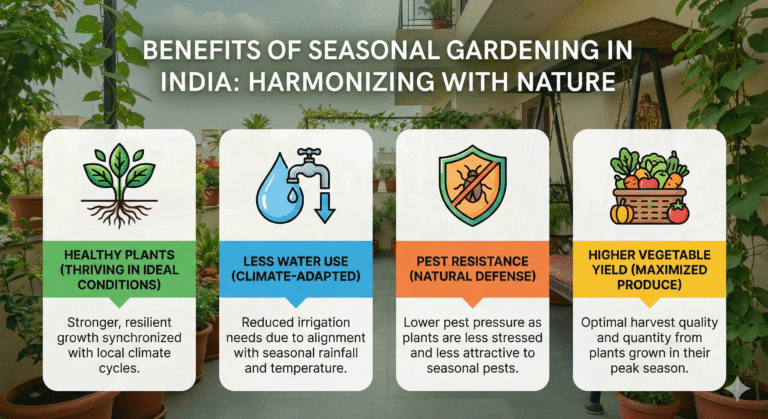
Plants thrive when sown in the right temperature and humidity. Following a planting calendar boosts germination and growth automatically.
2. Better Pest Resistance
Many pests and diseases peak during certain months. Planting at the right time helps plants build natural resistance instead of forcing you to use chemicals.
3. Maximized Flowering & Vegetable Yield
Season-appropriate planting increases:
- Fruit set
- Flowering duration
- Vegetable production
4. Saves Time, Effort & Water
Season-friendly plants require less:
- Watering
- Fertilizer
- Shade protection
5. Perfect for Balcony & Terrace Gardening
Urban gardeners often struggle with temperature extremes. A planting calendar solves this by guiding you season-wise.
6. Helps You Plan a Year-Round Supply
Whether it’s herbs, veggies, or flowers—you can grow something fresh every month in India.
Seasonal Planting Calendar for India (Month-Wise Guide)
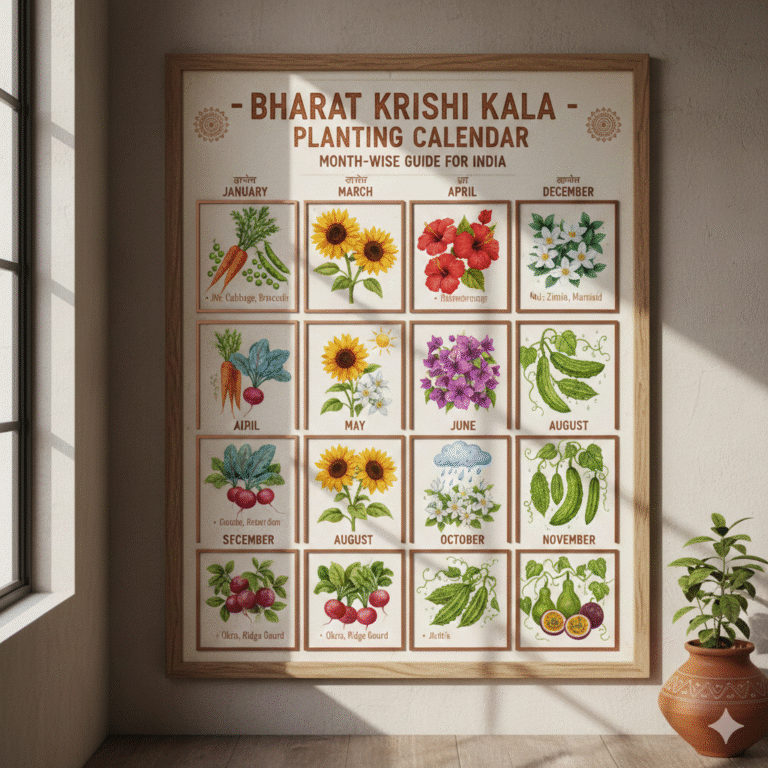
This is the most detailed India Planting Calendar to help Indian gardeners grow throughout the year.
Winter Season (October–February)
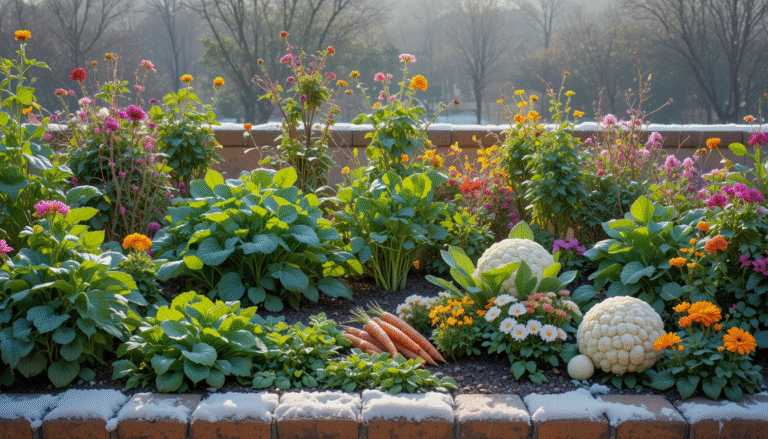
Winter is the best growing season for most vegetables and flowers in India. Cool temperatures and low humidity create ideal conditions.
Best Vegetables for Winter
- Carrot (Desi Red)
- Cauliflower
- Spinach
- Peas
- Beetroot
- Fenugreek (Methi)
Best Winter Flowers
- Petunia
- Marigold
- Calendula
- Verbena
- Dianthus
Balcony-Friendly Picks
- Lettuce (grows fast, shallow pots)
- Spinach
- Chrysanthemum
- Marigold
Sowing Temperature Range
- Ideal: 15–25°C
- Avoid frost-prone rooftops in extreme North India
Watering Frequency
- Water every 2–3 days
- Avoid overwatering because cool temperatures slow evaporation
Summer Season (March–June)
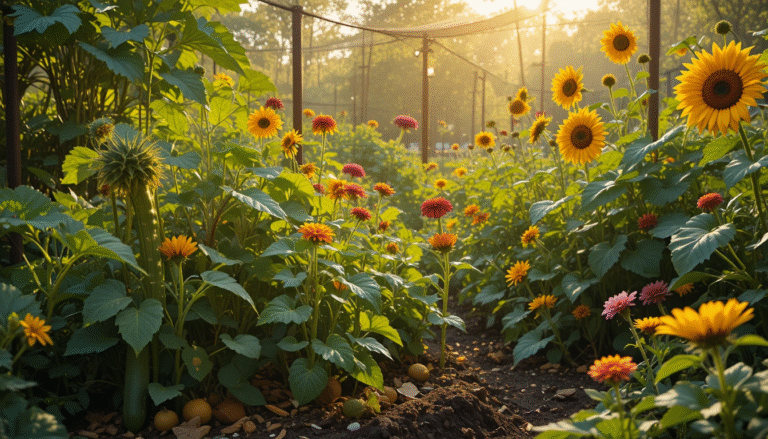
Summer in India is harsh. Choose heat-loving and drought-tolerant plants.
Heat-Tolerant Vegetables
- Okra (Ladyfinger)
- Bottle Gourd
- Cucumber
- Bitter Gourd
- Pumpkin
Summer Flowers
- Zinnia
- Cosmos
- Sunflower
- Portulaca (Moss Rose)
Shade-Loving Balcony Recommendations
- Money Plant
- Ferns
- Snake Plant
- Areca Palm
- Coleus
Soil + Mulch Tips for Heat Protection
- Add 2–3 cm of mulch to retain moisture
- Add cocopeat to improve water retention
- Use clay pots for natural cooling
Monsoon Season (July–September)
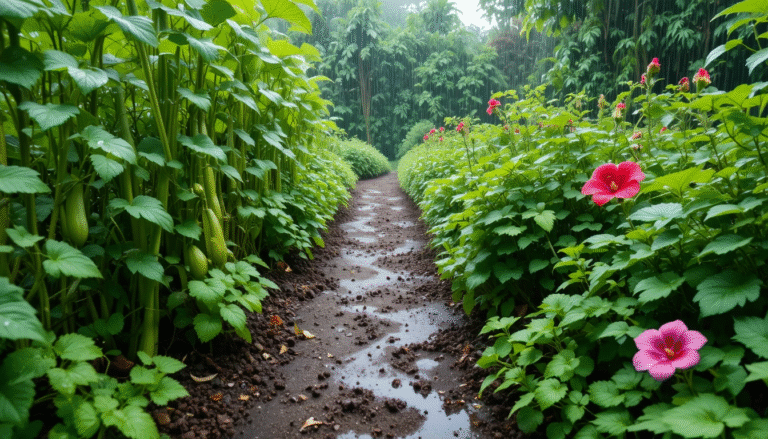
The rainy season supports fast-growing, humidity-loving plants.
Fast-Growth Vegetables
- Beans
- Coriander
- Pumpkin
- Spinach
- Cucumber
Rain-Friendly Flowers
- Balsam
- Hibiscus
- Lotus
- Rain Lily
Fungal Protection Tips
- Use neem oil spray (once a week)
- Provide airflow
- Avoid wetting leaves
Drainage Care
- Use pots with at least 3–4 drainage holes
- Add gravel/LECA at base
- Tilt pots slightly to avoid waterlogging
→ Balcony Vegetable Garden Guide
→ Pots & Planters Page
Best Seasonal Plants & Varieties Grown in India
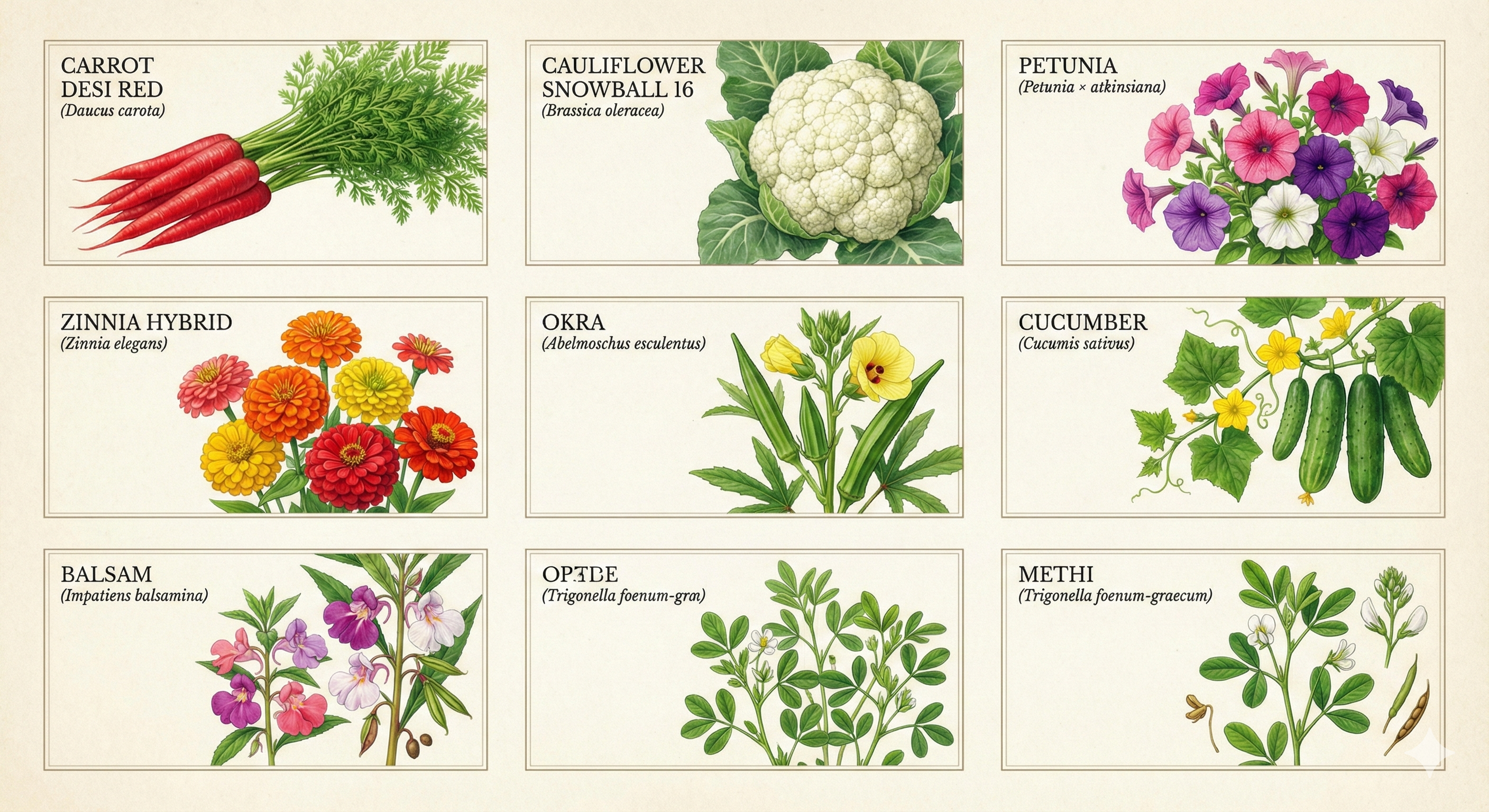
Winter Varieties
1. Carrot (Desi Red)
- Sweet, crunchy, excellent for kitchen gardens
- Grows best in full sun
- Takes 70–90 days to harvest
2. Cauliflower (Snowball 16)
- Compact heads
- Thrives in North Indian winters
- Needs loose, fertile soil
3. Petunia
- Ideal for balconies with sunlight
- Brilliant color range
- Long flowering season
Summer Varieties
1. Zinnia Hybrid
- Heat-tolerant
- Ideal for terraces
- Attracts butterflies
2. Okra (Pusa Sawani)
- Beginner-friendly
- High-yield variety
- Can tolerate high temperatures
3. Cucumber (Japanese Long Green)
- Fast-growing
- Perfect for trellis gardening
- Needs regular watering
Monsoon Varieties
1. Bottle Gourd (Calcutta Long)
- High-yield climber
- Suitable for terrace trellis
- Moisture-loving
2. Balsam Flower
- Extremely easy to grow
- Loves rain
- Low maintenance
3. Methi
- Grows in 20–30 days
- Perfect herb for balconies
- Low water needs
Growing & Care Guide for Seasonal Plants in India
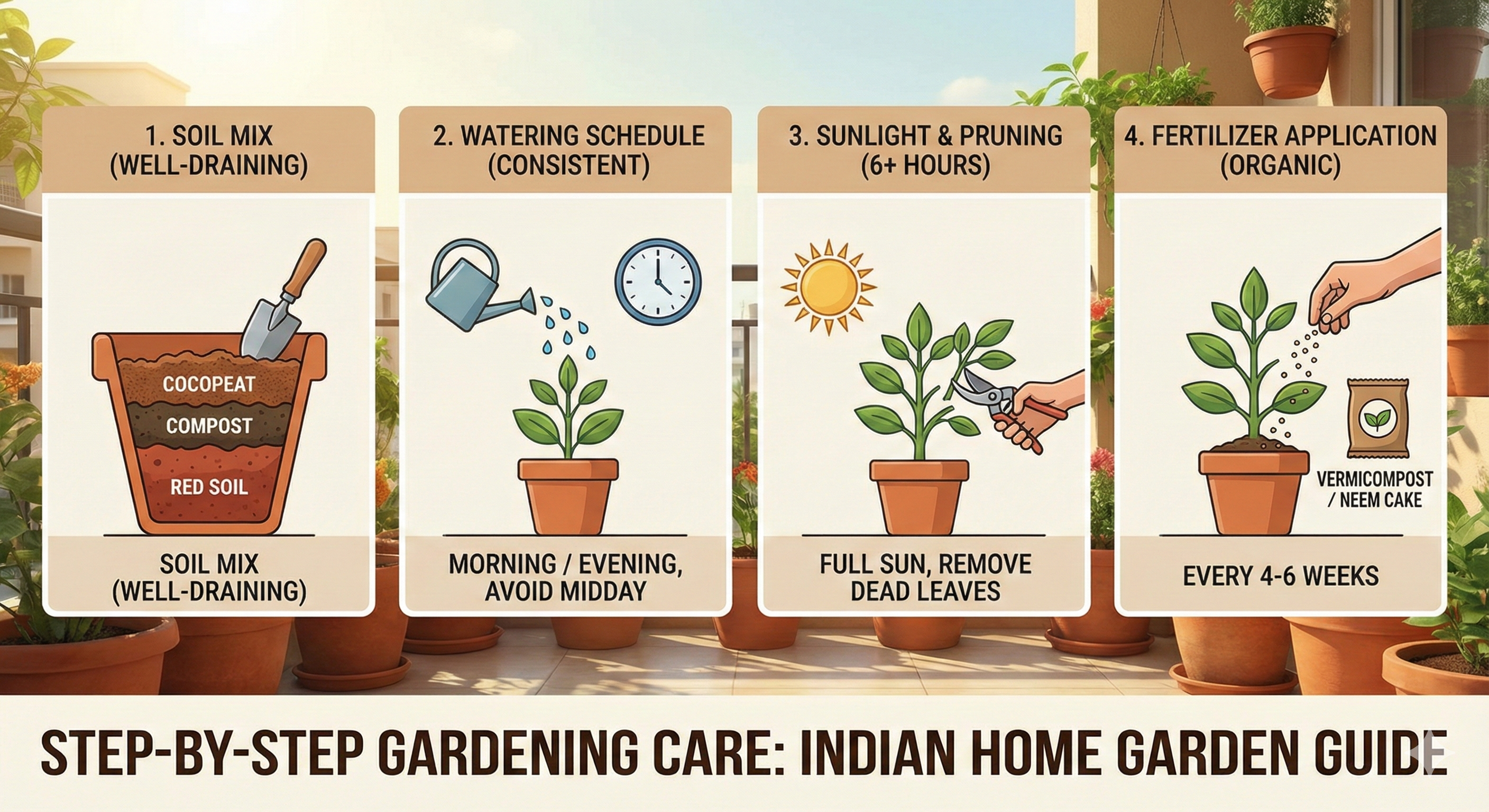
Light Requirements
- Summer: Morning sun, shade after 12 pm
- Winter: Full sun for vegetables
- Monsoon: Filtered sun due to high humidity
Watering Schedule
- Winter: 2–3 times/week
- Summer: Daily or alternate days
- Monsoon: Minimal—only when topsoil is dry
Avoid evening watering in monsoon—it promotes fungal rot.
Ideal Soil Mix for Indian Climate
- 40% garden soil
- 30% compost (organic)
- 30% cocopeat + river sand
Temperature & Humidity Guide
- Winter: 10–25°C
- Summer: 25–40°C
- Monsoon: High humidity—ensure ventilation
Fertilizer Routine
- Flowers: NPK 19-19-19 every 15 days
- Vegetables: Organic compost every 20–25 days
- Herbs: Liquid seaweed spray
Repotting Guidelines
- Avoid repotting during peak afternoon heat
- Best periods:
- Early winter
- Post-monsoon
- Before summer begins
Pruning Tips
- Removes dead/weak branches
- Improves airflow
- Encourages fresh seasonal growth
Common Mistakes to Avoid
- Planting off-season
- Using clay pots in winter (soil gets too cold)
- Over-fertilizing cool-season plants
- Watering at night during monsoon
→ How Often Should You Water Indoor Plants?
Common Problems & Solutions
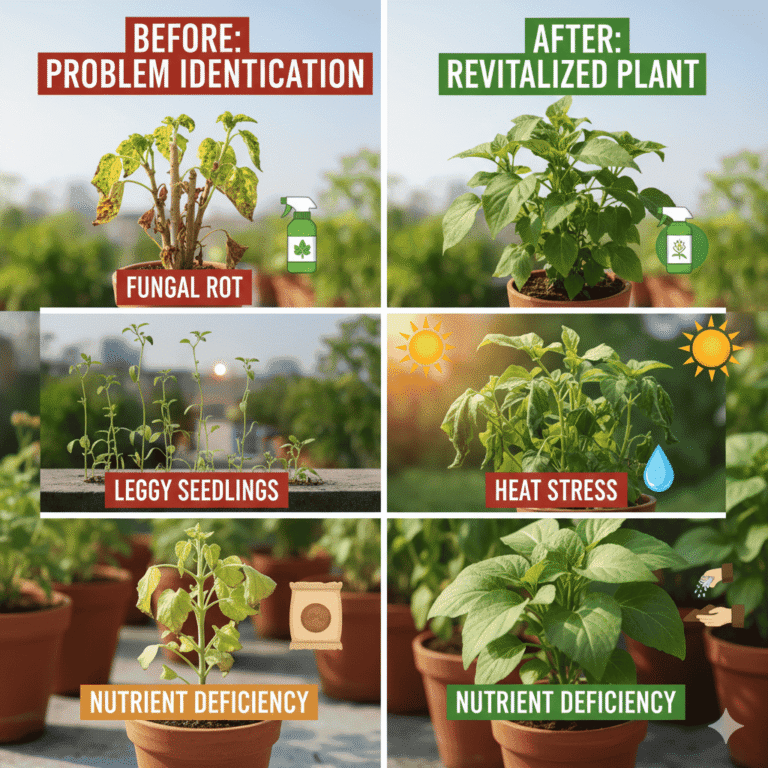
1. Fungal Rot in Monsoon
Cause: Waterlogging
Fix:
- Neem oil spray
- Improve drainage
- Add fungicide if needed
2. Leggy Seedlings in Winter
Cause: Insufficient sunlight
Fix:
- Move to full sun
- Reduce nitrogen
3. Heat Stress in Summer
Cause: Direct afternoon sunlight
Fix:
- Install shade net
- Add mulch
4. Slow Growth
Cause: Lack of nutrients
Fix: Add compost or liquid fertilizer
Price of Seasonal Plants in India (2025 Guide)
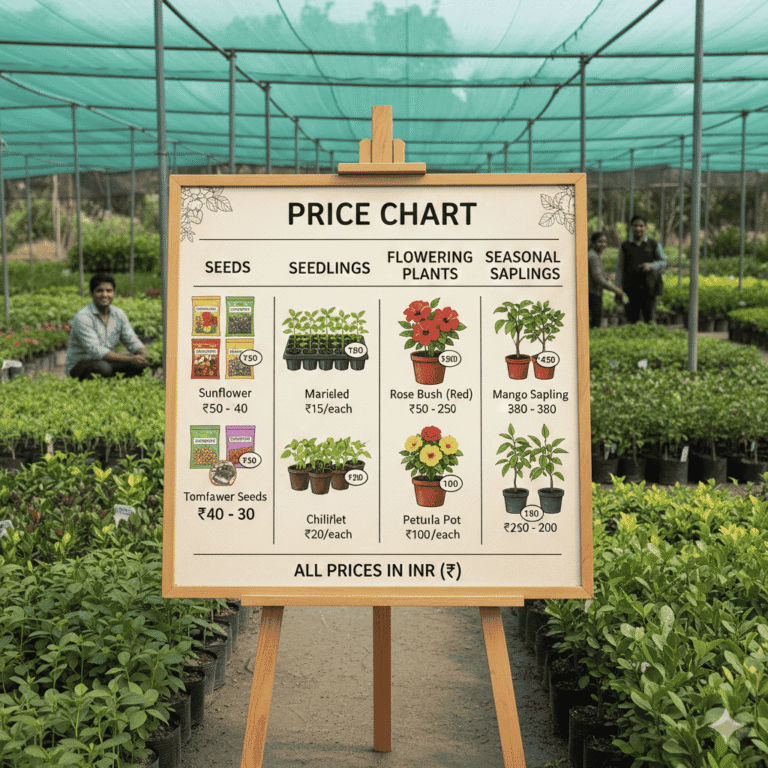
Vegetable Seeds
₹20–₹150 per packet
Seedlings
₹10–₹30 per plant
Flowering Plants
₹30–₹120
Seasonal Saplings
₹80–₹250
Price Factors
- Region
- Season (peak/off-season)
- Nursery vs online
- Rare hybrids
- Size of plant
Buying Guide for Indian Gardeners

Checklist Before Buying
- Check for healthy, pest-free leaves
- Avoid overly soggy nursery bags
- Choose the right season
- Verify root structure
- Look for fresh growth
Ideal Plant Sizes
- Seedlings: Best for herbs & leafy veggies
- Saplings: Good for flowers
- Mature plants: Great for gifting
Pot Recommendations
- Summer: Use clay pots (keep roots cool)
- Winter: Use plastic pots (retain warmth)
- Herbs: 6-inch pots are perfect
- Climbers: Use grow bags or 12-inch pots
Online vs Offline Buying
Online Buying
Pros:
- Wider variety
- Home delivery
- Easy comparison
Cons:
- Shipping stress on plants
Offline Buying
Pros:
- Inspect plants physically
- Cheaper
- Local variety
Cons:
- Limited range
Green Gifting Tips
- Best seasonal plants for gifting:
- Poinsettia (winter)
- Money Plant
- Lucky Bamboo
- Mini herbs
- Add jute wrap or custom pot for aesthetic gifting
Propagation Methods for Seasonal Plants
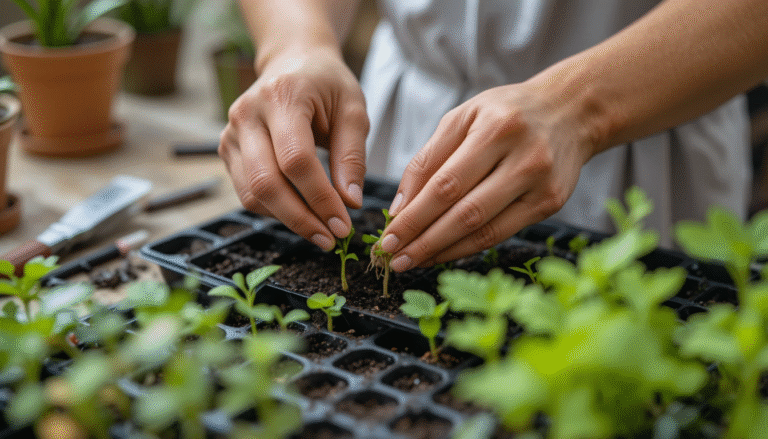
1. Seed Propagation (Step-by-Step)
- Prepare loose soil
- Sow seeds 0.5–1 cm deep
- Keep in shade until germination
- Water lightly
- Move to sunlight after sprouting
2. Stem Cutting Propagation
Perfect for basil, mint, hibiscus, coleus, balsam.
- Cut a healthy node
- Dip in rooting hormone
- Plant in moist soil
Keep under partial shade
FAQs
Which month is best for planting in India?
Depends on the crop. Winter vegetables grow best from October–January, summer crops from March–June, and monsoon plants from July–September.
What grows fastest in Indian winter?
Spinach, methi, lettuce, peas.
What can I plant in extreme summers?
Okra, bottle gourd, cucumber, zinnia, sunflower.
What vegetables grow all year in India?
oriander, spinach, mint, basil, aloe vera, money plant (indoors).
How do I protect plants in monsoon?
Improve drainage, avoid waterlogging, use neem oil.
What to plant in a balcony garden?
Herbs, leafy greens, petunia, money plant, ferns, microgreens.
Does North India and South India have different planting seasons?
Yes, due to temperature differences, but overall seasonal cycles remain similar.
How often should I water seasonal plants?
Watering depends on season. Summer needs daily watering, monsoon very little, winter moderate.
Best plants for first-time Indian gardeners?
Methi, spinach, marigold, money plant, basil, okra.
Conclusion
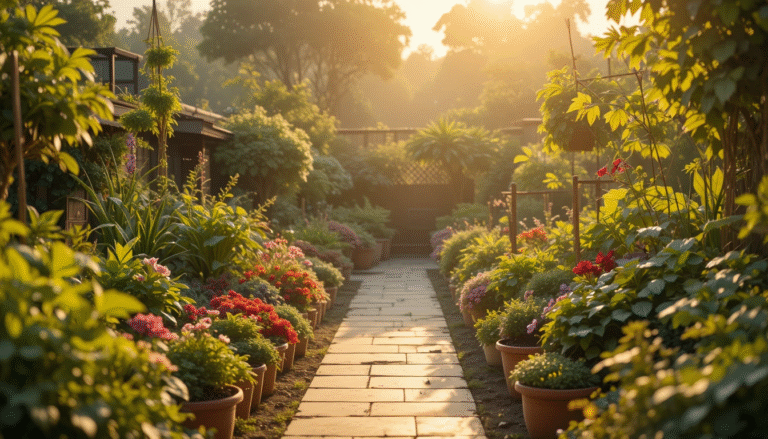
A seasonal planting calendar for India is the simplest way to achieve success in gardening—whether you’re growing on a balcony, terrace, backyard, or indoor window.
By planting seasonally, you enjoy:
- Higher success rates
- Better yields
- Lower maintenance
- Fewer pests
- Year-round greenery
To continue your gardening journey, explore our in-depth guides and resources on Greenarium.