
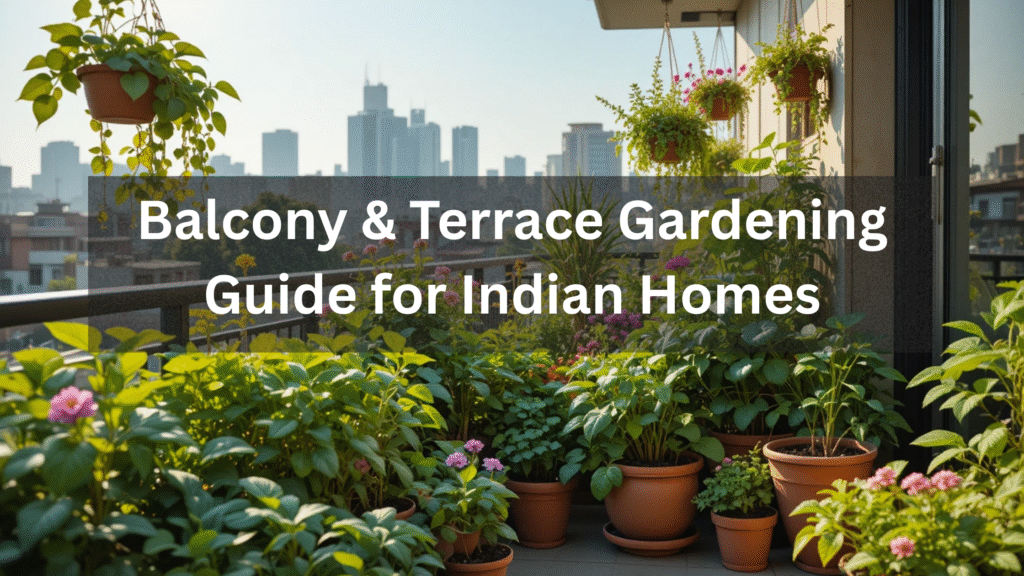
Balcony gardening India is more than just a trend — it’s a refreshing way to bring nature into our urban homes. Whether you live in a high-rise apartment in Mumbai or a cozy flat in Bengaluru, your balcony can become a peaceful green corner that grows fresh herbs, flowers, and even vegetables. In this guide, we’ll walk you through everything you need to know — from sunlight and soil basics to plant choices and low-budget setups — to help you create your very own balcony or terrace garden that thrives in Indian weather.
Quick Start — 5-Minute Checklist for Busy Indians
Want to start balcony gardening but short on time? You can get going in just five minutes.
Here’s a quick-start checklist designed for Indian homes — no fancy tools needed.
✅ Step-by-Step 5-Minute Balcony Gardening Checklist
- Check your sunlight direction: South or west-facing balconies get 5–6 hours of sun — great for vegetables. North-facing ones suit shade plants.
- Pick 3–5 easy pots: Start small — recycled buckets, grow bags, or railing planters work fine.
- Add potting mix: Combine garden soil + cocopeat + compost (1:1:1). This blend suits Indian heat and monsoon moisture.
- Choose 3 beginner-friendly plants: Basil (tulsi), money plant, and chillies are low-maintenance and fast-growing.
- Water lightly: Until water drips from the pot base — never over-water.
- Label and place: Arrange taller plants behind shorter ones for better sunlight and aesthetics.
Pro tip: Keep one empty tray or saucer under each pot to avoid water dripping onto neighbours — most Indian apartments appreciate that courtesy.
Instant answers — Can I start on a small apartment balcony?
Yes, absolutely!
Even a 3 × 3 ft balcony is enough for a mini garden if you use vertical space and railing planters.
Use lightweight pots (fabric or plastic), and choose plants that stay compact — think mint, coriander, spinach, succulents, or money plant.
For renters or high-rise residents, pick self-watering planters and foldable racks so your setup stays clean and easy to move.
Tip: If your balcony gets less than 3 hours of sun, go for shade-tolerant indoor plants — snake plant, pothos, peace lily.
Instant answers — What plants will definitely grow in my city?
(Delhi / Mumbai / Bengaluru / Chennai examples)
Delhi & North India:
- Ideal: Tomato, chilli, spinach, tulsi, and marigold.
- Weather tip: Shield plants from frost (Dec–Jan) with old cloth or a plastic sheet at night.
Mumbai & West Coast:
- Ideal: Curry leaf, hibiscus, money plant, aloe vera, ajwain.
- Weather tip: Rain-proof your balcony during monsoon; ensure quick drainage.
Bengaluru & South Plateau:
- Ideal: Lettuce, coriander, mint, capsicum, succulents.
- Weather tip: Use cocopeat-rich soil for consistent mild weather and occasional rains.
Chennai & Coastal South:
- Ideal: Okra, brinjal, lemongrass, jasmine, ixora.
- Weather tip: Morning watering only; heat-resistant varieties thrive best here.
💡 Pro Tip: Choose plants that match your city’s microclimate — that’s how you get lush growth without constant care.
How to Assess Your Balcony (Sunlight, Wind & Load Capacity)

Before buying pots or soil, take five minutes to understand your balcony’s natural conditions.
This simple step helps you pick the right plants and avoid damage during Indian summers or monsoons.
Measure Sunlight — Hours and Direction (East / South / West / North)
Why it matters:
Different balconies get different amounts of sunlight — that’s what decides which plants will actually survive.
Quick sunlight check:
- Morning (8–10 am): Note if sunlight enters your balcony.
- Noon (12–2 pm): Check intensity — if the floor feels hot, it’s full sun.
- Evening (4–6 pm): Watch how long the light lasts.
General sunlight guide for Indian balconies:
- East-facing: Best for herbs and flowers. Gets soft morning sun. 🌿 (Mint, Tulsi, Coriander)
- South-facing: Maximum light all day — great for veggies. ☀️ (Tomato, Chilli, Okra, Curry Leaf)
- West-facing: Hot afternoon sun — good for hardy plants. 🌸 (Aloe Vera, Bougainvillea, Hibiscus)
- North-facing: Minimal direct sun — best for shade lovers. 🌱 (Money Plant, Snake Plant, Peace Lily)
💡 Pro Tip: If your balcony gets harsh sun, install shade nets (50%) or bamboo blinds — they keep plants cool and prevent leaf burn in Indian summers.
Check Wind Exposure and Microclimates (Monsoon & Summer Heat)
Indian cities face extreme seasonal changes — scorching summers, dusty winds, and heavy monsoon rains.
Understanding wind flow helps you protect plants from damage and soil loss.
Here’s how to test wind exposure:
- Observe during peak hours: Keep a light cloth or paper — if it flutters strongly, your balcony is wind-prone.
- High-rises (above 6th floor): Usually face strong crosswinds; use heavier pots or windbreakers.
- Monsoon care: Ensure pots aren’t flooded — raise them slightly and avoid water stagnation.
Microclimate tip:
Buildings with nearby trees or walls create pockets of calm — ideal for sensitive herbs and seedlings. Use that corner for delicate plants.
💡 Pro Tip: Use tall plants or lattice screens as natural windbreakers. For coastal cities like Mumbai or Chennai, choose wind-tolerant plants like Areca Palm, Jade, or Spider Plant.
Balcony Weight & Building Rules — Safe Load, Railing Attachments, and What to Avoid
Before setting up large pots or water features, make sure your balcony can handle the load.
Most modern Indian apartments support around 200–250 kg per square metre, but always check with your RWA or builder if you plan something heavy.
Safety checklist:
- Use lightweight containers (fiberglass, plastic, fabric grow bags) instead of ceramic or cement pots.
- Keep heavy pots near walls or corners, not on cantilevered edges.
- Avoid placing multiple large tubs or water drums in one spot.
- If you hang railing planters, ensure brackets are rust-free and secure — never overload railings.
Things to avoid:
🚫 Hanging pots directly on weak or rusted iron railings.
🚫 Overwatering — it adds hidden weight and seeps through floors.
🚫 Leaving drainage holes blocked during monsoon — can cause slippery surfaces and cracks.
💡 Pro Tip: Distribute weight evenly. A well-balanced balcony garden looks good and stays safe.
Watering & Drainage — Keep Plants Healthy in Indian Weather
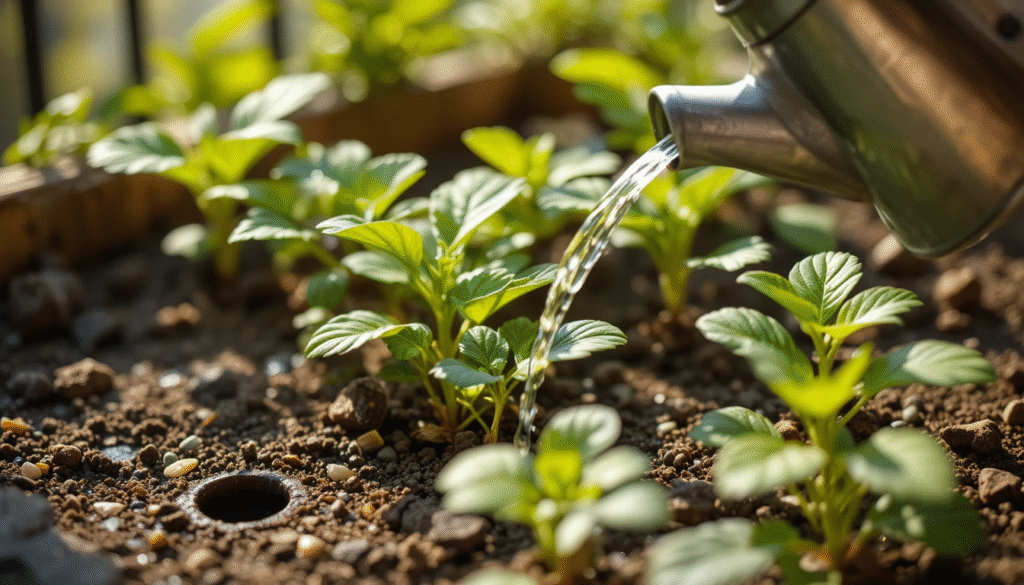
Watering is where most balcony gardeners go wrong — too much in monsoon, too little in summer.
Learning to balance moisture is the secret to lush balcony gardening in Indian climates.
Watering Frequency by Season (Summer, Monsoon, Winter)
🌞 Summer (March–June):
- Water once every morning, and lightly again in the evening if leaves droop.
- For balconies facing south or west, the soil dries faster — add mulch (dry leaves or cocopeat) to retain moisture.
- Use a spray nozzle or watering can instead of a pipe to avoid washing nutrients away.
🌧️ Monsoon (July–September):
- Cut watering to once every 2–3 days or only when the soil’s top inch feels dry.
- Move pots away from direct rain or cover them with transparent sheets or shade nets.
- Ensure pots don’t sit in standing water — root rot is the biggest balcony killer in this season.
❄️ Winter (October–February):
- Water every 3–4 days; the soil stays moist longer in cooler air.
- Water mid-morning, not evening — helps roots absorb moisture before night temperatures drop.
💡 Pro Tip: Always check by touching the soil — if it feels cool and damp, skip watering. Plants prefer consistency over flooding.
Quick Drainage Fixes — Saucers, Gravel Layer, Perforated Pots
Good drainage prevents your plants from drowning. In Indian balconies where rainfall and overwatering are common, drainage design is crucial.
Simple drainage hacks:
- Use perforated pots: Always ensure at least one hole at the bottom of every pot. Drill gently if missing.
- Add a gravel or pebble layer: 1 inch of gravel or broken terracotta at the base lets excess water escape easily.
- Use saucers or trays: Catch dripping water — a must for high-rise apartments. Empty them daily to prevent mosquito breeding.
- Check slope: Keep your balcony floor slightly tilted outward so rainwater drains away from doors or walls.
💡 Pro Tip: Mix cocopeat or perlite into your potting soil — it keeps the soil airy, allowing roots to breathe even after heavy watering.
Low-Effort Options — Self-Watering Pots, Drip Kits, Wicking Systems
If you’re a busy professional or travel often, automation is your best friend. These low-effort tools make balcony gardening in India effortless.
- Self-Watering Pots:
- Perfect for herbs, money plants, and succulents.
- They store extra water in a base reservoir and release it gradually.
- Available easily online or in local nurseries — look for options with visible water gauges.
- Drip Irrigation Kits:
- Ideal for larger balconies or terrace gardens.
- You can connect a 5-litre bottle or water tap timer to drip slowly into each pot.
- Saves up to 70% water — great for Indian cities facing water shortages.
- Wicking Systems (DIY):
- Place a cotton rope or jute wick from a water container into the pot’s soil.
- The soil draws water automatically when it’s dry.
- Excellent budget option for small balconies.
💡 Pro Tip: For summer months, combine self-watering pots with a mulch layer — your plants will stay hydrated for 2–3 days without manual watering.
Best Containers & Soil Mixes for Indian Balconies
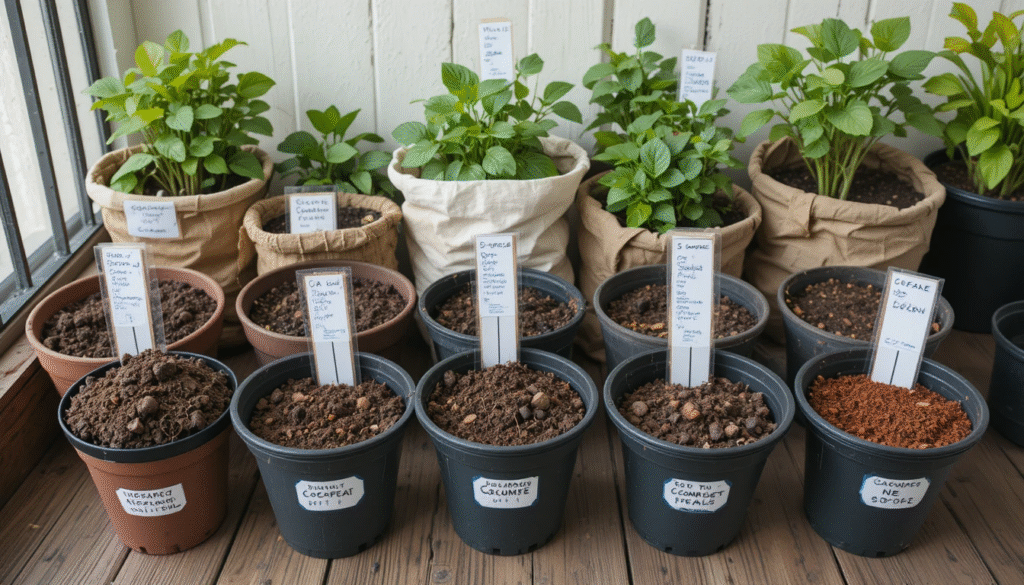
The right container and soil mix are the backbone of a healthy balcony garden.
Whether you’re gardening in a small Mumbai apartment or a spacious Delhi terrace, your choices should balance weight, cost, and weather resistance.
Container Choices by Budget (Under ₹2,000 / ₹2,000–₹7,000 / Premium)
🌱 Budget Setup (Under ₹2,000):
Perfect for beginners starting small.
- Use recycled plastic buckets, paint tubs, or tin cans — just drill holes for drainage.
- Buy fabric grow bags (₹100–₹150 each) — lightweight, breathable, and reusable.
- Add a few terracotta or clay pots for herbs and decorative plants.
👉 Best for: Basil, coriander, mint, money plant, succulents.
🌿 Mid-Range Setup (₹2,000–₹7,000):
Balanced between looks and durability.
- Mix ceramic, HDPE plastic, and self-watering pots for a neat balcony layout.
- Add vertical racks or railing planters to maximize space.
- Look for UV-resistant pots that handle Indian sunlight without cracking.
👉 Best for: Tomatoes, chillies, spinach, flowering plants.
🌺 Premium Setup (Above ₹7,000):
Ideal for long-term urban gardeners.
- Use fiberglass or FRP planters, wooden boxes with liners, or decorative stone-finish planters.
- Add automatic drip irrigation and matching saucers for a designer look.
👉 Best for: Fruit trees (lemon, guava), ornamental palms, and large flower displays.
💡 Pro Tip: Always mix sizes and heights — it improves airflow, drainage, and design balance for Indian balconies.
DIY Potting Mix Recipe for Indian Climates (Monsoon-Safe & Heat-Resilient)
Soil is where plant health begins. Garden soil alone is too heavy and compacts easily, especially in humid Indian weather.
A well-draining, airy mix keeps roots healthy and prevents rot during monsoon.
Here’s a perfect all-weather DIY potting mix recipe:
- 🌿 1 part garden soil (for minerals & structure)
- 🌴 1 part cocopeat (retains moisture, prevents hardening)
- 🍂 1 part organic compost (enriches nutrients and improves texture)
- 🪨 Optional: Add ¼ part perlite or river sand for better drainage in monsoon-heavy regions.
How to prepare:
- Mix all ingredients in a large bucket or on a clean sheet.
- Add a handful of neem cake powder or dry cow dung for pest resistance.
- Keep the mix slightly moist before filling pots.
💡 Pro Tip: During monsoon, top each pot with dry cocopeat — it prevents algae and fungal buildup from excess humidity.
Lightweight Solutions (Fabric Grow Bags, Plastic, Foam Planters)
For apartment or high-rise balconies, lightweight materials make gardening safe and practical.
They reduce strain on railings and floors while making plant rearrangement easy.
Top lightweight container options for Indian homes:
- Fabric Grow Bags:
- Breathable and foldable. Prevent root rot.
- Best for leafy greens, herbs, and tomatoes.
- HDPE Plastic Pots:
- UV-resistant and weatherproof; available in multiple colors.
- Perfect for decorative or large plants.
- Thermocol or Foam Boxes:
- Cheap, insulating, and surprisingly durable.
- Great for starting seeds or growing small veggies.
- Vertical Planters or Hanging Baskets:
- Save floor space; ideal for climbers or trailing plants.
💡 Pro Tip: Choose light-colored containers — they reflect heat and keep roots cooler during India’s hot summers.
Plants That Thrive in Indian Balconies (By Sunlight & Use)
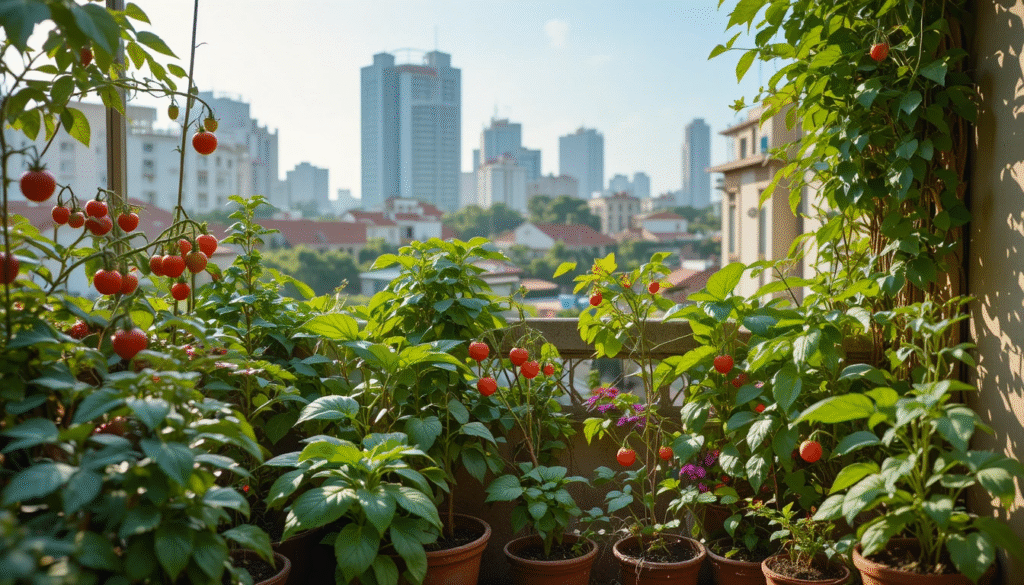
Every balcony has a different microclimate — some get blazing sun all day, while others stay cool and shaded.
Choosing plants that match your sunlight and purpose ensures easy growth and fewer failures.
Here’s your city-friendly guide to the best balcony plants for Indian homes.
Full Sun Picks (Tomato, Chilli, Okra, Curry Leaf)
If your balcony gets 5–6 hours of direct sunlight (especially south or west-facing), go for heat-loving plants that thrive in Indian weather.
Best choices:
- 🍅 Tomato (Desi varieties or cherry): Grows easily in 12–15-inch pots; needs staking and regular feeding.
- 🌶️ Chilli / Green Mirchi: Compact and long-yielding; perfect for pots or railing planters.
- 🌿 Curry Leaf (Kadi Patta): Loves warmth and full sun; prune regularly to encourage new shoots.
- 🥒 Okra (Bhindi): Grows well even in 10-inch pots; harvest young pods frequently for tender yield.
💡 Pro Tip: During peak summer, mulch the soil with cocopeat or dry leaves to keep roots cool and retain moisture.
Partial Shade Picks (Lettuce, Spinach, Coriander, Fenugreek)
If your balcony gets 3–4 hours of morning or filtered sunlight, partial shade plants are ideal.
These are perfect for east-facing or covered balconies found in most Indian apartments.
Great options:
- 🥬 Lettuce (Butterhead / Romaine): Grows quickly; prefers cool weather and indirect light.
- 🌱 Spinach (Palak): Thrives in medium sunlight; water regularly to keep leaves soft.
- 🌿 Coriander (Dhania): Short life cycle — harvest every 20–25 days.
- 🌾 Fenugreek (Methi): Super easy to grow from kitchen seeds; germinates in 3–4 days.
💡 Pro Tip: Rotate your partial-shade plants weekly to ensure even light and prevent legginess.
Low-Light & Decorative Picks (Snake Plant, Pothos, Peace Lily)
For balconies with limited or no direct sunlight, choose ornamental and low-maintenance indoor plants.
These add greenery without depending heavily on sunlight.
Top low-light performers for Indian homes:
- 🌿 Snake Plant (Sansevieria): Hardy, purifies air, needs watering only once a week.
- 🌿 Pothos (Money Plant): Grows beautifully in hanging pots; ideal for shaded corners.
- 🌸 Peace Lily: Produces white blooms even in low light; loves humidity.
- 🌵 ZZ Plant / Aglaonema: Great for shaded balconies or near walls.
💡 Pro Tip: These plants double as natural air purifiers, improving indoor air quality in Indian cities with high pollution.
Edible Herbs and Kitchen-Garden Essentials for Indian Cooking
Create a small herb corner to enjoy fresh Indian flavours right from your balcony.
These herbs grow fast, need little care, and save your weekly grocery trips.
Must-grow Indian kitchen herbs:
- 🌿 Tulsi (Holy Basil): Sacred and medicinal; thrives in sun and partial shade.
- 🌿 Mint (Pudina): Grows quickly; prefers moist, well-drained soil.
- 🌿 Curry Leaf: Use fresh for South Indian dishes; prune regularly.
- 🌿 Coriander (Dhania): Use both leaves and seeds; loves sunlight.
- 🌿 Lemongrass: Excellent for tea and mosquito repellent use.
💡 Pro Tip: Place herbs near your kitchen window or balcony entrance for quick access and fragrant air flow.
Climbers & Verticals (Beans, Bottle Gourd Alternatives for Small Terraces)
For small balconies or terraces, vertical gardening is a smart way to expand your green space.
Climbers use vertical supports or trellises, giving you lush greenery without eating up floor area.
Great Indian climbers for balconies:
- 🥒 Beans (French / Long Beans): Fast-growing and productive; needs a thin rope or trellis for support.
- 🎋 Bitter Gourd / Ridge Gourd: Ideal for large terraces; choose dwarf varieties for pots.
- 🌼 Morning Glory / Money Plant Variegated: Add color and privacy screening.
- 🍃 Cucumber Mini Varieties: Perfect for railing planters or hanging pots.
💡 Small-space hack: Try bottle gourd alternatives like ridge gourd or ivy gourd (kundru) — they grow well in limited soil depth and adapt to balcony planters.
Seasonal & Regional Calendar — What to Plant When (India)
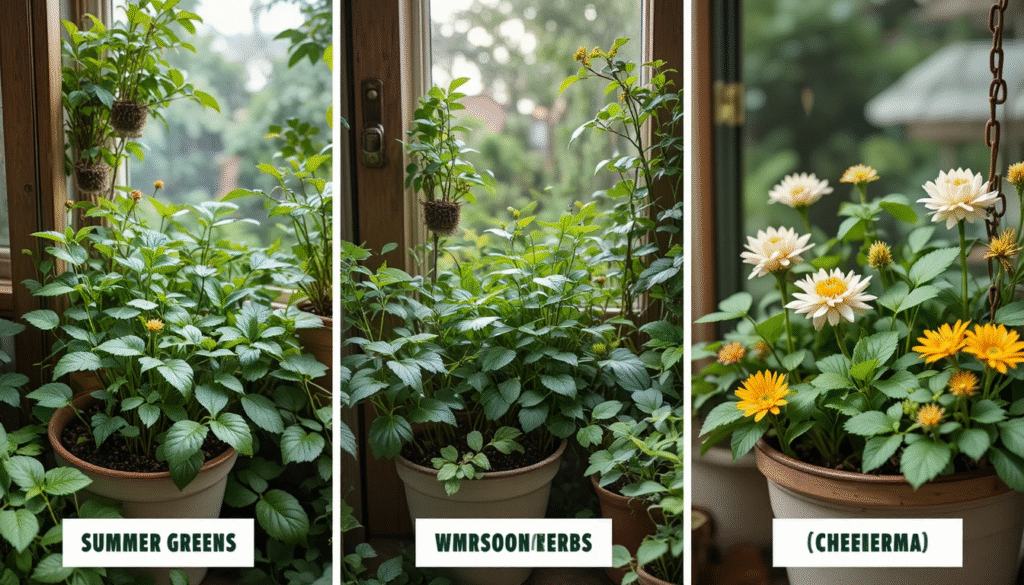
India’s diverse climate means there’s always something you can grow — no matter where you live.
Understanding your region’s seasons helps you choose the right plants for the right time, avoiding heat stress or monsoon rot.
Here’s a quick regional guide to plan your balcony garden year-round.
North India Seasonal Planting Calendar (Spring, Monsoon, Rabi/Kharif Pointers)
Regions covered: Delhi NCR, Punjab, Haryana, Uttar Pradesh, Rajasthan, Uttarakhand plains.
North India has hot summers, short monsoons, and cool winters, so your plant list changes every few months.
🌸 Spring (February–April):
- Ideal for sowing tomato, chilli, brinjal, spinach, and marigold.
- Herbs like basil, coriander, and mint sprout fast in moderate warmth.
☀️ Summer (May–June):
- Grow heat-tolerant veggies: okra, bottle gourd, bitter gourd, and cowpea.
- Add aloe vera, hibiscus, or bougainvillea for color and resilience.
- Use shade nets to protect tender plants from 40°C+ heat.
🌧️ Monsoon (July–September):
- Perfect for leafy greens — spinach, methi, lettuce, and amaranthus.
- Water carefully — monsoon humidity can cause fungal rot.
- Add neem oil spray weekly as a preventive measure.
❄️ Winter (October–January):
- Best growing season! Plant carrot, radish, cabbage, cauliflower, peas, and coriander.
- Decorate with petunia, marigold, and pansy for winter blooms.
💡 Pro Tip: Use raised pots during monsoon and plastic or FRP planters in winter to keep roots warm.
South India Planting Calendar and Hot-Humid Tips
Regions covered: Tamil Nadu, Kerala, Karnataka, Andhra Pradesh, Telangana.
South India’s tropical and humid climate allows balcony gardening almost year-round, but moisture control is key.
🌤️ Year-Round Growers:
- Chilli, brinjal, okra, coriander, curry leaf, and tulsi thrive all year.
- Herbs like mint, lemongrass, and ajwain love humidity.
☀️ Summer (March–June):
- Sow ridge gourd, bitter gourd, amaranthus, and snake gourd.
- Protect delicate plants with 50% shade nets and regular misting.
🌧️ Monsoon (June–October):
- Focus on drainage-friendly plants: ginger, turmeric, colocasia (arbi).
- Add extra perlite or sand in the soil to prevent root rot.
🌻 Post-Monsoon (October–February):
- Best time for tomatoes, beans, spinach, lettuce, and marigold.
- Use self-watering pots for easy moisture control during sudden rains.
💡 Pro Tip: South Indian balconies often get salty coastal air — rinse leaves occasionally with clean water to prevent salt buildup.
West & East India Quick Planting Windows and Monsoon Care
West India (Maharashtra, Goa, Gujarat) and East India (West Bengal, Odisha, Assam) have longer monsoons and mild winters — great for year-round balcony gardening.
🌤️ West India — Coastal & Dry Zones:
- Pre-summer (Feb–April): Sow tomato, chilli, brinjal, okra.
- Monsoon (June–Sept): Grow spinach, methi, cucumber, gourds, and amaranthus.
- Post-monsoon (Oct–Jan): Add capsicum, cabbage, and flowering plants.
💡 Monsoon tip: Raise pots on stands; add gravel trays for excess water runoff.
🌧️ East India — Humid & Rainy Zones:
- Spring (Feb–April): Great for beans, coriander, and tomatoes.
- Monsoon (June–Sept): Switch to taro, turmeric, and colocasia — they love rain.
- Winter (Oct–Jan): Grow cabbage, radish, and mustard greens.
💡 Humidity hack: Mix neem powder and cocopeat in soil to reduce fungal growth.
🗓️ Quick India-Wide Planting Summary (At a Glance)
Season | Best Crops | Tips |
Summer | Okra, chilli, tomato, basil | Use mulch, water daily |
Monsoon | Spinach, methi, amaranthus | Ensure drainage & pest control |
Winter | Carrot, radish, peas, cabbage | Sunlight 4–6 hrs minimum |
Year-Round Herbs | Mint, tulsi, coriander | Trim regularly for new growth |
Small-Space Design: Vertical, Railing & Modular Solutions
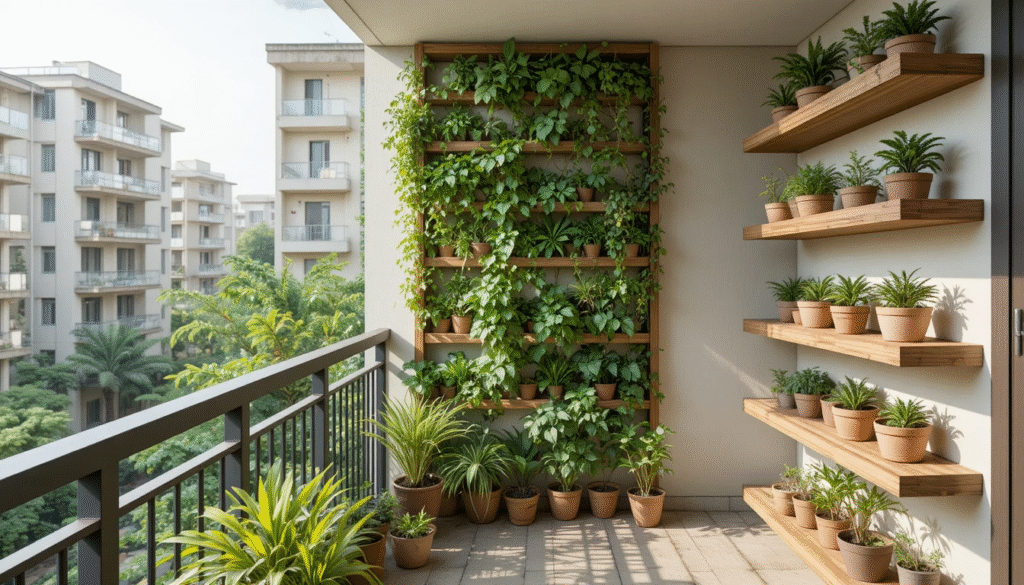
Even the tiniest Indian balcony can become a green paradise with smart design.
The secret? Think vertical, modular, and multi-use.
You don’t need more space — just better space planning.
Here’s how to make the most of your few square feet of balcony or terrace area.
Vertical Planter Ideas (DIY & Ready-Made)
When floor space is limited, go upward — vertical gardening is the best solution for Indian balconies.
🪴 Ready-Made Vertical Planters (Available Online in India):
- Modular Stackable Towers: Brands like IKEA, TrustBasket, and UrbanPlant offer tiered vertical stands. Perfect for herbs or flowering plants.
- Wall-Mounted PVC Panels: Great for decorative displays; use for pothos, ferns, or succulents.
- Metal Grid Frames: Add hanging pots or coco-liners — ideal for renters (no drilling needed).
🛠️ DIY Vertical Garden Ideas:
- Recycled PET Bottles: Cut and hang in staggered rows; perfect for herbs or lettuce.
- Wooden Pallets: Paint, line with coco sheet, and fill with soil mix — perfect rustic look.
- Old ladders or bookshelves: Convert into tiered plant displays using lightweight pots.
💡 Pro Tip: For Indian climates, always use UV-resistant plastic or powder-coated metal to prevent weather damage.
Railing Planters, Hanging Baskets and Wall Pockets (Safety Checks)
Railing and hanging planters instantly green up your balcony — but safety comes first in Indian apartments.
✅ Best Types of Railing Planters:
- Adjustable Clamp Planters: Fit securely on metal or concrete rails; perfect for herbs or trailing plants.
- Dual-Sided Planters: Hang both inside and outside to maximize space (choose lightweight options).
- Coco-Liner Baskets: Aesthetic and breathable; line them with plastic to prevent dripping.
⚠️ Safety & Maintenance Tips:
- Check railing strength before hanging heavy pots.
- Avoid glass, ceramic, or large terracotta planters for high-rise balconies — they can break or fall.
- Use nylon-coated steel hooks or wall anchors instead of ropes.
- Place drip trays or saucers to prevent water stains and balcony seepage (common in Indian monsoons).
💡 Pro Tip: Add a railing net or bamboo screen for privacy and wind protection — it doubles as a plant support wall.
Multi-Purpose Furniture + Plants (Benches, Shelves, Tiered Stands)
Turn your balcony into both a green retreat and a living space.
Multi-functional furniture keeps it practical while adding character.
💡 Smart Combinations:
- Planter Benches: Wooden benches with built-in planter boxes — ideal for small balconies.
- Tiered Shelves or Corner Racks: Use vertical corners to display decorative plants or herbs.
- Foldable Tables with Planters: Great for tea-time corners; tuck them away when not in use.
- Storage + Seating Units: Store soil, tools, and accessories under the seat.
Design Tips for Indian Homes:
- Choose powder-coated metal or treated wood for outdoor durability.
- Add weatherproof cushions and fairy lights for a cozy evening setup.
- Pair plants like snake plant, jade, or money plant for low-maintenance styling.
💡 Pro Tip: Always check balcony load limits — avoid overloading furniture with soil-heavy planters in older buildings.
Low-Budget Balcony Garden Plans (Step-by-Step)
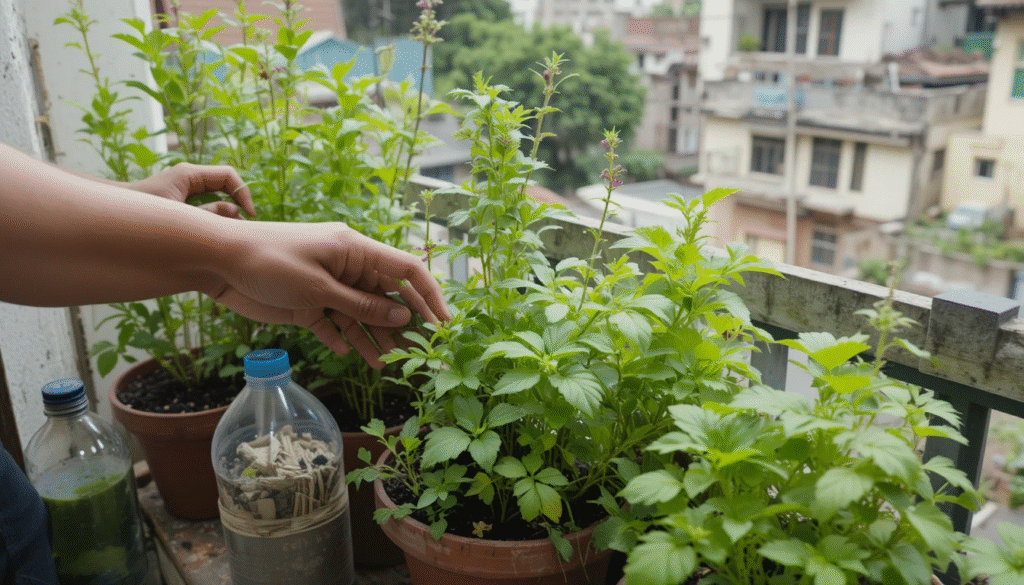
Building a green corner at home doesn’t have to be expensive.
With smart planning and a little creativity, you can start a thriving balcony garden in India for under ₹2,000 — and upgrade gradually as you grow.
Let’s break down three easy budget plans for every level: beginner, mid-range, and long-term upgrades that truly pay off.
Starter Plan Under ₹2,000 — Parts List & Shopping Links (Pots, Soil, Seeds)
Perfect for beginners living in small apartments or rented homes.
This setup gives you 5–7 easy plants, basic tools, and a clean start without overspending.
🛒 Estimated Budget Breakdown:
Item | Quantity | Approx. Cost (₹) |
Plastic pots (8–10 inch) | 5–7 | 350–400 |
Potting soil mix (cocopeat + compost + perlite) | 10 kg | 250–300 |
Vegetable & herb seeds (tomato, spinach, coriander, chilli) | 6–8 packets | 200 |
Small hand tools (trowel, spray bottle) | 1 set | 250 |
Organic fertilizer or compost (vermicompost) | 2 kg | 150 |
Total: | — | ₹1,400–₹1,800 |
🛍️ Where to Buy:
- Online: Amazon India, TrustBasket, Ugaoo, UrbanPlant
- Offline: Local nursery or terrace gardening store (ask for “balcony mix soil” or “grow bag combo”)
Setup Steps:
- Fill pots with potting mix (60% cocopeat, 30% compost, 10% sand).
- Sow easy crops like methi, coriander, spinach, or tulsi.
- Water lightly every morning; keep in partial sun for 4–6 hours.
💡 Pro Tip: Save money by reusing old paint buckets or food containers as planters — just drill drainage holes at the bottom.
Mid-Range Setup (₹2,000–₹7,000): Better Soil + Irrigation + Stands
Once you’ve mastered the basics, move to a semi-automatic and aesthetic setup.
This mid-range plan helps you grow 15–20 plants with improved irrigation and space design.
🛒 Suggested Purchases:
Item | Quantity | Approx. Cost (₹) |
FRP or ceramic pots (decorative mix) | 8–10 | 1,500–2,000 |
Metal or wooden multi-tier stand | 1 | 1,200–1,800 |
Drip irrigation kit / self-watering inserts | 1 set | 700–1,000 |
Quality soil mix + cocopeat block | 15–20 kg | 500–800 |
Organic compost / seaweed fertilizer | 1 kg | 300 |
Total: | — | ₹4,000–₹6,000 |
Setup Highlights:
- Use a multi-tier rack to free up floor space and add height.
- Set up a basic drip system or wicking tray to reduce daily watering.
- Mix bio-fertilizer or vermicompost tea monthly for steady growth.
💡 Pro Tip: For city balconies (Delhi, Mumbai, Bengaluru), choose UV-proof planters and anti-fungal compost to handle humidity and pollution.
Upgrades That Pay Off — Self-Watering Pots, Good Compost, Quality Seeds
Once your garden is established, invest in upgrades that save time, increase yield, and cut long-term costs.
💸 Smart Investments for Serious Balcony Gardeners:
- Self-Watering Pots: Maintain perfect moisture; save 40–50% water (ideal for busy schedules).
- Premium Compost or Bio-Enzyme Fertilizer: Builds soil health, prevents odor, and improves root growth.
- High-Quality Seeds or Seedlings: Buy from reliable brands like Ugaoo, SeedWorks, or local Krishi stores for higher germination.
- Grow Bags (Fabric): Lightweight, reusable, and ideal for large vegetables like tomato, brinjal, or okra.
- Soil pH & Moisture Meter: Helps track soil condition and prevent overwatering.
💡 Pro Tip: Combine DIY composting (using kitchen waste) with quality seeds — you’ll cut recurring costs by half and create a self-sustaining setup.
Maintenance Routine — Weekly, Monthly & Seasonal Tasks
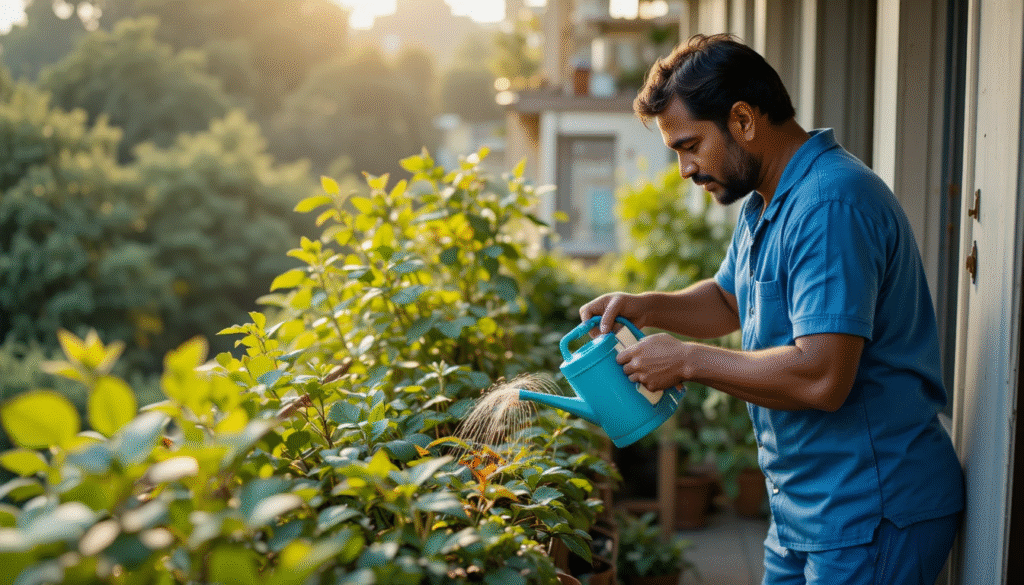
A thriving balcony garden isn’t just about planting — consistent maintenance is the secret to lush growth.
Here’s a simple, time-efficient routine tailored for Indian homes and urban apartments, covering daily, weekly, and seasonal tasks.
10-Minute Daily Checks (Water, Pests, Wilt)
Spend just 10 minutes each day to keep your balcony garden healthy.
Daily Routine Checklist:
- Water Check: Touch the soil — if the top inch is dry, water lightly. Morning watering is ideal for Indian summers; late afternoon works in monsoon.
- Pest Scan: Look under leaves for aphids, whiteflies, or mealybugs. Early detection prevents infestations.
- Leaf & Stem Health: Remove wilted or yellow leaves; check for broken stems after wind or heavy rain.
- Soil Moisture & Drainage: Ensure pots aren’t waterlogged; empty saucers if needed.
💡 Pro Tip: Keep a small notebook or phone reminder for daily checks — urban gardeners often forget minor signs that prevent major problems.
Weekly Tasks (Pruning, Fertilizing, Rotating Pots)
Weekly maintenance ensures plants stay productive and aesthetically neat.
Weekly Balcony Garden Checklist:
- Pruning: Trim overgrown herbs, dead flowers, or tall shoots. Keeps plants bushy and encourages new growth.
- Fertilizing: Add organic fertilizer, compost tea, or seaweed solution once a week for faster growth.
- Rotating Pots: Turn pots slightly to ensure even sunlight exposure for all sides.
- Leaf Cleaning: Dust off leaves, especially for low-light or ornamental plants — improves photosynthesis.
💡 Pro Tip: Use the same day each week (like Sunday morning) to make weekly maintenance a habit.
Pre-Monsoon and Post-Monsoon Care Checklist
Indian monsoon can be challenging — heavy rain, humidity, and pests. Protect your balcony garden with seasonal care.
Pre-Monsoon Tasks:
- Move delicate pots under shelter or use rain covers/shade nets.
- Add extra drainage material (gravel, broken terracotta) to pots.
- Apply organic neem oil or bio-pesticide to prevent fungal infections.
- Secure railing planters and hanging baskets against wind.
Post-Monsoon Tasks:
- Check for root rot and waterlogged soil; replace or refresh potting mix if necessary.
- Wash leaves gently to remove dust, algae, or salt deposits.
- Fertilize lightly to replenish nutrients leached by heavy rains.
- Inspect pots for cracks or damages caused by sudden rainfall.
💡 Pro Tip: Combine pre- and post-monsoon tasks with a general pest scan — monsoon encourages rapid insect breeding in Indian cities.
Common Problems & How to Fix Them (Troubleshooting)
Even the best balcony gardeners face issues — yellow leaves, pests, overwatering, or nosy pigeons!
The good news? Most problems are easy to fix once you know what caused them.
Here’s a quick guide to diagnose and treat the most common balcony gardening troubles in Indian conditions.
Yellow Leaves, Root Rot & Overwatering — Quick Fixes
- Yellow Leaves
- Cause: Overwatering, poor drainage, or nutrient deficiency.
- Fix:
- Let the soil dry before the next watering.
- Add organic compost or liquid fertilizer weekly.
- Ensure pots have drainage holes; elevate them slightly using pot stands.
- Root Rot
- Cause: Stagnant water during monsoon or blocked drainage holes.
- Fix:
- Remove the plant, trim black/mushy roots.
- Repot in fresh, dry soil mix with gravel or perlite.
- Use fungicide or neem powder to disinfect the root zone.
- Overwatering Prevention
- Water only when the top 1 inch of soil is dry.
- Use self-watering pots or add a drip tray to monitor excess water.
- In humid cities like Mumbai or Chennai, reduce watering frequency during monsoon.
💡 Pro Tip: Stick your finger 2 cm into the soil — if it feels moist, skip watering for a day.
Pest Checklist — Aphids, Mealybugs, Whiteflies and Organic Treatments
Balcony gardens attract pests easily in warm, humid Indian weather.
But you don’t need harsh chemicals — organic solutions work wonders.
🕷️ Common Pests & Natural Remedies:
Pest | Signs | Natural Treatment |
Aphids | Sticky residue, curled leaves | Spray neem oil + soap water every 3 days. |
Mealybugs | White cottony spots on leaves/stems | Dab with cotton soaked in 70% isopropyl alcohol or neem spray. |
Whiteflies | Small white insects under leaves | Use yellow sticky traps; spray diluted neem oil (1 tsp/litre). |
Spider Mites | Fine webbing on leaves | Mist leaves daily; they hate humidity. |
Caterpillars / Leaf miners | Holes or trails on leaves | Handpick and dispose; add chilli-garlic spray for prevention. |
DIY Neem Spray Recipe:
- Mix 1 tsp neem oil + few drops of mild liquid soap + 1 litre of water.
- Spray on affected leaves in the evening, twice a week.
💡 Pro Tip: Keep air circulation in your balcony — overcrowded plants invite pests.
Dealing with Birds, Pigeons and Neighbor Concerns (Safe Netting & Etiquette)
Pigeons and birds can turn your balcony into their hangout spot — or worse, their nesting zone.
Protect your plants without harming wildlife or disturbing neighbors.
✅ Safe & Humane Bird Control Tips:
- Use Nylon or HDPE Balcony Nets: Install professionally or DIY with cable ties — they’re strong, transparent, and safe.
- Reflective Tape or Hanging CDs: Birds avoid shiny moving objects.
- Keep Soil Covered: Use small pebbles or mulch to prevent birds from digging in pots.
- Avoid Food Waste: Never leave food scraps or open compost bins — it attracts pigeons fast.
🤝 Balcony Etiquette (For Indian Apartments):
- Avoid dripping water onto lower balconies — use saucers under pots.
- Don’t hang large pots outside railings in high-rise apartments.
- Keep shared balcony walls tidy and free from creeping vines.
💡 Pro Tip: For a natural deterrent, place camphor or cloves near problem spots — pigeons dislike strong scents.
Safety, Legal & RWA Considerations in Indian Apartments
Before hanging planters or setting up vertical gardens, it’s smart to know the rules and safety norms that apply in Indian housing societies.
A little awareness goes a long way in preventing accidents, complaints, or fines from your RWA or building management.
RWA Rules and Sample Permission Note for Railing Attachments
Many Indian Resident Welfare Associations (RWAs) have specific rules for balconies — especially regarding external railing planters, drilling, and visible fixtures.
Always check your apartment’s by-laws before making permanent changes.
Common RWA Restrictions:
- No drilling or nailing into outer walls without written approval.
- No heavy planters hanging outside railings (safety hazard).
- Avoid blocking water drainage or common façade designs.
- Maintain cleanliness — no dripping or falling leaves onto neighbors’ balconies.
📝 Sample Permission Note (you can modify and submit):
To: The Secretary, [Apartment Name] RWA
Subject: Request for Permission to Install Balcony Planters
Dear Sir/Madam,
I wish to install light-weight railing planters on the inner side of my balcony using adjustable brackets. These planters will not affect the building façade or drainage system.
I assure you that all items will be securely fixed and maintained regularly.
Kindly grant permission for the same.
Thank you,
[Your Name & Flat Number]
💡 Pro Tip: If you live in a high-rise or rental unit, avoid drilling — use clamp-on railing planters or freestanding racks instead.
Preventing Falling Pots — Securing Tips and Safe Mounting Methods
Loose or heavy planters can be dangerous, especially during strong winds or monsoons.
Follow these safety practices to secure your balcony setup:
✅ Safe Mounting Checklist:
- Use clamp-type railing planters with locking screws or safety clips.
- Prefer lightweight materials (plastic, FRP, or grow bags) over ceramic or concrete.
- Install anti-slip mats under large pots to prevent sliding.
- Tie tall plants (tomato, money plant) to supports using soft garden ties or jute rope.
- Regularly inspect brackets, ropes, and hooks — tighten or replace if rusted.
💡 Pro Tip: Keep a wind buffer like bamboo screen or mesh net — it prevents planters from tipping in strong gusts.
Mosquito Prevention and Responsible Water Management
Standing water in trays or pots is a breeding ground for mosquitoes, especially in humid Indian cities.
Maintain hygiene and manage water smartly.
🌿 Anti-Mosquito & Water Safety Checklist:
- Empty saucers and trays every 2–3 days; never let water stagnate.
- Add a gravel or pebble layer on top of soil — prevents mosquitoes from laying eggs.
- Use self-watering pots with enclosed reservoirs to minimize open water exposure.
- Keep gutters, floor drains, and balcony corners clean during monsoon.
- For compost bins, cover tightly and sprinkle neem or turmeric powder to repel insects.
💡 Pro Tip: A few pots of citronella, lemongrass, or tulsi act as natural mosquito repellents — a simple and fragrant way to stay safe.
Value & Benefits — Food, Savings & Climate (Local & Health Angles)
Balcony gardening isn’t just a hobby — it’s a lifestyle shift that pays back in fresh food, cooler homes, cleaner air, and better mental health.
Here’s what you really gain when you start growing greens right outside your living room.
How a Balcony Garden Reduces Grocery Bills (Simple Math Example)
Even a tiny 6×4 ft balcony can produce a surprising amount of fresh herbs and vegetables.
Let’s do a quick, real-world math example:
Crop | Average Yield (per month) | Market Price (₹/kg) | Monthly Savings |
Coriander | ~400 g | ₹80 | ₹32 |
Mint | ~500 g | ₹60 | ₹30 |
Spinach | ~1 kg | ₹50 | ₹50 |
Tomatoes (3 plants) | ~2 kg | ₹40 | ₹80 |
Chillies (2 plants) | ~500 g | ₹150 | ₹75 |
Total | ≈ ₹250–₹300/month |
That’s ₹3,000–₹3,500 saved per year, just from 5–6 balcony pots — and this doesn’t even count the satisfaction of eating chemical-free, fresh-picked produce.
💡 Pro Tip: Start with fast-yielding herbs like coriander, mint, and methi — they grow quickly, need minimal care, and regrow multiple times after cutting.
Air-Quality and Cooling Benefits in Urban Indian Homes
Indian cities like Delhi, Mumbai, Bengaluru, and Chennai face intense heat and rising pollution.
Balcony plants act as micro air-purifiers and natural air conditioners for your home.
Proven Local Benefits:
- 🌿 Cleaner air: NASA studies show plants like snake plant, peace lily, and pothos absorb toxins like benzene and formaldehyde — common in city apartments.
- 🌡️ Lower indoor temperature: 5–10 balcony plants can reduce surface temperature by up to 2–4°C, cutting down your AC use during summer.
- 💨 Improved humidity: Moisture from leaves helps balance dry indoor air caused by constant air-conditioning.
💡 Pro Tip: For hot Indian balconies, grow money plant or areca palm along railings — they act as green shade filters.
Mental Health and Aesthetic Benefits
Adding greenery to your balcony isn’t just about looks — it’s a proven mood-booster and stress reliever.
Scientifically backed perks:
- 🧠 Studies show spending just 15 minutes daily with plants can lower cortisol (stress hormone) levels.
- 🌸 Gardening activities improve focus and reduce anxiety — a reason why many urban professionals call it “green meditation.”
- 🏡 Aesthetic appeal: A well-designed balcony garden can raise home value by 5–7% in metro cities and make apartments more photogenic (great for social media & rental listings).
💡 Pro Tip: Mix flowering plants like hibiscus or marigold with leafy greens — color diversity enhances both your mood and your garden’s Instagram appeal.
Tools, Seeds & Where to Buy in India (Trusted Local Sources)
Setting up a thriving balcony or terrace garden doesn’t require expensive gear — just a smart toolkit, quality seeds, and trusted local sources.
Here’s a complete breakdown for Indian homes, with estimated budgets and product suggestions you can easily link or integrate later.
Quick Tool Kit (Must-Have & Optional) with Approximate INR Ranges
Whether you’re starting fresh or upgrading your setup, these essentials make balcony gardening smoother and less messy.
Category | Tool Name | Use | Approx. Price Range (₹) |
Must-Have | Hand Trowel | Soil mixing, transplanting | 100–250 |
Pruning Shears | Trimming, harvesting | 300–700 | |
Watering Can (2–5L) | Controlled watering | 300–600 | |
Gloves & Apron | Protection, hygiene | 200–500 | |
Spray Bottle | Misting & pest control | 150–300 | |
Optional (For Upgrades) | Mini Rake | Loosening soil | 200–400 |
pH & Moisture Meter | Soil health check | 500–900 | |
Hand Weeder | Weed removal | 250–400 | |
Small Gardening Stool | Comfort during long sessions | 600–1,000 | |
Drip Irrigation Kit | Automatic watering | 700–2,000 |
💡 Pro Tip: For compact Indian balconies, a 5-tool foldable gardening kit saves both space and cost — perfect for beginners.
Seed & Sapling Sources (Local Nurseries, E-Commerce, Seed Packs)
You can source balcony-friendly seeds and plants both locally and online — just ensure freshness and reliability.
🪴 Local Nursery Advantages:
- Personal guidance for your city’s climate.
- Immediate availability of saplings (tomato, basil, curry leaf, mint).
- Option to check plant health before buying.
🌐 Trusted Online & E-Commerce Platforms (Pan-India Delivery):
- Ugaoo – Great for balcony starter kits & organic fertilizers.
- Nurserylive – Wide variety of herbs, flowers & air-purifying plants.
- Amazon India (Garden section) – Ideal for bulk seed packs & drip kits.
- IKEA India / Home Centre – Stylish planters & indoor garden accessories.
- BigHaat – Farmer-grade vegetable seeds, suited for Indian climates.
💡 Pro Tip: Always check the seed expiry date and choose F1 hybrid or heirloom varieties for better yield in Indian urban settings.
Recommended Brands / Product Pages 🏆 Recommended Indian Brands
- Kraft Seeds – Affordable and beginner-friendly seed packs.
- Greenarium – Premium pots and smart irrigation kits.
- IFFCO Urban Gardens – Organic fertilizers and pest solutions.
Advanced Options — Hydroponics, Raised Beds & Small Fruit Trees
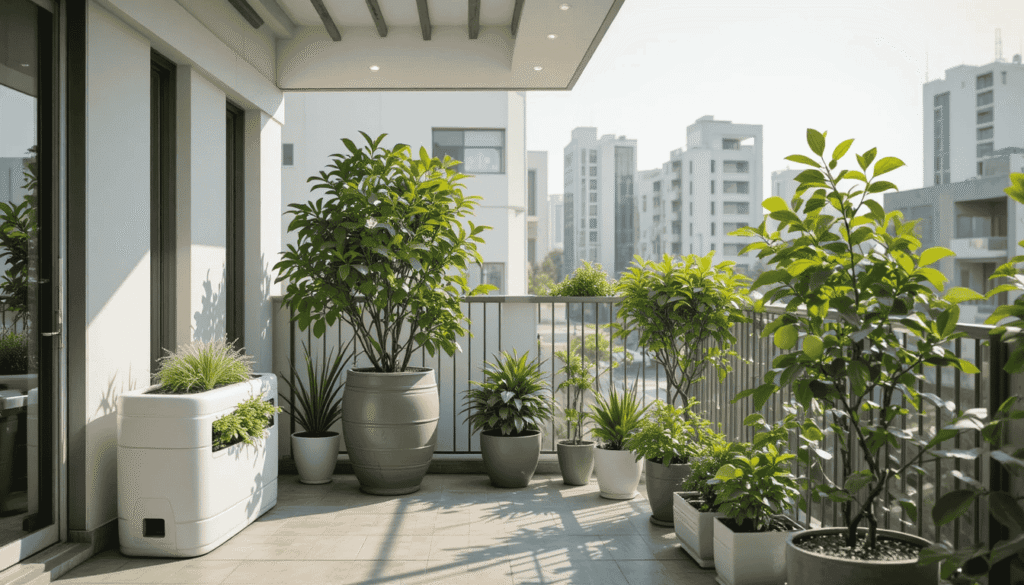
Once your balcony garden is thriving, it’s time to level up.
If you’re ready to experiment and maximize yield in limited space, these advanced gardening setups — hydroponics, raised beds, and dwarf fruit trees — bring both efficiency and freshness to your Indian home.
When to Try Hydroponics on a Balcony (Space & Budget Guide)
Hydroponics — growing plants without soil — is becoming popular in Indian cities like Bengaluru, Mumbai, and Hyderabad.
It’s ideal for gardeners short on space but looking for clean, fast-growing, and low-maintenance options.
✅ When Hydroponics Makes Sense:
- You have a balcony or terrace with 4–6 hours of sunlight and no room for soil mess.
- You want herbs, lettuce, spinach, basil, or strawberry year-round.
- You’re okay with a starter investment of ₹4,000–₹10,000 for a small setup.
🛒 Basic Starter Kit Includes:
- NFT (Nutrient Film Technique) or DWC (Deep Water Culture) unit
- Net cups + hydroton clay pebbles
- Nutrient solution (NPK, micronutrients)
- pH and TDS meter
💡 Pro Tip: Try a 5-plant hydroponic kit first (available on Amazon, UrbanPlant, or Ugaoo).
If you enjoy it, expand with a modular vertical hydroponic tower — perfect for balconies under 5×6 ft.
Growing Small Fruit Trees in Containers (Lemon, Dwarf Guava)
Yes — you can grow fruit trees on your balcony!
Many Indian varieties adapt beautifully to containers, giving you mini harvests and a refreshing green vibe.
🌳 Best Small Fruit Trees for Indian Balconies:
Fruit Tree | Pot Size | Notes |
Lemon (Kagzi / Thai Dwarf) | 16–18 inch | Sun-loving, water regularly, prune after fruiting. |
Guava (Dwarf / VNR Bihi) | 20–24 inch | Produces small, sweet fruit; feed monthly with compost. |
Pomegranate (Anar) | 18–20 inch | Hardy and drought-tolerant; prune for compact shape. |
Banana (Dwarf Cavendish) | 25+ inch | Needs full sun and regular feeding; great for terraces. |
Papaya (Hybrid Dwarf Varieties) | 20+ inch | Grows fast, prefers heat and drainage. |
🌼 Tips for Container Fruit Trees:
- Use FRP or large grow bags with good drainage.
- Apply bio-fertilizer or compost every 20 days.
- Support with stakes to prevent wind damage in high-rise balconies.
- Pollinate manually using a brush if you have only one plant.
💡 Pro Tip: Growing a lemon or guava in your balcony not only adds greenery but also attracts pollinators — enhancing nearby plant productivity.
Small Terrace Raised Beds vs Containers: Pros & Cons
If you have access to a terrace or large balcony, raised beds can be a game changer — but they’re not for everyone.
Here’s how they compare to container gardening for Indian homes:
Feature | Raised Beds | Containers |
Setup Cost | Medium to High (₹5,000–₹12,000) | Low to Medium (₹500–₹5,000) |
Space Need | Requires larger area (6×4 ft minimum) | Works even in 3×3 ft balcony |
Watering | More uniform; supports drip irrigation | May dry faster, needs frequent checks |
Crop Yield | Higher — ideal for tomatoes, okra, greens | Moderate — ideal for herbs & compact plants |
Mobility | Fixed structure | Portable, easy to move |
Maintenance | Low once built | Medium (individual pot care) |
🏗️ Raised Bed Materials:
- Galvanized iron, wooden frames, or high-density plastic.
- Add a mix of red soil + compost + cocopeat (1:1:1) for durability in Indian climates.
💡 Pro Tip: For terraces, line the bottom with HDPE sheet or waterproof membrane to prevent seepage — especially in monsoon-heavy cities.
FAQs
Can I grow tomatoes on a 4-ft balcony?
Yes! You can easily grow cherry or desi tomato plants on a 4-ft balcony.
Use one 12-inch pot, place it in 5–6 hours of sunlight, and support the plant with a stake.
Regular watering and monthly compost feeding will give you healthy tomatoes even in compact Indian apartments.
How many hours of sun do balcony vegetables need?
Most balcony vegetables in India need 4–6 hours of direct sunlight daily.
Leafy greens like spinach or methi grow with less (2–3 hours), while fruiting plants like tomato and chilli need more.
If your balcony faces east or south, you already have ideal sunlight conditions.
Will my balcony survive monsoon rains?
Yes, if you prepare properly.
Before monsoon, move plants under partial cover, add extra drainage holes, and keep pots raised using stands or bricks.
Avoid overwatering — Indian monsoon humidity can cause root rot and fungal growth if soil stays soggy.
What’s the cheapest way to start a balcony garden in India?
Start small — you can build a balcony garden for under ₹2,000 using plastic pots, cocopeat soil mix, and basic seeds (spinach, coriander, tulsi).
Reuse old containers, buckets, or bottles as planters, and make your own compost from kitchen waste to cut costs further.
How do I stop mosquitoes in balcony planters?
To stop mosquitoes, avoid stagnant water in trays and pots.
Add a gravel or sand top layer to block mosquito breeding, and use citronella, lemongrass, and basil plants — they naturally repel insects.
Empty saucers after rain and ensure proper drainage in every pot.