
Indoor plants for oxygen are more than just decorative greenery — they can improve the air you breathe, create a calming atmosphere, and even help reduce daily stress. In this updated 2025 guide, we’ll explore the best indoor plants that naturally boost oxygen levels and contribute to overall wellbeing. Whether you’re looking for a low-maintenance desk companion or a leafy bedroom plant to enhance sleep, this guide will help you pick the right green partner.
If you want to dive deeper, check out our Top 10 Air-Purifying Indoor Plants in India guide
Why this guide — what you’ll learn and how to use this article?
Most articles on “oxygen plants” simply list plant names without explaining how they actually work or how many you really need. This guide is different. You’ll get:
- Clear science behind how plants release oxygen and what that means indoors.
- Curated plant recommendations for bedrooms, living rooms, and workspaces.
- Stress-relief insights backed by research on plants’ effect on mood and focus.
- Practical care tips so your plants stay healthy and effective long term.
- Easy-to-follow FAQs that answer the most common oxygen plant questions.
💡 How to use this article:
- Skim the quick summary below if you’re short on time.
- Read plant-specific sections to discover the best match for your lifestyle.
- Jump to the care tips and FAQs if you already own plants and want to optimize their benefits.
Who this guide is for (bedroom use, office desks, apartments, gift buyers)
This guide is designed for:
- Apartment dwellers who want greener, fresher indoor spaces without complex upkeep.
- Bedroom decorators looking for oxygen-rich plants that support better sleep.
- Office workers & remote professionals who want a desk plant that relieves stress and boosts focus.
- First-time plant owners searching for low-maintenance options.
- Gift buyers who want meaningful, health-boosting gifts instead of flowers that fade in a week.
Quick summary: best plants at a glance (3-line bulleted table in the article)
Here’s a fast overview before we dive deep:
- Snake Plant (Sansevieria): Releases oxygen at night, ideal for bedrooms, very low maintenance.
- Areca Palm: One of the best natural humidifiers, large leaves = more oxygen output.
- Spider Plant: Hardy, pet-friendly, and effective at freshening indoor spaces.
👉 Scroll down for the full plant list with care tips, placement ideas, and stress-relief benefits.
How indoor plants produce oxygen — simple science for readers

Before choosing the right plants, it’s helpful to understand how they actually work. Plants aren’t magical air purifiers — their oxygen benefits come from a natural process you learned about in school: photosynthesis. But not all plants behave the same way. Some even release oxygen at night, which makes them special for bedrooms.
Photosynthesis 101: how CO₂ becomes O₂ (plain language)
- oxide (CO₂) from the air through tiny pores in their leaves.
- They absorb light (sunlight or artificial grow lights) as an energy source.
- Water from the soil combines with this light energy and CO₂.
- The plant produces glucose (food) for itself + oxygen (O₂) as a byproduct.
➡️ Result: During the day, plants continuously release oxygen into their surroundings.
Think of plants as natural mini oxygen gHere’s the process, in simple terms:
Plants take in carbon degenerators, but their effectiveness depends on light, size, and the number of plants in your room.
CAM vs. C3 plants — what “night oxygen” really means
Most plants (called C3 plants) only release oxygen during the day when they have light. At night, they switch to mild respiration, which means they absorb oxygen and release a little CO₂.
However, a few special plants — called CAM (Crassulacean Acid Metabolism) plants — work differently. They store CO₂ at night and release oxygen even in the dark.
🔑 Examples of CAM plants (great for bedrooms):
- Snake Plant (Sansevieria)
- Aloe Vera
- Orchids
👉 This is why Snake Plant and Aloe Vera are so often recommended as “oxygen plants for bedrooms.”
What the NASA Clean Air Study actually found and what it didn’t (short evidence box)
📝 Evidence Box: The NASA Clean Air Study (1989)
- Conducted in sealed space-station-like chambers, NASA tested how certain plants removed volatile organic compounds (VOCs) like benzene and formaldehyde.
- Results showed that plants like Areca Palm, Snake Plant, and Peace Lily improved air quality in these closed environments.
⚠️ What it didn’t prove:
- The study was in laboratory conditions with sealed air and a high plant-to-space ratio.
- In real homes, with open windows, fans, and normal ventilation, a few plants won’t dramatically “purify” the air.
💡 Takeaway: Indoor plants do release oxygen and can contribute to cleaner, fresher-feeling air — but they should be seen as complements to good ventilation, not replacements.
Do houseplants measurably improve indoor air in real homes?
This is one of the most debated questions. You’ll often read headlines like “Plants purify your air” or “Snake Plant is the best oxygen generator”. The truth is more nuanced. While plants definitely release oxygen and interact with indoor air, their real-life impact depends heavily on conditions like ventilation, number of plants, and room size.
Lab vs. real life: ventilation, plant count, and measurable impact
- In lab studies (like NASA’s), plants were tested in sealed chambers, where even small improvements could be measured. In that controlled environment, one plant could noticeably reduce VOCs.
- In real homes, air is constantly moving in and out through windows, doors, AC units, and cracks. This ventilation dilutes pollutants far faster than a single plant could.
- Plant count matters: Studies suggest you’d need dozens (sometimes over 90+) medium-to-large plants in one room to replicate the lab results. That’s not practical for most households.
- Leaf area matters too: Bigger, leafy plants like Rubber Plant or Areca Palm interact with more air than a small succulent.
👉 So yes, plants do contribute oxygen and interact with indoor air — but in everyday homes, they add freshness and a psychological sense of “clean air” more than dramatic air purification.
Practical takeaway: what plants can and cannot do for your air quality
✅ What plants can do:
- Release oxygen during the day (and some at night if they’re CAM plants).
- Increase humidity naturally, which helps with dry skin, eyes, and respiratory comfort.
- Absorb small amounts of certain pollutants through leaves and roots.
- Improve wellbeing by making you feel that the air is fresher (biophilic effect).
❌ What plants cannot do:
- Replace proper ventilation or an air purifier.
- Eliminate all indoor toxins or guarantee measurable health improvements.
- Work instantly — benefits come with consistent care and growth.
💡 Bottom line: A few plants won’t transform your air quality overnight, but combined with open windows, clean habits, and maybe an air purifier, they’re a beautiful, natural boost to both oxygen and mood.
Top oxygen-producing indoor plants (quick facts + one-line benefit)
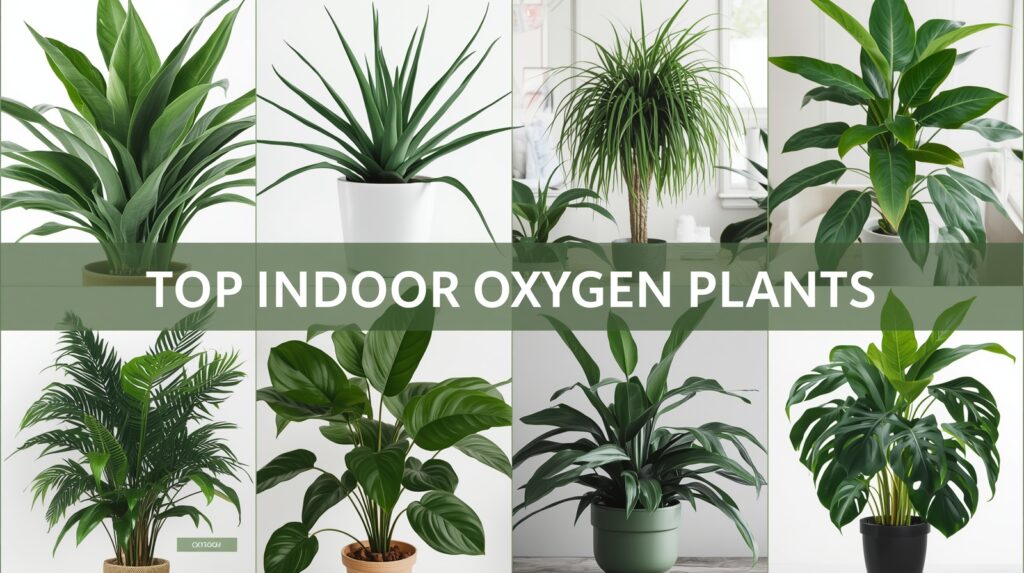
Below is a curated list of the best indoor plants for oxygen. Each comes with a quick benefit so you can decide which one fits your space and lifestyle.
Snake Plant (Sansevieria / Dracaena trifasciata) — night oxygen + low care
Often called the “bedroom plant,” Snake Plant is a CAM plant, meaning it releases oxygen even at night. It thrives on neglect — low water, low light, and minimal fuss — making it perfect for busy plant owners.
Aloe Vera — bedside succulent that may help at night
Aloe Vera is another CAM plant that continues oxygen release after dark. Apart from air benefits, its gel is famous for soothing burns and skin irritation. Best kept on a sunny windowsill.
Spider Plant (Chlorophytum comosum) — fast grower, great for beginners
Known for its long arching leaves and baby “spiderettes,” this hardy plant is one of the easiest oxygen-boosters. It’s pet-friendly and adapts well to indirect light, making it ideal for living rooms or desks.
Areca Palm — best for large rooms and humidity regulation
With its lush, feathery fronds, the Areca Palm is a natural humidifier and oxygen booster. It needs more space but is excellent for large living areas where its broad leaves can thrive.
Peace Lily (Spathiphyllum) — VOC removal and mood-boosting flowers
Peace Lily not only adds oxygen but is also linked to removing VOCs like benzene and formaldehyde in lab tests. Its elegant white flowers add a calming, stress-relieving vibe to any corner.
Pothos / Money Plant (Epipremnum aureum) — low light and trailing decor
A popular choice for low-light rooms, Pothos grows quickly and is forgiving if you forget to water. Its trailing vines make it a beautiful oxygen-producer for shelves, hanging baskets, or office spaces.
Aglaonema (Chinese Evergreen) — low light oxygen and air cleansing
This decorative plant is loved for its patterned leaves and tolerance for low light. It steadily contributes oxygen while also adding a touch of tropical style to small apartments.
Rubber Plant (Ficus elastica) — large leaves, high photosynthetic area
Rubber Plants are powerhouse oxygen producers thanks to their large, broad leaves. They look striking in modern interiors and also help in absorbing indoor pollutants in controlled studies.
Boston Fern (Nephrolepis exaltata) — humidity + stress relief
Boston Ferns love humidity and are excellent natural humidifiers. They give off oxygen and create a cooling, calming atmosphere — but need a bit more care (regular misting or humid rooms).
Additional honorable mentions (Hoya, Philodendron, Gerbera, ZZ plant)
- Hoya (Wax Plant): Attractive climber with waxy flowers, tolerates neglect.
- Philodendron: Large-leaved, adaptable, and oxygen-boosting in bright spaces.
- Gerbera Daisy: Bright flowers plus oxygen release, but seasonal indoors.
- ZZ Plant: Nearly indestructible, tolerates low light, adds greenery with oxygen.
✨ Quick tip: For best results, group 3–5 different oxygen plants in a room — this not only boosts oxygen release but also creates a healthier, more biophilic environment.
In our broader guide, 15 Best Indoor Plants for Oxygen, we cover how these plants also aid stress relief and overall air quality.
How to choose the right oxygen plant for your room
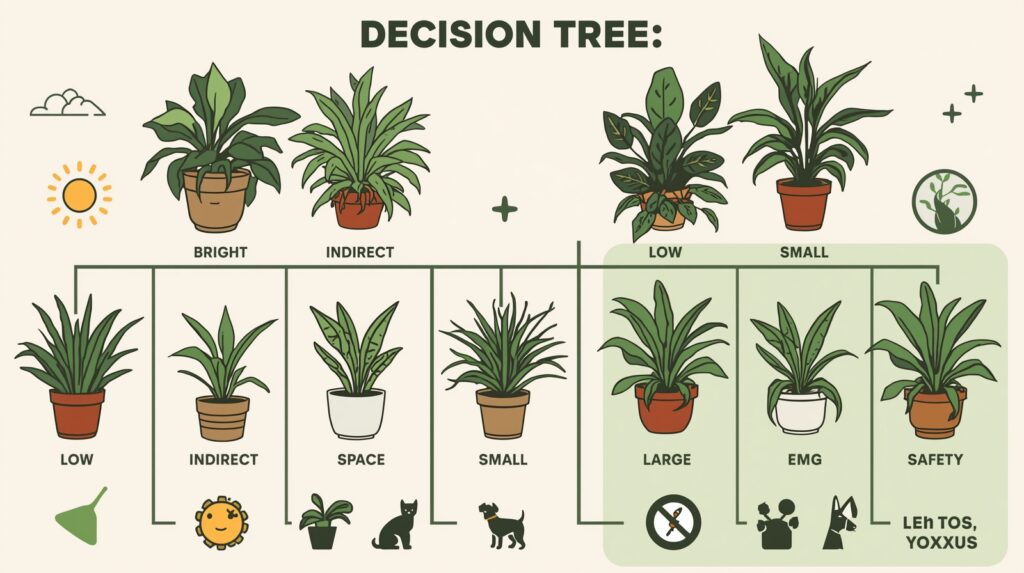
Not every plant suits every space. To maximize oxygen benefits and keep your greenery thriving, match the right plant to your light conditions, available space, and household needs.
Match plant to light level: bright, indirect, low light decision tree
- Bright light (near south-facing windows): Go for Aloe Vera, Areca Palm, or Rubber Plant — they’ll thrive and release more oxygen with strong sunlight.
- Indirect/medium light (east or west-facing windows, filtered sunlight): Snake Plant, Spider Plant, and Peace Lily adapt perfectly.
- Low light (north-facing rooms, shaded corners): Choose Aglaonema, ZZ Plant, or Pothos — these tolerate less light and still keep producing oxygen.
💡 Rule of thumb: More light = more photosynthesis = more oxygen. Place plants where they can get the most suitable light for their type.
Space & pot size: why leaf area matters for oxygen & aesthetics
- Bigger leaves = more surface area for photosynthesis = more oxygen.
- Large rooms: Use big-leaf plants like Rubber Plant or Areca Palm to make an impact.
- Small spaces: Compact options like Snake Plant or Aloe Vera fit on desks and shelves without overwhelming the room.
- Trailing plants (like Pothos): Great for vertical spaces — hanging baskets or wall shelves — so you don’t lose floor area.
👉 When repotting, move plants into slightly larger containers over time. Healthy roots = healthy leaves = better oxygen output.
Pets, kids, and safety: toxic vs. non-toxic choices
Many popular oxygen plants are toxic if ingested by cats, dogs, or toddlers. Always check before bringing one home:
- Safer options (non-toxic): Areca Palm, Spider Plant, Boston Fern.
- Toxic if chewed/ingested: Snake Plant, Peace Lily, Pothos, Philodendron, Rubber Plant.
⚠️ If you have pets or small children, place potentially toxic plants out of reach or opt for safer alternatives.
💡 Quick tip: Use raised stands, hanging baskets, or shelves to keep toxic plants away from curious paws or hands.
Best plants for bedrooms (focus: oxygen at night & sleep)
Not every plant suits every space. To maximize oxygen benefits and keep your greenery thriving, match the right plant to your light conditions, available space, and household needs.
Match plant to light level: bright, indirect, low light decision tree
- Bright light (near south-facing windows): Go for Aloe Vera, Areca Palm, or Rubber Plant — they’ll thrive and release more oxygen with strong sunlight.
- Indirect/medium light (east or west-facing windows, filtered sunlight): Snake Plant, Spider Plant, and Peace Lily adapt perfectly.
- Low light (north-facing rooms, shaded corners): Choose Aglaonema, ZZ Plant, or Pothos — these tolerate less light and still keep producing oxygen.
💡 Rule of thumb: More light = more photosynthesis = more oxygen. Place plants where they can get the most suitable light for their type.
Space & pot size: why leaf area matters for oxygen & aesthetics
- Bigger leaves = more surface area for photosynthesis = more oxygen.
- Large rooms: Use big-leaf plants like Rubber Plant or Areca Palm to make an impact.
- Small spaces: Compact options like Snake Plant or Aloe Vera fit on desks and shelves without overwhelming the room.
- Trailing plants (like Pothos): Great for vertical spaces — hanging baskets or wall shelves — so you don’t lose floor area.
👉 When repotting, move plants into slightly larger containers over time. Healthy roots = healthy leaves = better oxygen output.
Pets, kids, and safety: toxic vs. non-toxic choices
Many popular oxygen plants are toxic if ingested by cats, dogs, or toddlers. Always check before bringing one home:
- Safer options (non-toxic): Areca Palm, Spider Plant, Boston Fern.
- Toxic if chewed/ingested: Snake Plant, Peace Lily, Pothos, Philodendron, Rubber Plant.
⚠️ If you have pets or small children, place potentially toxic plants out of reach or opt for safer alternatives.
💡 Quick tip: Use raised stands, hanging baskets, or shelves to keep toxic plants away from curious paws or hands.
Best plants for bedrooms (focus: oxygen at night & sleep)
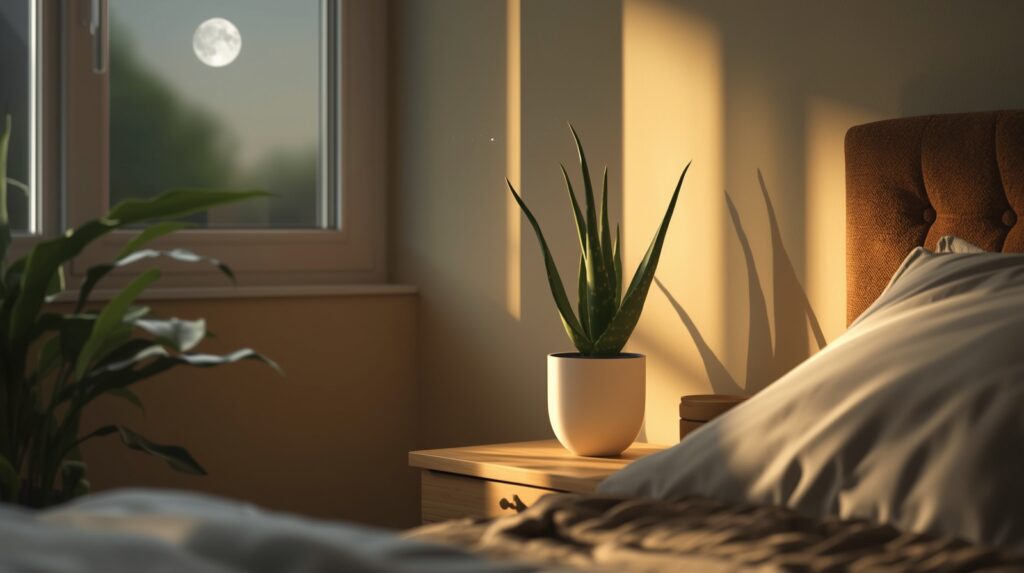
If you’re choosing plants for your bedroom, the goal is to support better oxygen levels at night and a calming sleep environment. The best candidates are night-breathing plants (CAM plants) that continue releasing oxygen even in darkness.
Night-breathing plants and CAM discussion (practical list)
Unlike most plants that stop releasing oxygen when the lights go out, CAM plants use a special process to store carbon dioxide at night and release oxygen in return. This makes them perfect bedside companions.
Top CAM plants for bedrooms:
- Snake Plant (Sansevieria): Hardy, low-maintenance, excellent night oxygen source.
- Aloe Vera: Small, soothing, and oxygen-active at night.
- Orchids (some species): Beautiful flowering CAM plants that also release oxygen after dark.
- Christmas Cactus: Decorative succulent that follows CAM metabolism and works well indoors.
💡 For best results, place at least 2–3 small CAM plants or 1–2 large ones in your bedroom to complement ventilation.
Bedroom placement tips (distance from bed, pot height, air flow)
- Distance from bed: Keep plants at least 1–2 feet away from your headboard — this prevents moisture buildup near pillows and allows air to circulate.
- Pot height: Use bedside tables, plant stands, or window ledges to bring plants to breathing level, but avoid blocking airflow.
- Air flow matters: Place plants near a window or where natural air circulation occurs. Moving air helps distribute oxygen more evenly in the room.
- Moisture caution: Avoid overwatering — bedrooms should remain dry to prevent mold or allergens.
👉 Pro tip: Combine one night-oxygen plant (Snake Plant/Aloe Vera) with one decorative stress-relieving plant (Peace Lily or Boston Fern) for the perfect balance of oxygen + calm vibes.
Care essentials that keep plants healthy (so they actually produce oxygen)
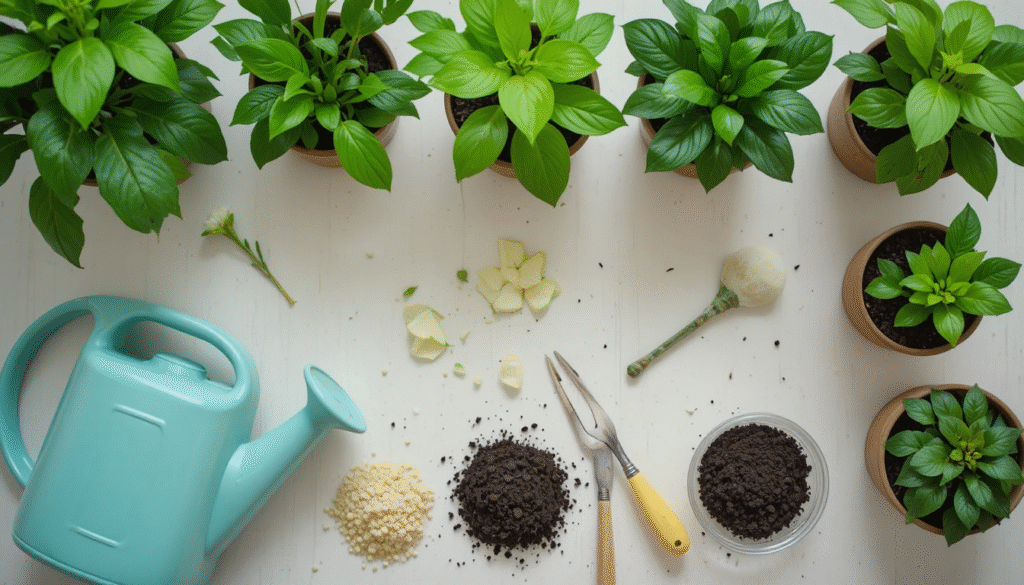
Even the best oxygen-producing plants won’t thrive — or produce optimal oxygen — without proper care. Follow these essentials to keep your indoor greenery healthy, vibrant, and oxygen-active.
Watering: avoid overwatering (how to check soil moisture)
- Overwatering is the #1 killer of indoor plants. Excess water can rot roots and stunt growth, reducing oxygen output.
- Quick check: Stick your finger about 1–2 inches into the soil. If it feels dry, it’s time to water; if it’s moist, wait a few days.
- Tip: Succulents like Aloe Vera and ZZ Plant need less frequent watering, while ferns and Peace Lily prefer consistently moist soil.
Light: windows, artificial light, and rotate for even growth
- Plants need adequate light for photosynthesis. Without it, oxygen production decreases and leaves may yellow.
- Natural light: Place plants near windows according to their light tolerance (bright, indirect, or low).
- Artificial light: Use LED grow lights for rooms with insufficient sunlight — 12–14 hours per day is usually enough.
- Rotate plants: Turn your plants once a week to ensure even growth and prevent leaves from leaning toward light sources.
Soil, fertilizer & repotting schedule (simple checklist)
- Soil: Use a well-draining potting mix appropriate for your plant type (succulent mix for cacti, loamy mix for palms).
- Fertilizer: Feed plants 1–2 times per month during the growing season with a balanced, water-soluble fertilizer.
- Repotting: Check roots yearly. If roots crowd the pot or grow out of drainage holes, repot into a slightly larger container. Healthy roots = healthy leaves = more oxygen.
Pest & disease quick checks (what to look for)
- Common pests: Aphids, mealybugs, spider mites — check the underside of leaves regularly.
- Signs of disease: Yellowing leaves, wilting, brown spots, or powdery mold.
- Quick fixes: Wipe leaves, use insecticidal soap, and isolate infected plants to prevent spread.
💡 Pro tip: Healthy plants are more productive oxygen-wise. A little attention each week prevents problems before they reduce your plant’s benefits.
Stress relief & wellbeing — how plants improve mood and focus
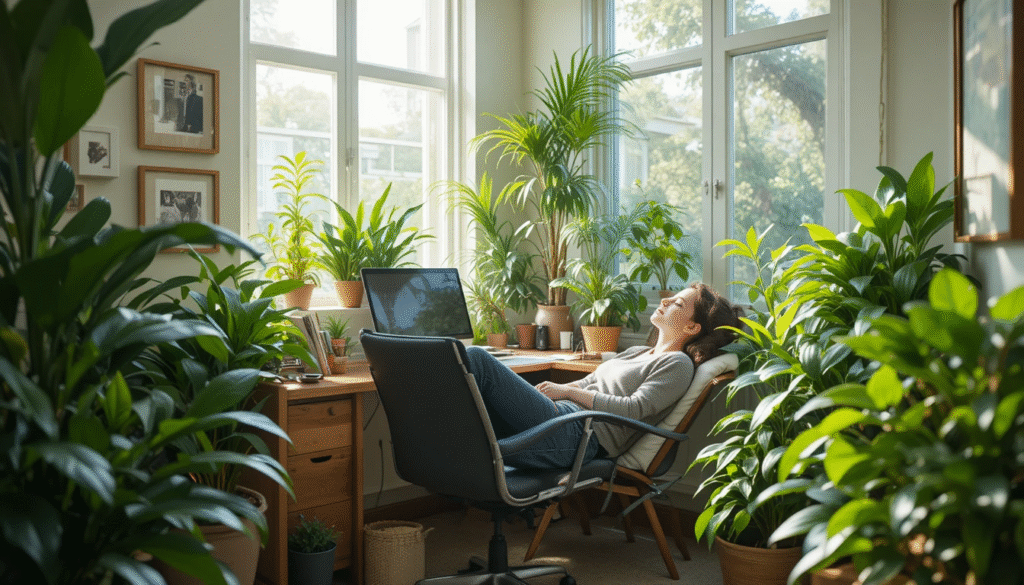
Indoor plants don’t just improve air quality — they also have measurable effects on mental wellbeing, stress reduction, and productivity. Adding greenery to your home or workspace can help you feel calmer, more focused, and even happier.
Short summary of relevant studies and practical effects (attention, stress, productivity)
- Reduced stress: Studies show that simply having plants nearby can lower cortisol levels (the stress hormone) and reduce anxiety.
- Improved focus: Office and study environments with plants lead to higher attention spans and better task performance.
- Enhanced mood: Exposure to greenery is linked to positive emotional states, less fatigue, and greater overall satisfaction.
- Practical takeaway: Even a small indoor plant on a desk or bedside table can provide noticeable mental benefits.
How to arrange plants for maximum psychological benefit (biophilic tips)
- Visual accessibility: Keep plants within your line of sight while working or relaxing to enhance calmness and focus.
- Layered greenery: Combine small tabletop plants with larger floor plants to create depth and a natural “indoor landscape.”
- Color variety: Mix different shades of green, or add flowering plants like Peace Lily or Gerbera, to boost mood.
- Natural placement: Mimic outdoor patterns — clusters, varied heights, and indirect sunlight create a pleasing biophilic effect.
💡 Tip: Arrange plants near workstations, reading corners, or bedside areas to combine oxygen benefits with psychological uplift.
Styling & placement ideas that boost perceived oxygen/healthiness
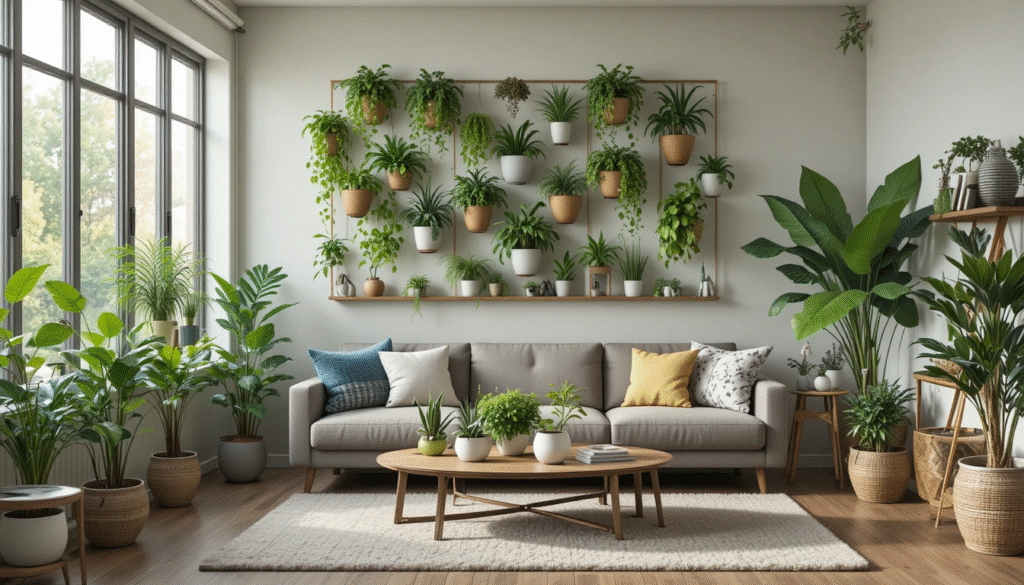
How you arrange your indoor plants affects not only airflow and oxygen distribution but also the overall look and feel of your space. Strategic placement can make small rooms feel larger, offices more productive, and bedrooms calmer.
Small spaces and vertical solutions (hanging + wall planters)
- Use hanging baskets, wall-mounted planters, or shelf arrangements to maximize greenery without taking up floor space.
- Trailing plants like Pothos or Spider Plant work perfectly in vertical setups.
- Vertical greenery improves perceived air freshness and makes compact apartments feel more open.
Office desk setups that don’t block vents or screens
- Keep plants at the side of your desk or on elevated stands to maintain proper airflow and prevent screen glare.
- Small plants like Aloe Vera, Snake Plant, or mini Peace Lily are ideal for desktops.
- This setup provides stress relief, visual interest, and improved focus without interfering with work tasks.
Combining plants for aesthetics + function (bedroom, living room, office)
- Bedroom: Mix CAM plants (Snake Plant, Aloe Vera) with soft foliage (Boston Fern, Peace Lily) for sleep-friendly oxygen and mood benefits.
- Living room: Use large leafy plants like Areca Palm or Rubber Plant with smaller trailing plants for depth and oxygen balance.
- Office: Pair medium-sized plants for desks with tall leafy plants near corners to enhance oxygen flow and create a calming workspace.
💡 Tip: Combine different leaf sizes, shapes, and heights for a biophilic feel — it boosts both oxygen efficiency and psychological wellbeing.
Buying, potting and maintenance — practical buying checklist
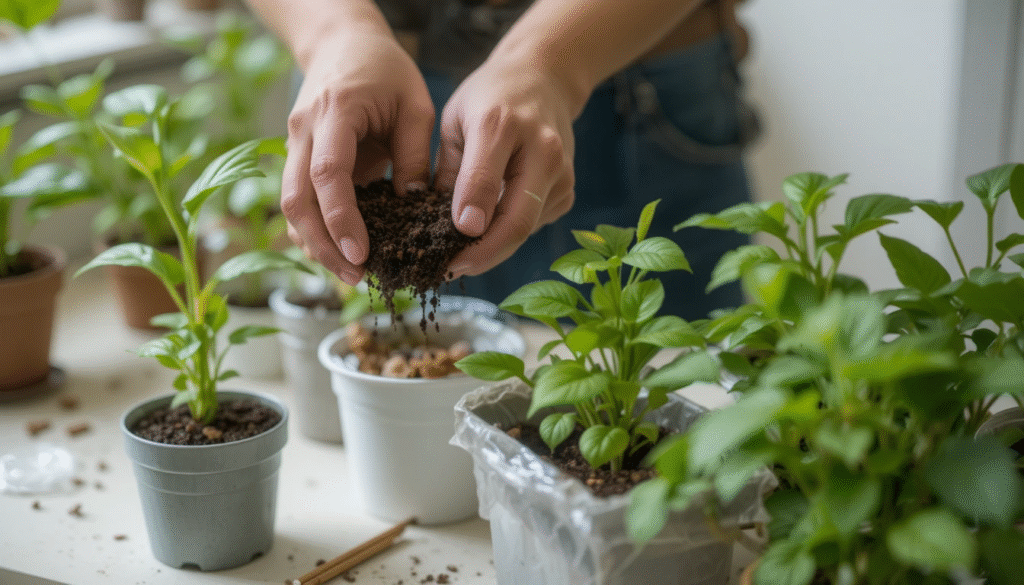
Choosing the right plant is only half the battle. Proper buying, potting, and ongoing maintenance ensure your indoor plants stay healthy and continue producing oxygen efficiently.
What to look for at a nursery or online (root health, pests, leaf color)
- Root health: Check for firm, white roots without rot or dryness. Avoid plants with tangled or overly crowded roots.
- Leaves: Look for vibrant green leaves with no yellowing, spots, or wilting.
- Pests: Inspect undersides of leaves and soil for aphids, spider mites, or mealybugs.
- Online shopping tip: Read reviews, check plant images, and ensure the seller provides proper packaging for delivery.
Best potting mixes per plant type
- Succulents & cacti (Aloe Vera, ZZ Plant): Use fast-draining cactus mix to prevent root rot.
- Tropical plants (Areca Palm, Rubber Plant, Peace Lily): Loamy potting soil with organic matter for moisture retention.
- Ferns & moisture-loving plants (Boston Fern, Spider Plant): Peat-based soil that retains humidity without waterlogging.
- Repotting tip: Always use pots with drainage holes to prevent water accumulation.
Budget options vs premium plants (value ladder + when to spend)
- Budget-friendly: Spider Plant, Pothos, Snake Plant — affordable, hardy, and effective oxygen producers.
- Mid-range: Aloe Vera, Boston Fern, Aglaonema — slightly higher cost, visually attractive, low maintenance.
- Premium: Areca Palm, Rubber Plant, Peace Lily — large, decorative, make a statement, great for living rooms and offices.
💡Tip: Invest in premium plants for central spaces where aesthetics and air benefits matter most; use budget-friendly options to fill secondary spaces.
💡 Quick takeaway: Healthy, well-chosen plants in the right soil and pots will thrive longer, giving you maximum oxygen and stress-relief benefits.
Common myths — quick mythbusting Q&A
Myth: “One snake plant can keep you alive in a sealed room”
False. A single Snake Plant produces oxygen, but it’s not enough to sustain a human in a sealed room. Proper ventilation is essential for safety and overall air quality.
Myth: “All plants produce oxygen at night”
False. Most plants (C3 plants) release oxygen only during the day. Only CAM plants like Snake Plant and Aloe Vera release oxygen at night.
Myth: “Plants alone will replace mechanical ventilation” — short answer
False. Indoor plants improve air freshness and oxygen levels slightly, but they cannot substitute for proper ventilation or air purifiers in maintaining healthy indoor air.
FAQs
Which indoor plant produces the most oxygen?
The Areca Palm and Rubber Plant are top oxygen producers due to their large leaf surface area. For night-time oxygen, Snake Plant and Aloe Vera are excellent CAM plant options.
Can indoor plants increase oxygen in a bedroom overnight?
Yes, but only CAM plants like Snake Plant and Aloe Vera release oxygen at night. Standard plants mainly produce oxygen during daylight hours.
How many plants do I need to improve air quality in a room?
A few indoor plants add oxygen and improve freshness, but dozens of medium-to-large plants would be needed to significantly change air quality in real homes. Even 2–3 well-placed plants can improve perceived air freshness.
Which low-light plants produce oxygen?
Aglaonema, ZZ Plant, Pothos, and Spider Plant tolerate low light while releasing oxygen. These are ideal for bedrooms, offices, or apartments with minimal sunlight.
Are oxygen plants safe for pets and children?
Some plants are safe, like Spider Plant, Areca Palm, and Boston Fern. Others, such as Snake Plant, Peace Lily, and Pothos, are toxic if ingested, so keep them out of reach of pets and toddlers.