

Imagine turning your daily kitchen waste into nutrient-rich “black gold” for your plants—right from your apartment balcony or backyard. That’s the magic of home composting in India, and it’s easier than you think.
Home composting is the process of converting organic kitchen waste like vegetable peels, fruit scraps, and dry leaves into natural fertilizer. It’s nature’s way of recycling, and Indian households are embracing it like never before. With cities drowning in waste, fertilizer prices skyrocketing, and a growing awareness about sustainability, composting has moved from farmlands to urban balconies.
In this comprehensive guide, you’ll discover everything about home composting india—from choosing the right method and bin to troubleshooting common problems. Whether you live in a Mumbai apartment, a Delhi flat, or an independent house in Bangalore, there’s a composting solution perfect for you. We’ll walk you through simple kitchen compost methods, realistic prices, beginner-friendly steps, and expert tips tailored specifically for Indian climates and households.
The best part? You don’t need a garden or fancy equipment. With just a small bin and your daily kitchen scraps, you can start your composting journey today.
Key Benefits of Home Composting in India
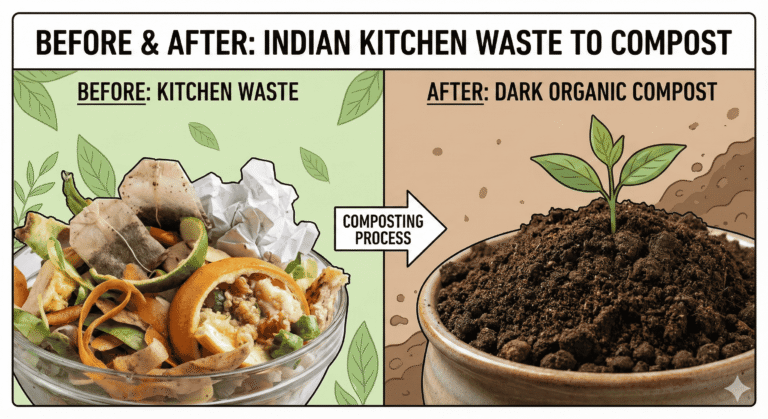
Home composting offers remarkable advantages that go beyond just waste management. Here’s why thousands of Indian families are making the switch:
- Dramatic Waste Reduction: The average Indian household generates approximately 500 grams of kitchen waste daily. Composting can reduce up to 60% of this waste, significantly lightening the burden on already overflowing landfills.
- Free, Premium Fertilizer: Your compost produces nutrient-rich organic fertilizer packed with nitrogen, phosphorus, and potassium. This saves you hundreds of rupees monthly on commercial fertilizers while giving your plants exactly what they need.
- Perfect for Indian Climate: India’s warm temperatures naturally accelerate decomposition. What takes months in colder countries happens in just 45-60 days here, making home composting incredibly efficient.
- Environmental Champion: Every kilogram of waste composted prevents methane emissions from landfills. Methane is 25 times more potent than carbon dioxide as a greenhouse gas, so you’re directly contributing to climate action.
- Gardening Success Multiplier: Whether you’re growing herbs on your balcony, maintaining a terrace garden, or nurturing indoor plants, compost dramatically improves soil structure, water retention, and plant health. The results are visible within weeks—lusher leaves, stronger stems, and vibrant blooms.
- Cost Savings: With a one-time investment of ₹500-₹2,500 for a basic setup, you’ll save thousands annually on fertilizers and reduce waste disposal costs.
- For apartment dwellers especially, composting transforms the guilt of throwing away daily peels into the pride of creating something valuable. It’s gardening’s perfect companion activity.
Types of Home Composting Methods in India
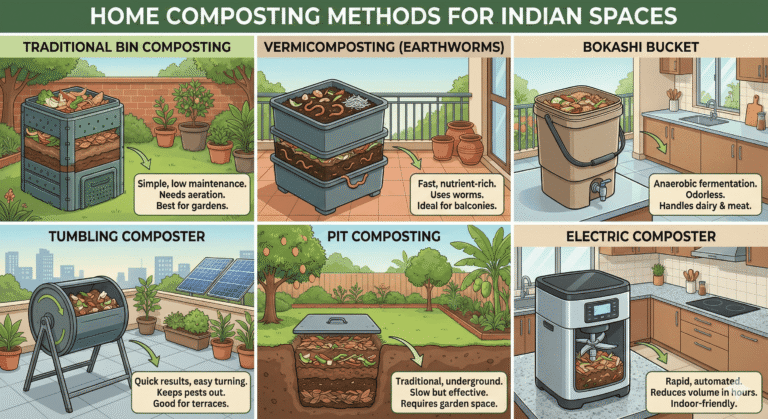
Not all composting methods suit every home. Your space, time, and waste type determine the best fit. Here are the most popular methods for Indian households:
Traditional Bin Composting
The simplest entry point into composting. You place organic waste in a plastic or terracotta drum with ventilation holes, add brown material like dry leaves, and let nature do its work. Perfect for balconies and small backyards, this low-maintenance method requires minimal intervention—just weekly mixing and occasional moisture checks. Compost is ready in 60-90 days. Best for families generating moderate kitchen waste who want a set-it-and-forget-it approach.
Vermicomposting (Earthworm Composting)
This method uses earthworms, typically red wigglers or African nightcrawlers, to break down organic matter. The worms consume kitchen scraps and produce vermicast—an incredibly nutrient-rich compost that’s often called “black gold.” Vermicomposting works exceptionally well in India’s climate since earthworms thrive in temperatures between 20-30°C. Care level is medium, requiring regular feeding and moisture monitoring. Results appear faster, typically within 45-60 days, and the compost quality is superior to traditional methods.
Bokashi Composting
A Japanese fermentation technique that’s gaining popularity in Indian metros. Bokashi uses beneficial microbes (EM cultures) to ferment waste in an airtight container. The standout advantage? You can compost non-vegetarian waste like fish, chicken, and meat scraps—something traditional methods struggle with. Ideal for small apartments with limited space, the sealed system eliminates odor concerns. The process takes 2-3 weeks to ferment, after which you bury the pre-compost in soil for final decomposition.
Tumbling Composters
These barrel-style composters rotate on an axis, making mixing effortless—just turn the handle. The constant aeration speeds up decomposition to 30-45 days and minimizes smell since waste is contained and regularly mixed. Tumbling composters work well on terraces and balconies where you want a clean, organized setup. They’re more expensive (₹3,000-₹10,000) but deliver faster results with less manual effort.
Pit Composting
The traditional method for independent houses with garden space. Simply dig a pit (2-3 feet deep), add kitchen and garden waste in layers, cover with soil, and let it decompose naturally. This zero-cost method is perfect for large volumes of waste and requires minimal maintenance. The compost is ready in 90-120 days. Rural and semi-urban homes with yards find this the most practical solution.
Electric Kitchen Composters
Modern technology meets sustainability. These appliances quickly process kitchen waste through heating, grinding, and deodorizing, producing dry compost or compost powder in 4-24 hours. They’re compact, odorless, and fit under kitchen counters. The downside is the price (₹10,000-₹35,000) and electricity consumption. Best suited for busy urban professionals who want convenience and have budget flexibility.
Each method has its sweet spot. Apartment balconies thrive with vermicomposting or Bokashi, independent homes suit pit or bin composting, and those seeking speed prefer tumblers or electric options.
Home Composting & Care Guide (Step-by-Step for Indian Homes)
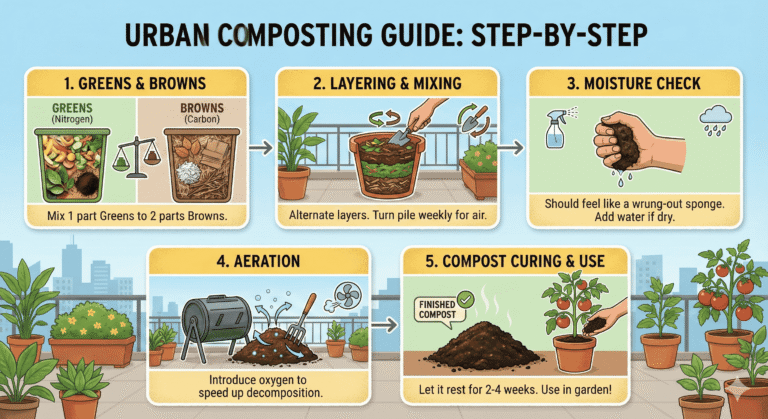
Success in composting comes from understanding the basic principles. Here’s your complete care guide tailored for Indian conditions:
Light Requirements
Compost bins should be placed in shaded, warm areas that receive indirect sunlight. Avoid exposing your compost to direct harsh afternoon sunlight, especially during Indian summers when temperatures soar above 40°C. Excessive heat can kill beneficial microbes and dry out your compost. A covered balcony, shaded terrace corner, or backyard area under a tree works perfectly.
Watering/Moisture
The golden rule: compost should feel like a squeezed-out sponge—moist but not dripping. Too much water creates anaerobic conditions leading to foul smells, while too little slows decomposition. In humid monsoon months, protect your bin from direct rain and add extra brown materials like shredded newspaper or dry leaves. In dry summer months, sprinkle water weekly to maintain moisture.
Soil Additions
Adding a handful of garden soil or old compost introduces beneficial microorganisms that jumpstart decomposition. Layer cocopeat or soil between waste layers—this controls odor, absorbs excess moisture, and maintains the carbon-nitrogen balance. Think of soil as the “starter culture” for your compost ecosystem.
Temperature & Humidity
The ideal temperature range for active composting is 30-35°C, which fortunately aligns perfectly with average Indian temperatures. Your compost pile may heat up to 40-50°C during active decomposition—this is normal and indicates healthy microbial activity. During monsoon season, ensure drainage holes prevent waterlogging. In winter (especially North India), composting slows but doesn’t stop.
Adding Waste (Greens & Browns Ratio)
This is the secret to odor-free composting. Greens are nitrogen-rich materials: vegetable peels, fruit scraps, tea leaves, coffee grounds, and fresh grass clippings. Browns are carbon-rich materials: dry leaves, shredded paper, cardboard, coconut coir, and sawdust. Maintain approximately a 50:50 balance. Too many greens cause smell and attract pests; too many browns slow decomposition. A practical approach: every time you add a bucket of kitchen waste, add an equal amount of dry leaves or shredded paper.
Mixing & Aeration
Oxygen is essential for aerobic decomposition. Mix or turn your compost weekly using a stick or small garden fork. This prevents compaction, introduces oxygen, and distributes moisture evenly. If you notice your compost developing a rotten smell, it needs more air—mix immediately and add brown materials.
When Compost is Ready
Your compost is harvest-ready when it displays these characteristics: dark brown or black color, earthy forest-floor smell, crumbly texture that breaks apart easily, and no recognizable food scraps. The volume reduces by 50-60% from the original. This typically takes 60-90 days for traditional composting, 45-60 days for vermicomposting, and 30-45 days for tumblers in Indian conditions.
Common Mistakes to Avoid
Don’t add oily, greasy, or spicy food waste—these attract pests and slow decomposition. Avoid adding too much water at once; add gradually as needed. Never let your compost sit without mixing for weeks—it compacts and turns anaerobic. The biggest mistake Indian composters make is adding only wet kitchen waste without balancing with brown materials, leading to a smelly, slimy mess instead of beautiful compost.
Common Problems & Solutions
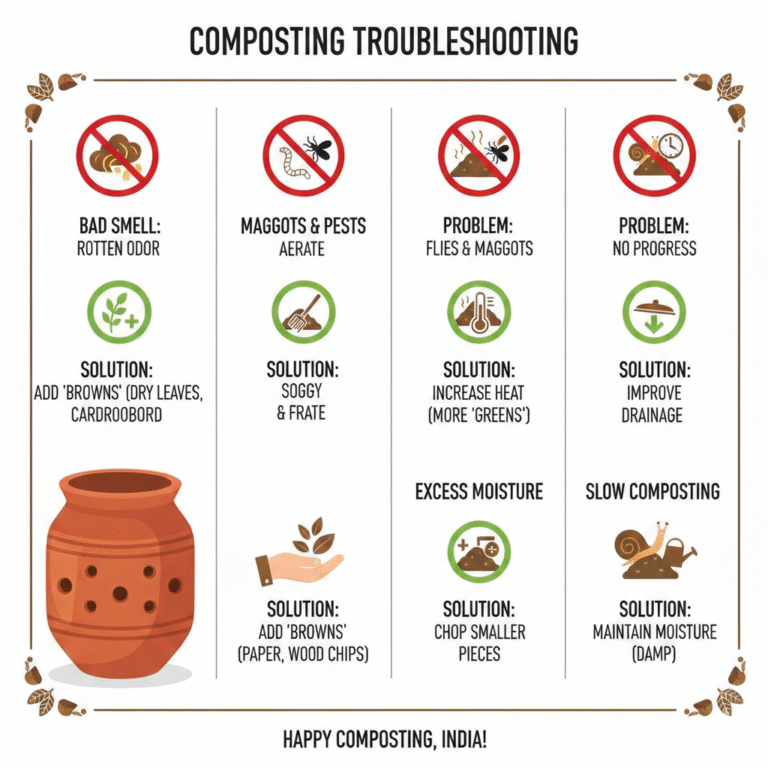
Even experienced composters encounter challenges. Here’s how to troubleshoot the most common issues:
- Issue 1: Bad Smell – If your compost smells like rotten eggs or sewage, the problem is excess moisture and lack of oxygen. The fix is immediate: stop adding wet waste, mix thoroughly to introduce air, and add at least 50% more brown waste like dry leaves or shredded cardboard. Continue mixing daily until the smell disappears.
- Issue 2: Maggots/Flies – Finding maggots or fruit flies indicates exposed food waste. While maggots actually help decomposition, most people find them unpleasant. The solution is simple: always cover fresh kitchen waste with a 2-inch layer of cocopeat, dry leaves, or soil. Never leave food scraps exposed on top. Consider adding a handful of neem powder, which acts as a natural pest deterrent.
- Issue 3: Compost Not Heating Up – A cold compost pile suggests an imbalanced green-brown ratio or insufficient nitrogen. Add fresh green waste like vegetable peels, used tea leaves, or grass clippings to boost nitrogen content. Ensure the pile is large enough—very small quantities don’t generate enough heat. Mix well to distribute the greens throughout.
- Issue 4: Slow Composting – If decomposition seems to take forever, several factors might be at play. Cold weather naturally slows the process, but you can accelerate it by placing your bin in a warmer spot. High moisture levels also slow breakdown—add browns and mix well. For a natural boost, add jaggery water (1 tablespoon jaggery dissolved in 1 liter water) to feed microorganisms and accelerate activity. Chopping waste into smaller pieces before adding also speeds decomposition significantly.
Composting Bin Price in India (2025 Guide)
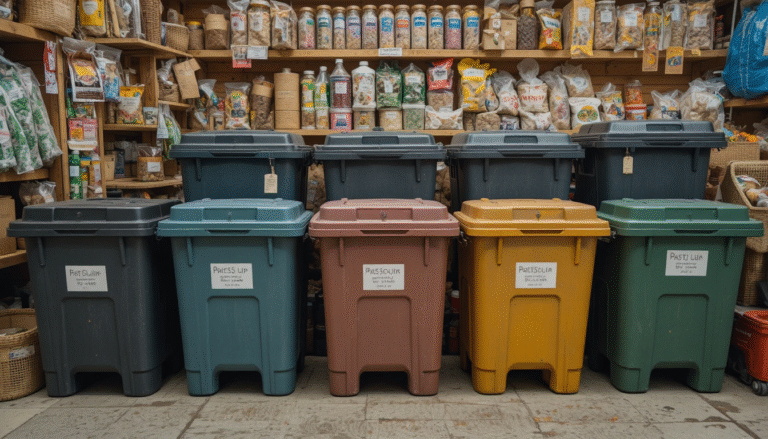
Understanding the investment helps you choose the right setup for your budget. Here are realistic price ranges for 2025:
Basic Plastic Bin: ₹300-₹800 – Simple drum-style containers with ventilation holes. Perfect for beginners testing the waters.
Composting Starter Kit: ₹1,000-₹2,500 – Includes a bin, cocopeat, microbial culture, and instructions. Great value for first-time composters.
Vermicompost Setups: ₹1,200-₹3,000 – Comes with tiered trays, earthworms, bedding material, and sometimes a tap for leachate collection.
Tumbling Composters: ₹3,000-₹10,000 – Rotating barrel systems with stands. Prices vary based on capacity and build quality.
Electric Food Composters: ₹10,000-₹35,000 – High-tech appliances with automated processing. Premium models with larger capacity cost more.
Price Factors:
Size directly impacts cost—larger bins for bigger families cost more. Material matters too—stainless steel and UV-resistant plastic cost more than basic plastic. Advanced odor-control systems, drainage taps, and dual chambers increase prices. Indoor models designed for aesthetic appeal typically cost more than outdoor utility bins.
The sweet spot for most Indian households is ₹1,500-₹2,500, which gets you a quality mid-sized bin with essential features. Remember, this is a one-time investment that pays back within months through fertilizer savings.
Buying Guide – Choosing the Right Compost Bin in India
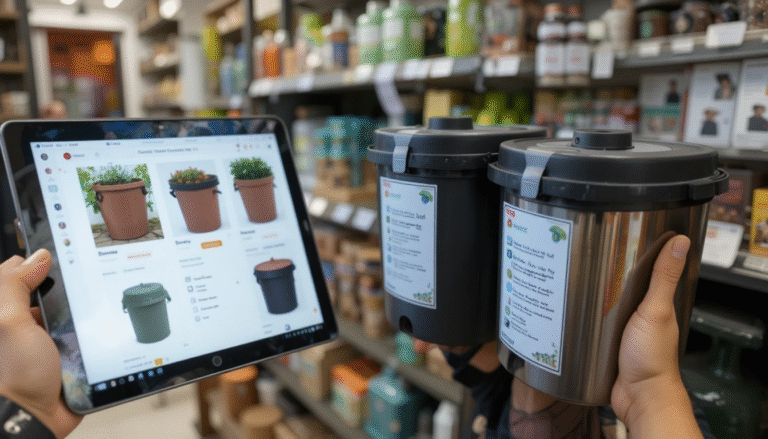
Selecting the right compost bin can make or break your composting experience. Here’s what to check:
Essential Features: Ensure proper ventilation through side holes or mesh panels—oxygen is crucial. Check for drainage holes or a tap at the bottom to release excess liquid. Verify material durability, especially for outdoor use; UV-resistant plastic prevents cracking under Indian sun. A lid is essential to keep pests out and retain moisture.
Size Selection: Match capacity to your family waste generation. A 15-20L bin suits 1-2 member homes generating 300-400 grams daily waste. For 3-4 member families producing 500-700 grams daily, choose 30-35L capacity. Large families, villas, or homes with gardens should consider 50L+ bins or multiple smaller bins.
Container Options: Terracotta pots provide excellent breathability and look attractive on balconies, though they’re heavier and pricier. Plastic bins are affordable, lightweight, and durable but ensure they’re food-grade or UV-resistant. Drum composters often repurpose large containers with modifications—an economical DIY option.
Where to Buy: Online platforms like Amazon, Flipkart, and gardening specialty sites offer the widest selection, convenience of doorstep delivery, and customer reviews to guide decisions. Offline options include local nurseries, garden centers, and home improvement stores where you can negotiate prices, inspect quality firsthand, and get immediate purchase satisfaction. Both have merits—online for variety, offline for touch-and-feel.
Trending: Green Gifting: Compost bins and starter kits are becoming popular sustainable gifts in 2025. They’re meaningful, practical, and align with eco-conscious values. Perfect for housewarmings, birthdays, or corporate gifting programs. Pair with a pack of seeds or a small plant for a complete green gift.
Propagation (Vermicomposting Setup)
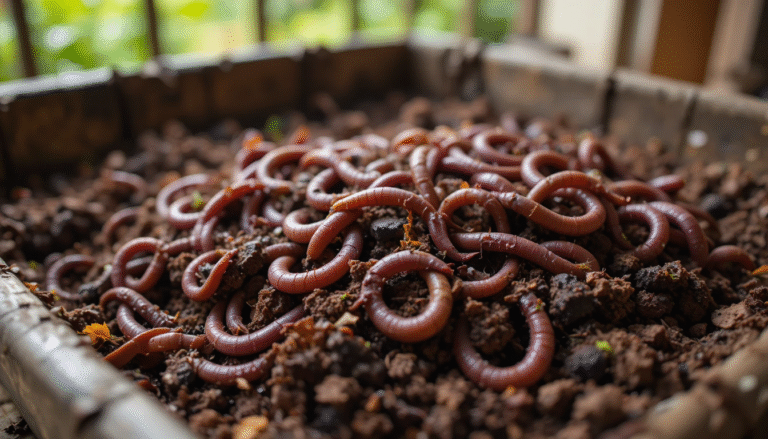
If you’re choosing vermicomposting, here’s how to start your worm colony:
- Take a well-ventilated plastic bin or three-tiered vermicompost unit.
- Create bedding by mixing cocopeat, shredded paper, and dry leaves—dampen until moist.
- Add earthworms (typically 500-1000 red wigglers for a starter bin available for ₹300-₹500 online). Place chopped kitchen waste in one corner, covering it with bedding to prevent fruit flies.
- Maintain moisture like a wrung-out sponge—spray water if needed. Feed worms 2-3 times weekly, avoiding overfeeding.
- Worms are surprisingly low-maintenance. They don’t smell, don’t make noise, and work 24/7 converting your waste into premium compost.
- Within 45-60 days, you’ll harvest rich vermicast—dark, crumbly, and packed with nutrients.
- Simply move finished compost to one side and add fresh bedding and waste to the other; worms migrate to the food source.
- The best part? Your worm population multiplies, so you can share with friends or start additional bins.
FAQs
How do I start home composting in India as a beginner?
Start simple: get a basic bin (₹500-₹1,000), add kitchen waste daily, balance with equal amounts of dry leaves, mix weekly, and maintain moisture. Begin with fruit peels and vegetable scraps, avoiding meat and oily foods initially.
What kitchen waste can be composted?
Yes: vegetable peels, fruit scraps, tea leaves, coffee grounds, eggshells, rice, dal, bread, and roti.
No: meat, bones, dairy, oily/greasy food, citrus in large quantities, onion/garlic in vermicomposting.
How to compost in small Indian apartments?
Use compact bins (15-20L) on balconies, choose odor-free methods like Bokashi or sealed vermicomposting units, maintain proper green-brown balance, and mix regularly. Many apartment composters successfully run bins in kitchen corners or balconies.
How long does composting take in Indian climate?
India’s warm weather accelerates composting: 45-60 days for vermicomposting, 60-90 days for traditional bin composting, 30-45 days for tumbling composters, and just weeks for Bokashi fermentation.
How do I prevent smell in my compost bin?
Always cover wet waste with dry browns, maintain 50:50 green-brown ratio, never let it become too wet, mix weekly for aeration, and add neem powder or cocopeat for odor absorption.
Can non-veg food scraps be composted?
Traditional composting struggles with non-veg waste (attracts pests, slow to break down). However, Bokashi composting handles meat, fish, and bones excellently through fermentation.
Is vermicomposting better than normal composting?
Vermicomposting produces higher quality compost richer in nutrients, works faster (45-60 days), and is more compact. However, it requires slightly more care regarding moisture and temperature. Both work excellently for Indian homes.
Can compost be used for all plants?
Yes! Compost benefits everything from flowering plants and vegetables to indoor houseplants and fruit trees. Use it as a soil amendment (mix 30% compost with 70% soil) or as top dressing around established plants.
Do I need to buy a compost bin or can I make one?
DIY bins work great—use large plastic drums, old buckets, or wooden crates with drainage and ventilation holes drilled in. However, readymade bins offer better design, pest protection, and ease of use for ₹500-₹1,500.
What is the cost of home composting setup in India?
A basic starter setup costs ₹1,000-₹2,500 including bin, cocopeat, and culture. Ongoing costs are near zero—just electricity for electric composters. Compare this to ₹200-₹500 monthly spent on commercial fertilizers.
Conclusion
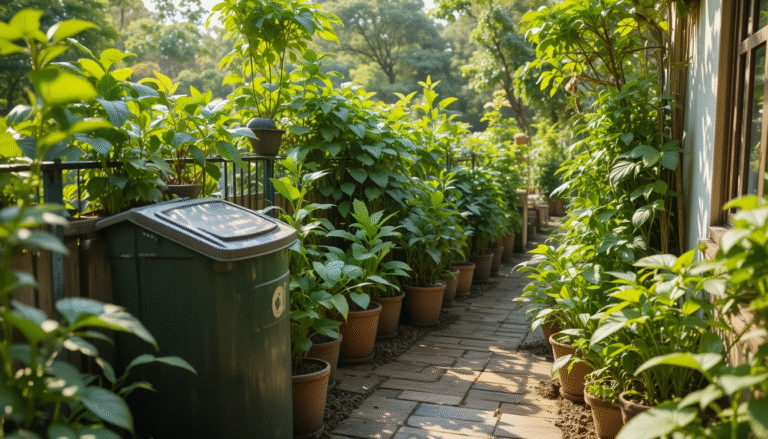
Home composting in India is more than a trend—it’s a practical, affordable solution that transforms daily waste into valuable resources. Whether you’re in a studio apartment in Mumbai or an independent house in Pune, there’s a composting method perfectly suited to your space, lifestyle, and budget.
The beauty of composting lies in its simplicity. With a basic understanding of greens and browns, regular mixing, and moisture balance, anyone can create nutrient-rich fertilizer within weeks. The environmental impact amplifies when thousands of households participate—reduced landfill waste, lower methane emissions, and chemical-free gardens across India.
Starting is easier than you think. Choose a method that fits your space, invest in a basic bin or kit, and begin with just your daily vegetable peels. Watch as kitchen waste transforms into dark, crumbly compost that makes your plants thrive like never before. Your balcony herbs will flourish, your terrace garden will bloom, and your houseplants will thank you with lush growth.
Want to get Expert Consulation?
Conact Greenarium Landscapes and schedule a consultation call.